A column
from the coast.
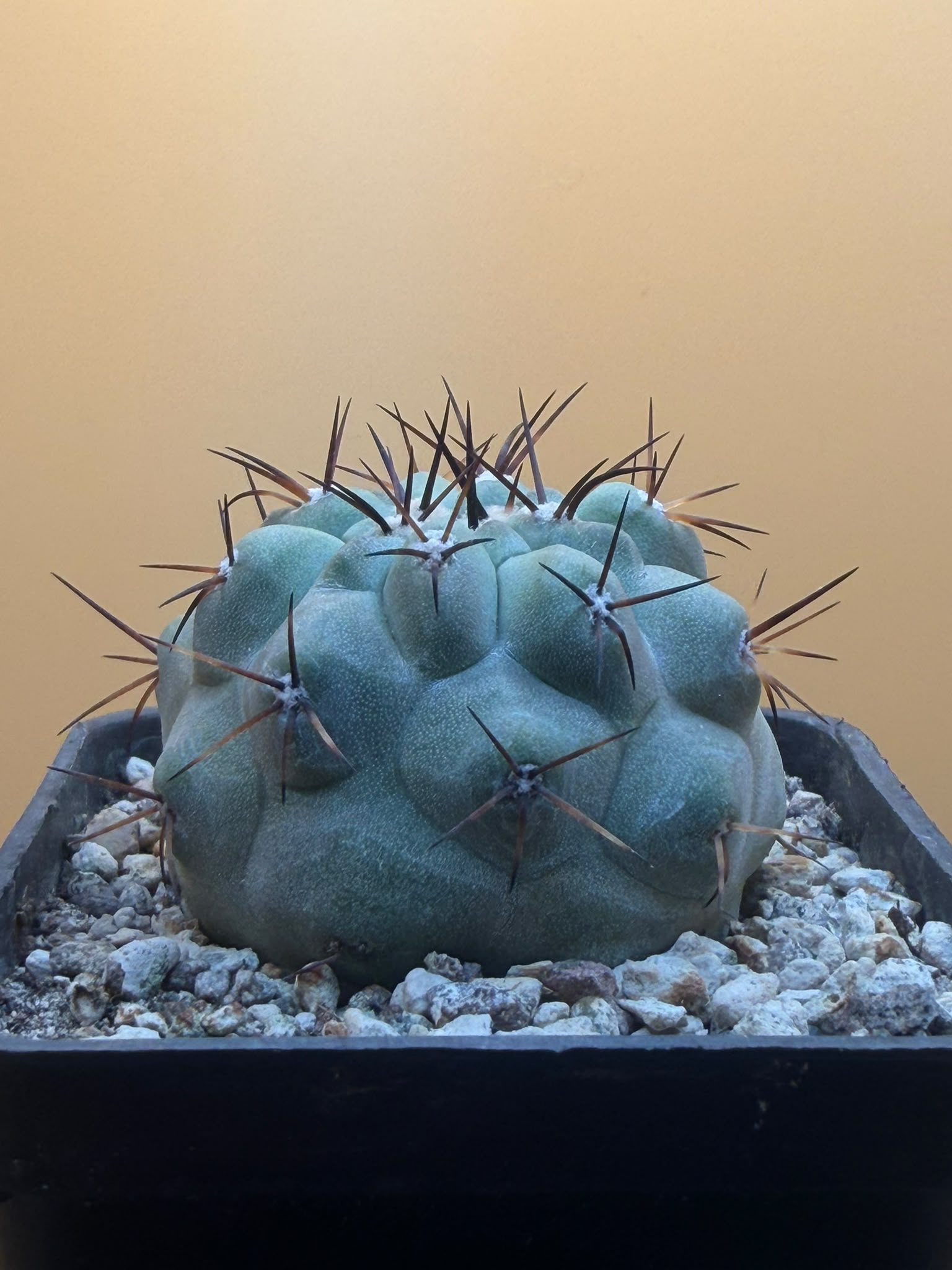
I found this plant at Casa del Cactus during Festa del Cactus in Bologna in 2026. That is the beginning of its documented life in my collection.
The name on this record is the one familiar to growers: Copiapoa columna-alba. Kew currently accepts it as C. cinerea subsp. columna-alba. The change in rank folds the plant into a broader, naturally variable species rather than erasing the name collectors use to recognize this pale, column-forming expression.
Friedrich Ritter published Copiapoa columna-alba in 1959. The name reads as “white column,” a compact description of its upright habit and pale, waxy-looking body. Later field-number records associate Ritter’s FR 530 with several places in the Antofagasta–Atacama region; those records help trace the taxon’s botanical history, but they do not establish the origin of this cultivated specimen.
Kew places the subspecies along Chile’s Pacific side, from south of Taltal to hills north of Chañaral, and describes it as a plant of desert and dry shrubland. In its coastal range it is part of the Atacama’s spare, fog-influenced landscape. The field photograph below gives a sense of the plant among its native stones; it is a species reference, not a claim about this individual’s provenance.
Its conservation status depends on which assessment is being read. Chile’s 19th national classification process lists C. cinerea subsp. columna-alba as Endangered. Kew’s taxon page also reproduces an earlier Kew Bulletin assessment that concluded Least Concern for the more broadly distributed subspecies. I’m keeping that distinction visible rather than reducing two differently scoped assessments to one unqualified label.
For this plant, the facts are simpler: it joined my collection in 2026, bought from Casa del Cactus at Festa del Cactus in Bologna. The tag and any earlier growing history are not recorded here, so the Atacama remains the species’ range—not this plant’s known origin.
Kew · accepted name, range and cited Kew Bulletin account · IPNI · original name and publication record · BCSS · field-number records · Chile · 19th national conservation classification.