
Named for a
resemblance.
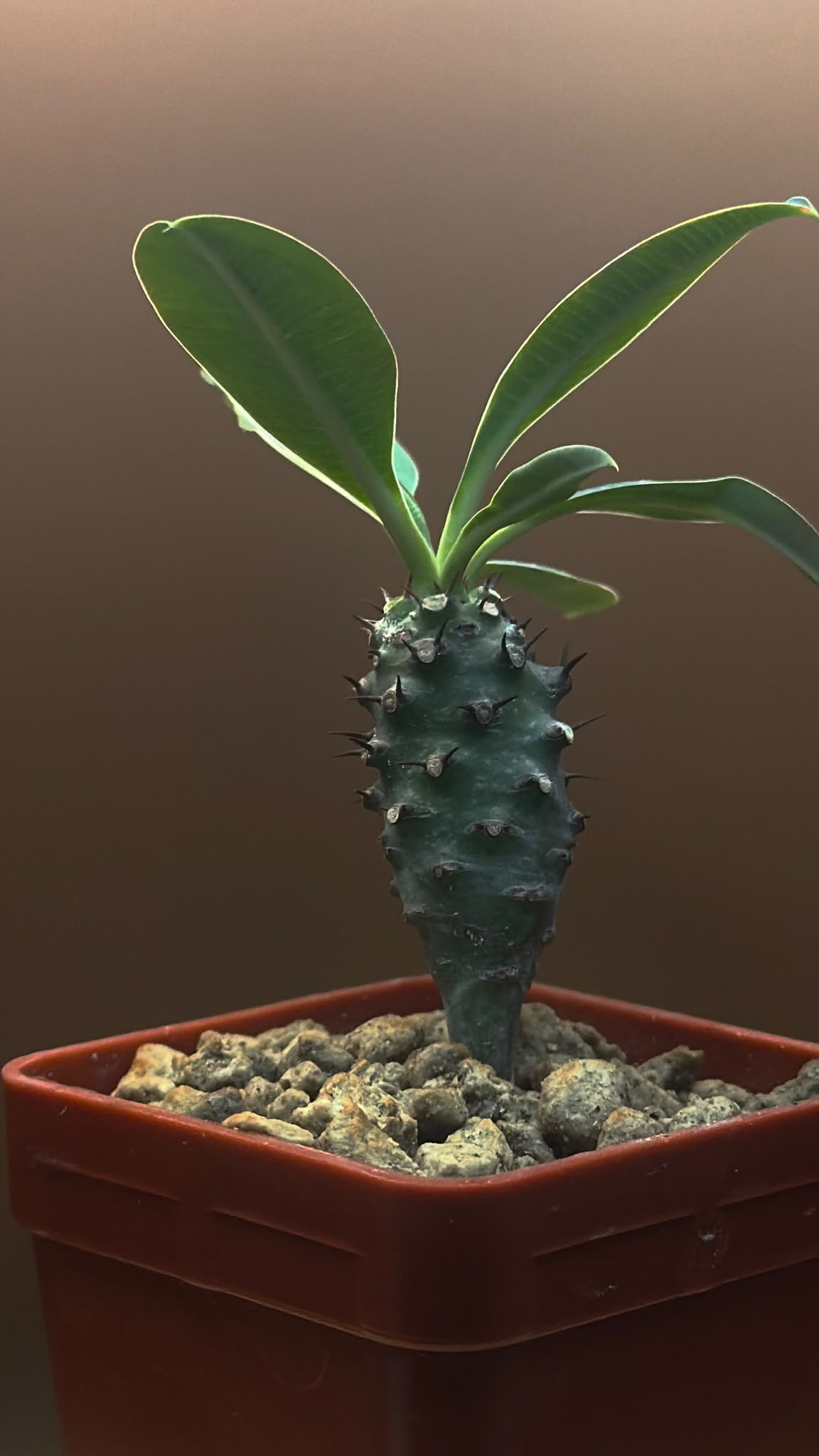
I brought this plant home from Bologna in 2026. Its species name points to another genus: Pachypodium.
This specimen joined my collection in 2026, acquired from Petr Pavelka at Festa del Cactus in Bologna. That is the start of its documented story with me. I have no earlier nursery record or wild provenance, so the passport keeps those details open.
Pachypodioides means “Pachypodium-like.” The comparison makes sense in the plant’s stout, spiny stem and the crown of leaves at its tip. But this is an Euphorbia, from a different family; the resemblance is one of shape, not kinship. In the wild, it sheds those leaves for part of the year, then renews them with the rains.
Pierre Boiteau published the name in 1942. A digitized specimen record at the Muséum national d’Histoire naturelle links the name to H. Humbert’s collection from Ankarana’s limestone hills and plateaus. The location is a remarkable one: Tsingy country, where erosion has cut the limestone into sharp ridges, ledges and narrow seams.
That narrow range also makes the species vulnerable. Kew records it as Critically Endangered, and a CITES review describes it as known only from Ankarana, with habitat degradation, fire and collection among the reported pressures. The review notes that it occurs within a reserve, while the effectiveness of protection was uncertain in the material assessed. Those concerns belong to the wild species—not to the undocumented past of this cultivated individual.
Sources: Kew · accepted name, range and conservation assessment · International Plant Names Index · 1942 publication · MNHN · herbarium type record · CITES · review of significant trade.