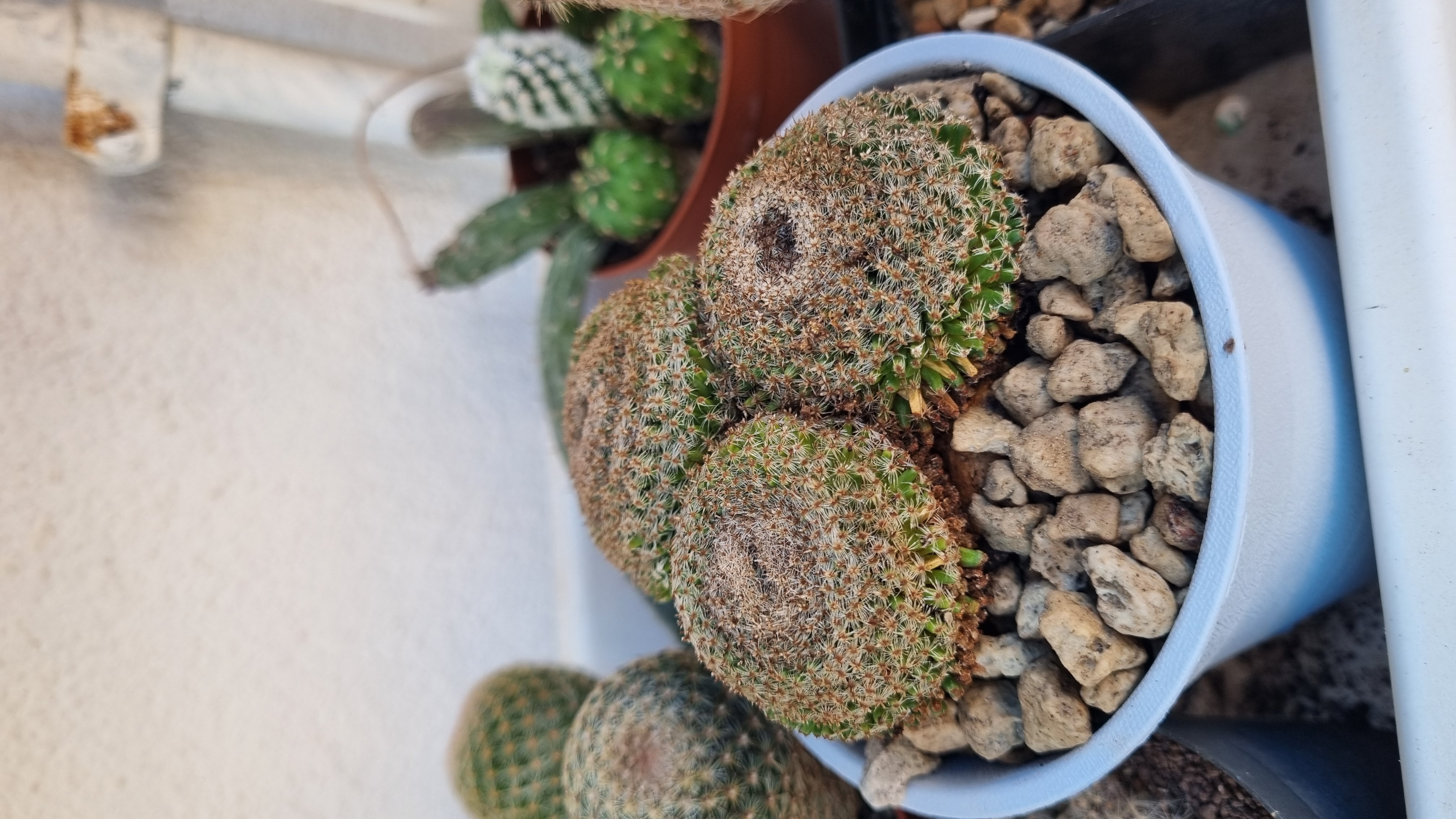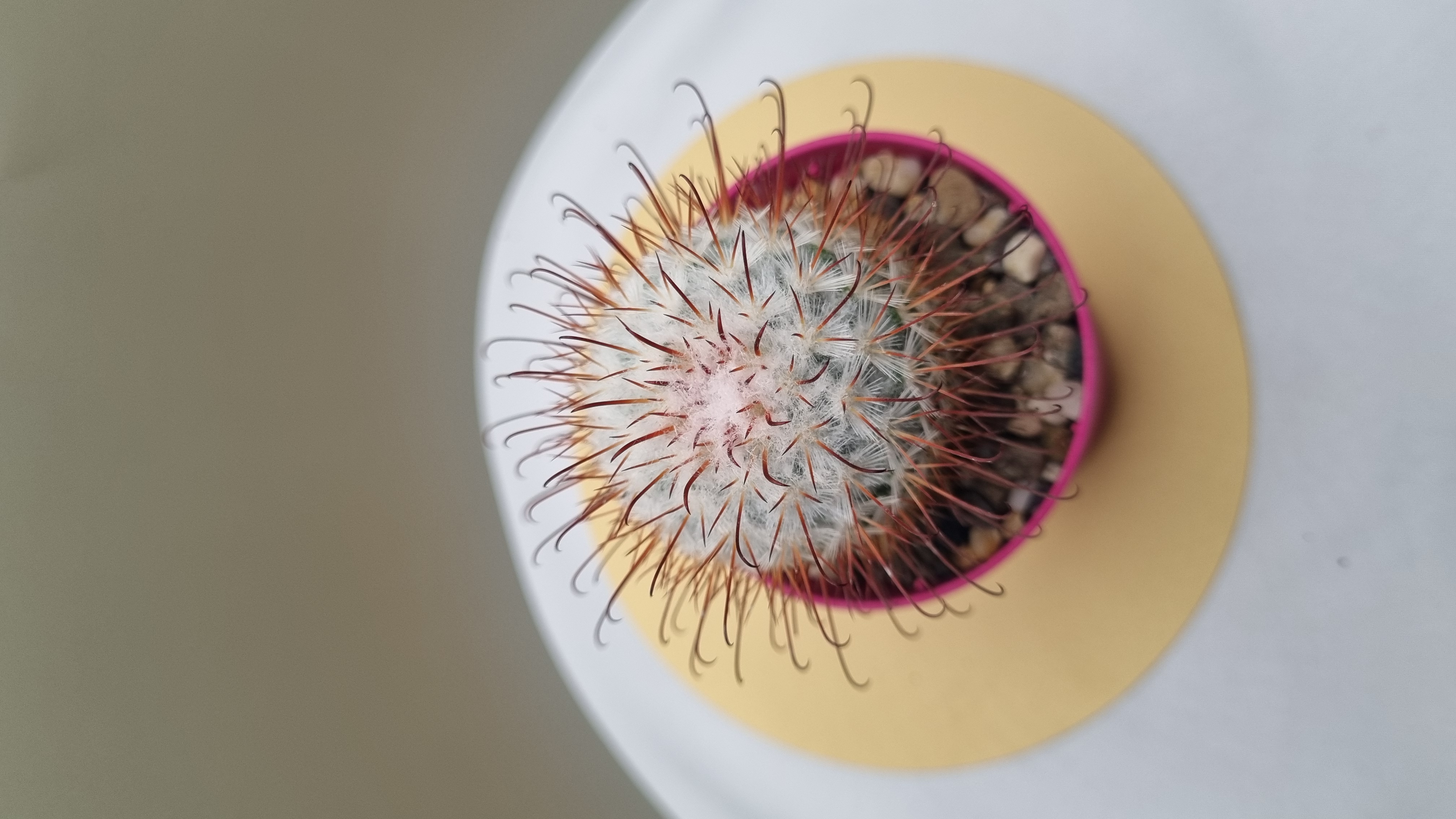
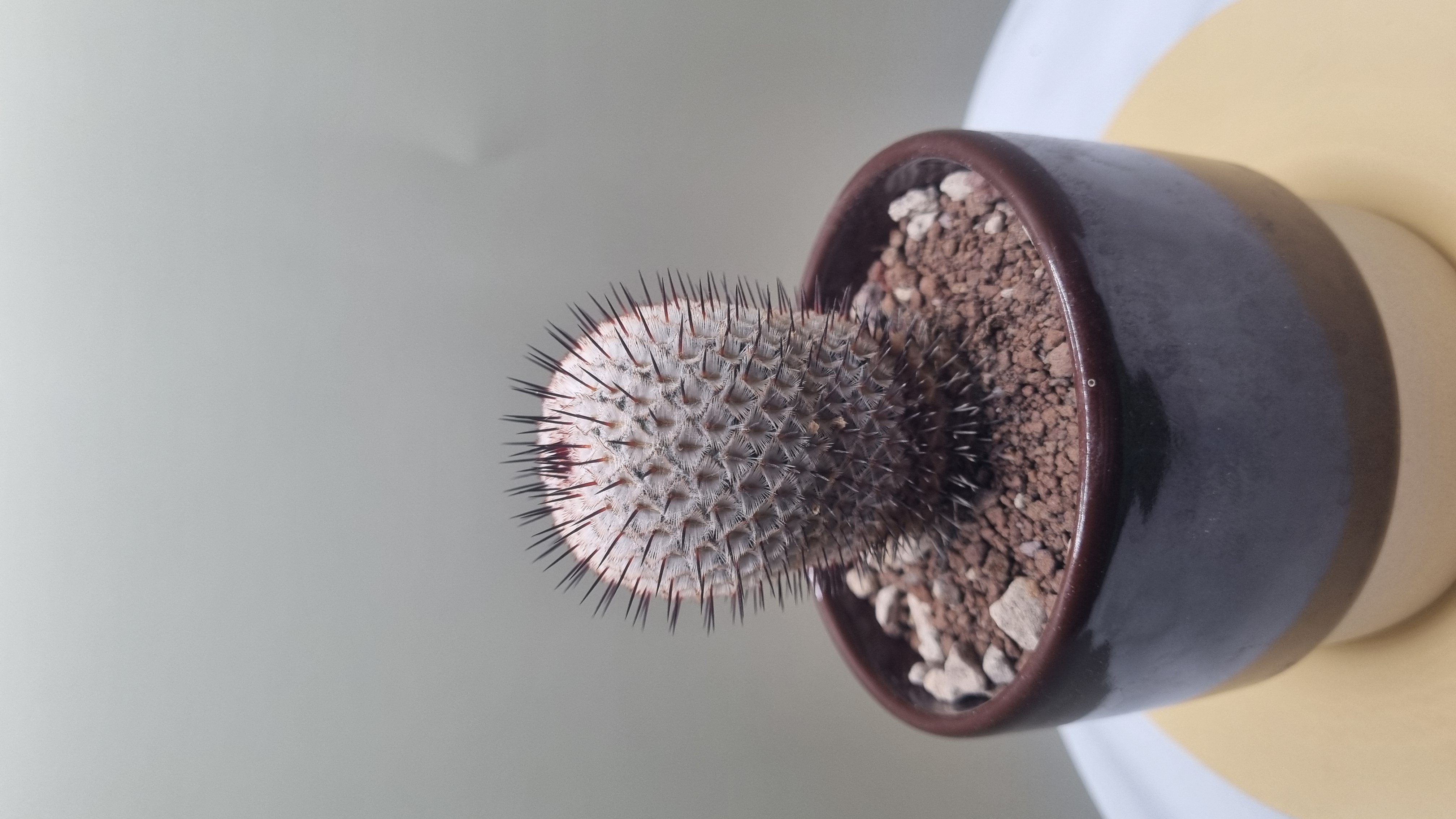
Collected in 1999.
Named in 2001.
Near Villa García, Zacatecas, a small cactus with unusually straight central spines entered the field record. Two years later, W.A. and Betty Fitz Maurice gave that form a name: Mammillaria perezdelarosae subsp. andersoniana.
The record begins with a field collection in June 1999, in the municipality of Villa García at about 2,000 metres. The plant was small and easy to miss among the stones, but its short, solitary stem and straightened central spines set it apart from the hooked-spined forms associated with M. perezdelarosae and M. bombycina. Those field details are reported in a later account by the Henry Shaw Cactus and Succulent Society; the original paper is titled “Another look at Mammillaria bombycina and M. perezdelarosae, and something new.”
In 2001, W.A. and Betty Fitz Maurice published the new subspecies in the Cactus and Succulent Journal. Its formal type is Fitz Maurice 2416, preserved at Mexico’s National Herbarium (MEXU). That specimen anchors the name: a particular collected plant, kept as evidence so later botanists can examine what the description meant. The two-year gap between collection and publication is short, but it marks the passage from a field find to a named taxon.
The name andersoniana honours Edward F. Anderson, the American botanist and cactus scholar. Taxonomy has since taken a different view of its rank: Kew lists the subspecies name as a synonym of Mammillaria perezdelarosae. I keep “Andersoniana” in this collection because it points to the straight-spined form and to the name under which this plant is being documented.
The older story belongs to the parent species, not this subspecies: M. perezdelarosae was published in 1985 by Helia Bravo Hollis and Lélia Scheinvar, and its name honours Mexican botanist Jorge Alberto Pérez de la Rosa. The Andersoniana record is a later chapter from Zacatecas. It should not be confused with the parent species’ earlier discovery.
I acquired this plant in autumn 2025 at Festa del Cactus in Bologna. I no longer have the seller’s name or the original tag, and its wild provenance is unrecorded. The 1999 Villa García locality belongs to the history of the Andersoniana form; it is not evidence that this individual came from there.
Henry Shaw Cactus and Succulent Society · field collection details · 2001 publication and type citation · Kew · current taxonomic treatment.