A green skin,
broken into plates.
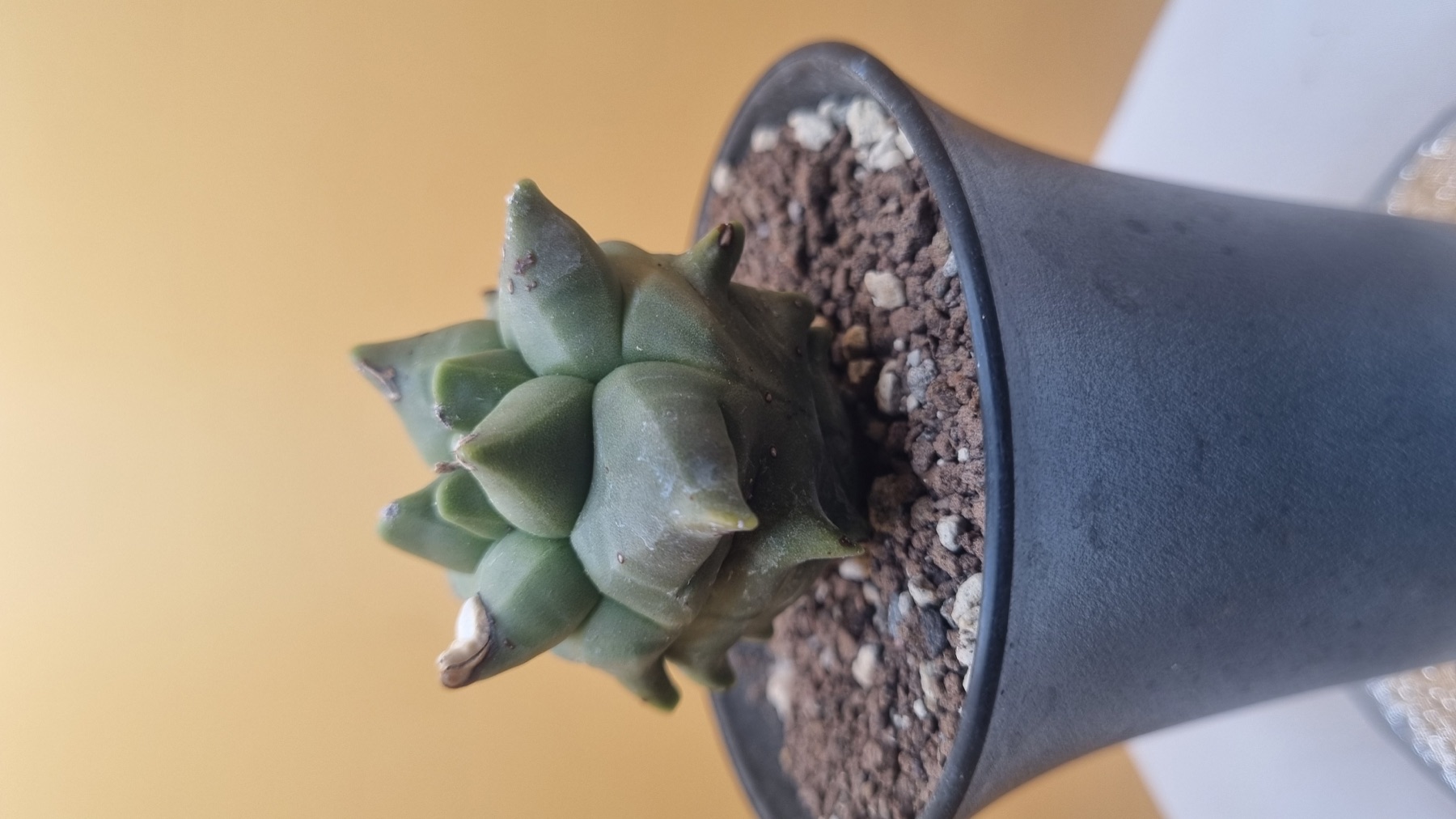
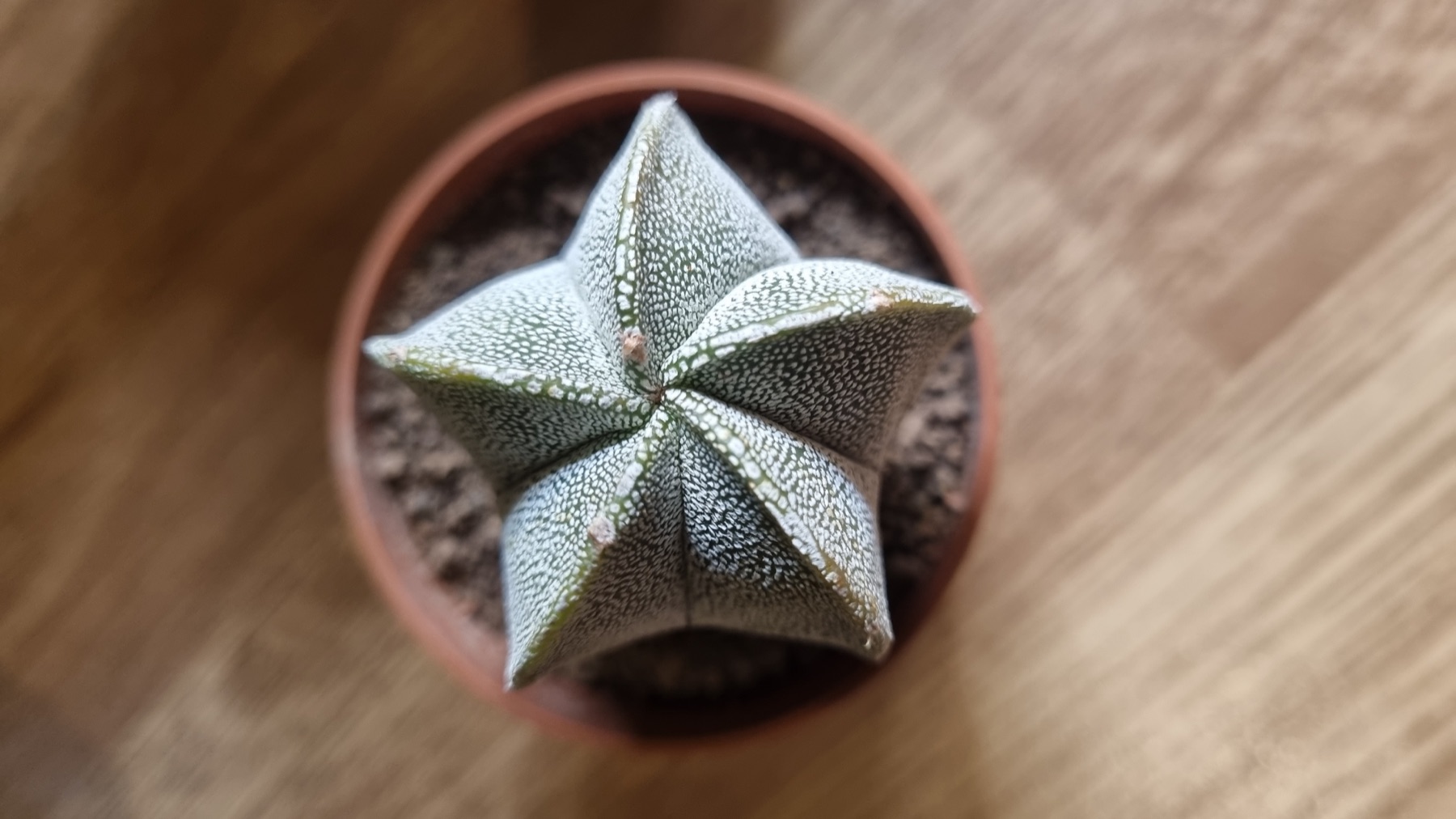
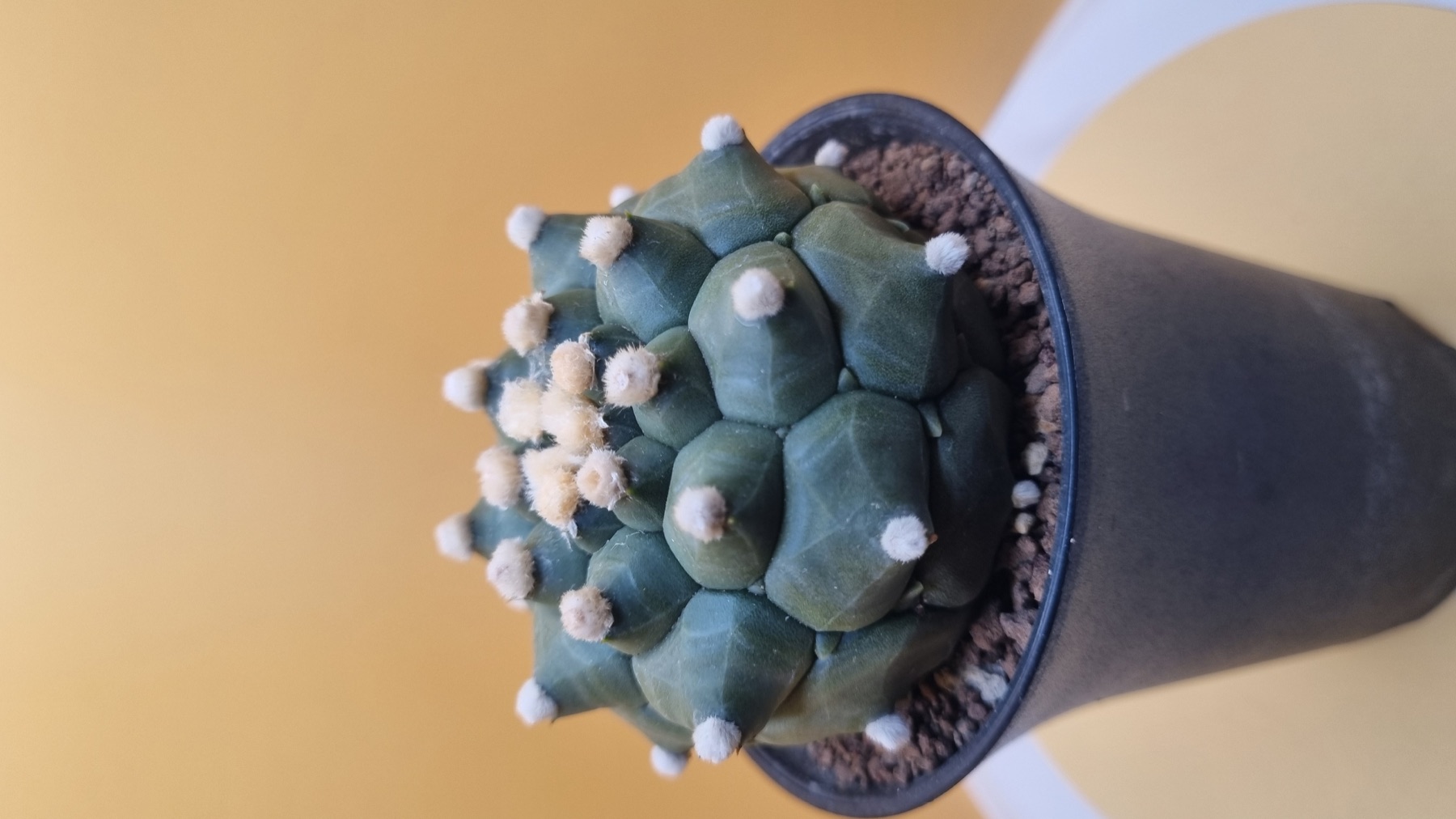
The ribs of this star cactus do not run smoothly from crown to edge. They break into raised, shell-like plates; the green skin makes each notch easy to see.
The collection record calls this Astrophytum asterias ‘Kikko Nudum’. A. asterias is the star cactus; Kikko—亀甲, “tortoise shell”—describes the interrupted, raised rib relief. Nudum means “naked” and, in this horticultural usage, points to the smooth green body with little or none of the usual white flecking. The two details matter together: the skin stays quiet, while the ribs do the sculpting.
This is a cultivated form, not a wild subspecies. The earliest dated reference I could verify for the specific name ‘Kikko Nudum’ is the LLIFLE entry dated 14 November 2005. It describes the plant as nursery-produced and garden-origin. That gives us a firm “by this date”; it does not identify the first grower, the original nursery, or a Japanese city. I have not found a reliable source that does.
The wild species has a much older, better-documented record. A U.S. Fish and Wildlife Service account traces its first collection to Baron von Karwinsky in Tamaulipas in 1843. Joseph Zuccarini named it Echinocactus asterias in 1845; Charles Lemaire transferred it to Astrophytum in 1868. The species’ flat, star-shaped body belongs to nature. The raised Kikko relief is a later horticultural selection, and the “nudum” skin makes this particular expression especially legible.
Star cactus is federally and state endangered in Texas, assessed as Vulnerable globally, and listed in CITES Appendix I. Those protections concern the species and trade in specimens—not a claim that this cultivated plant was collected from the wild. Its own acquisition details and wild provenance have not been recorded, so the passport keeps that gap visible.