
Plantastic living collection
Astrophytum
A living index of owner-grown plants. Start with a species, compare its cultivated forms, then open any record for photographs, identity, history and growing notes.
Collection index
Choose a species, then a specimen.
Astrophytum asterias
Low, star-shaped plants where surface pattern, rib shape and Japanese cultivar selection become the main story.
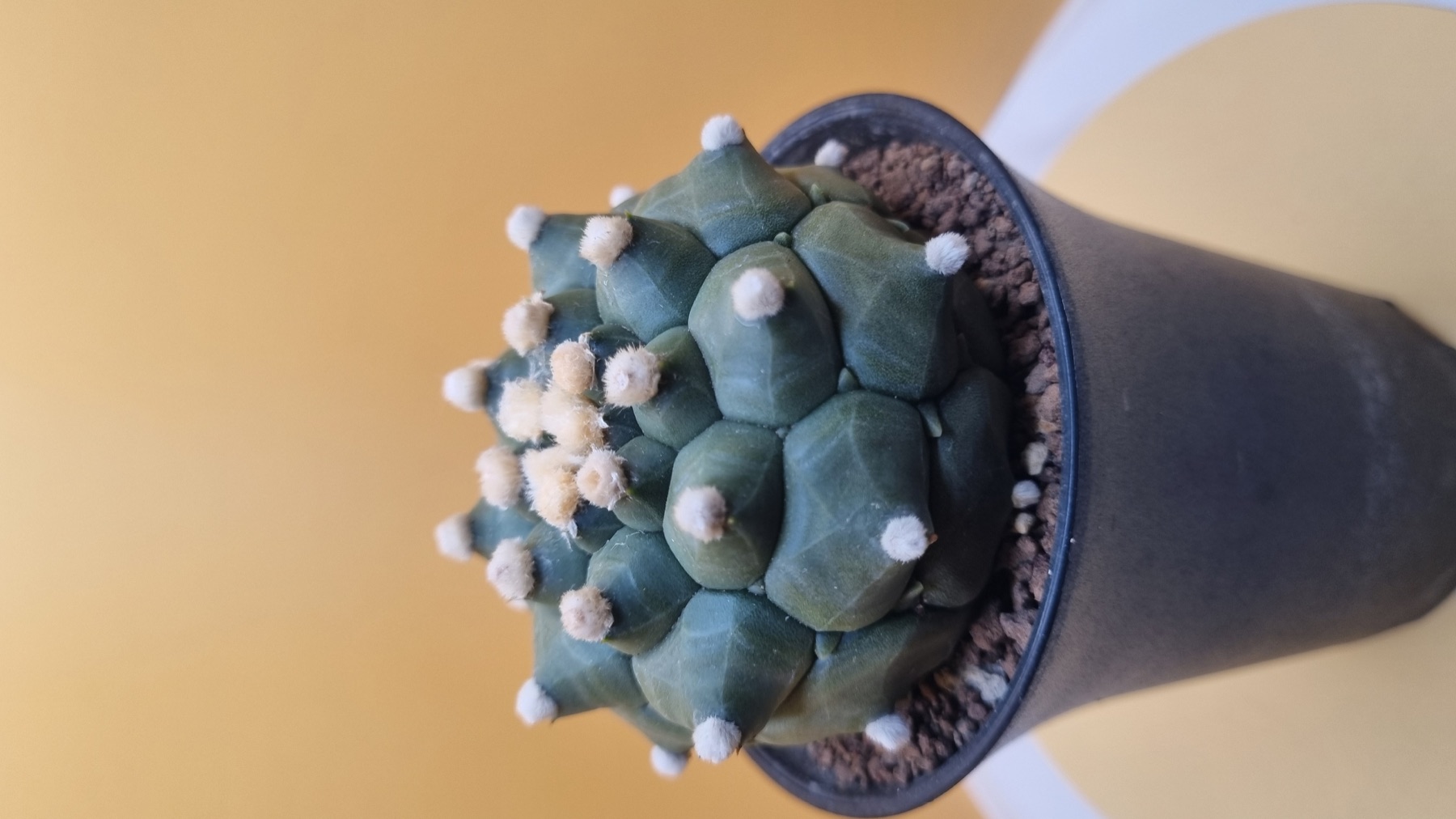
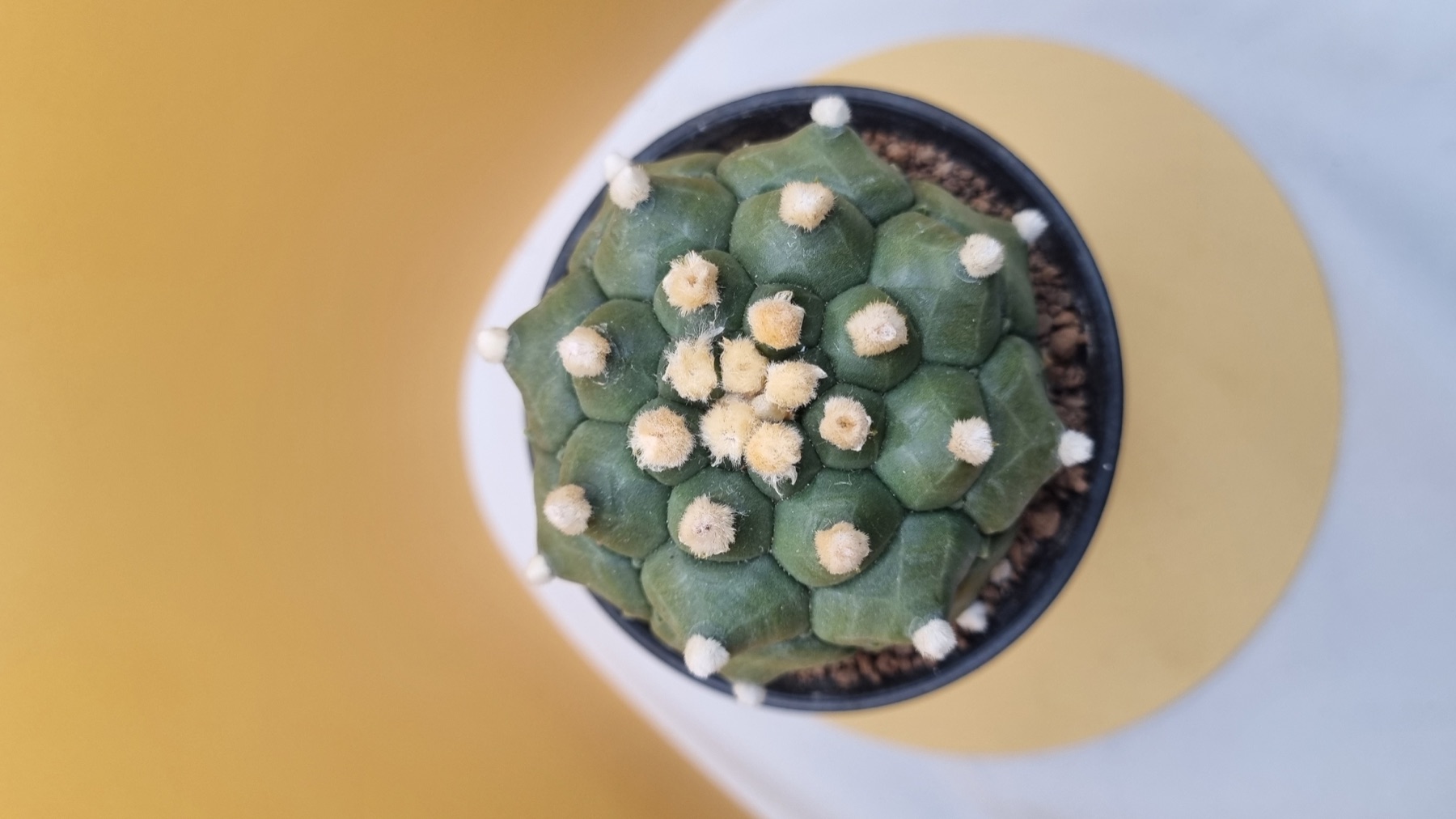
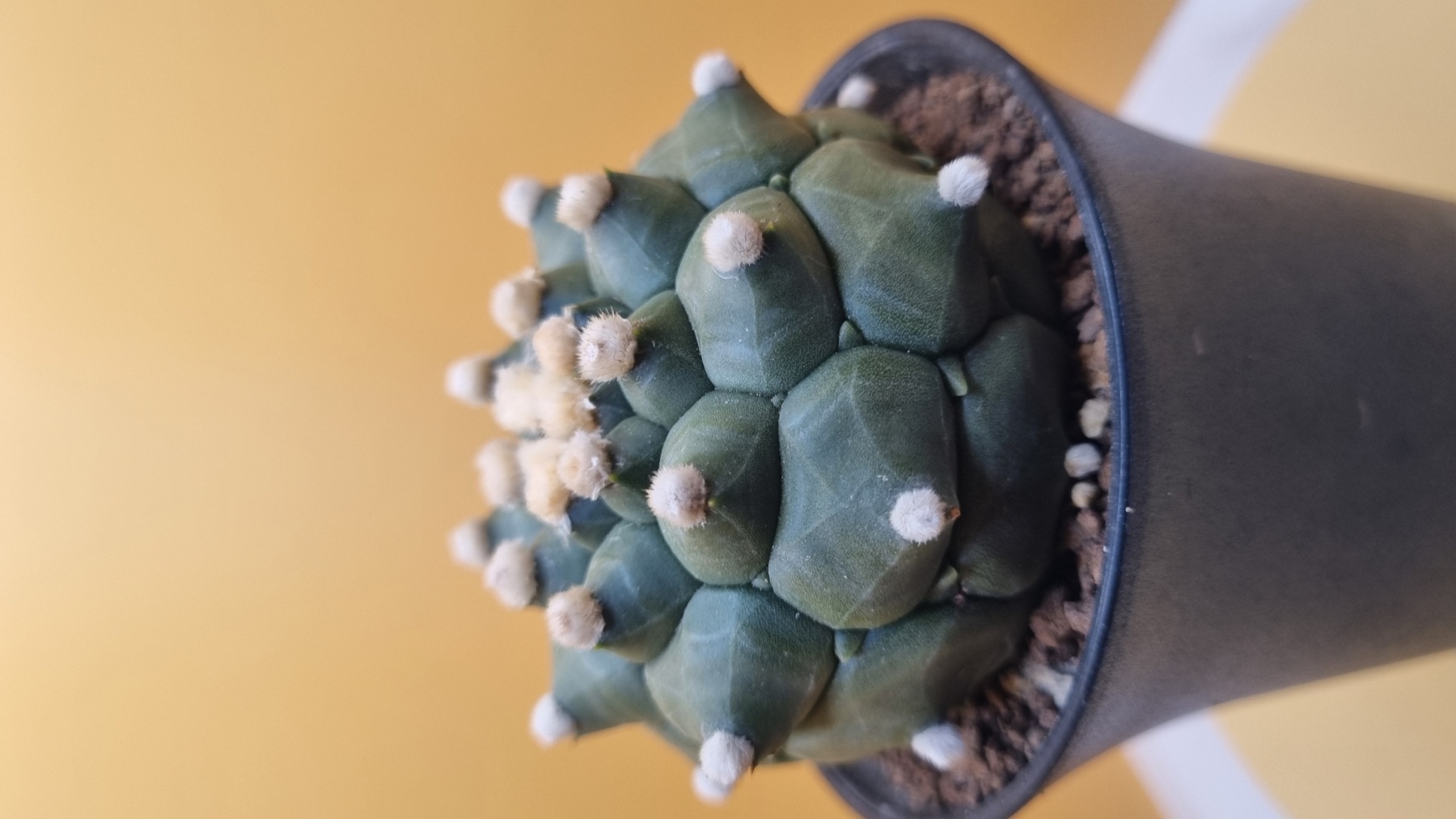
Kikko Nudum
A green, shell-relief asterias with reduced flecking and a compact, sculptural crown.
- Origin
- Japanese horticultural selection
- Look for
- Geometric · Nudum
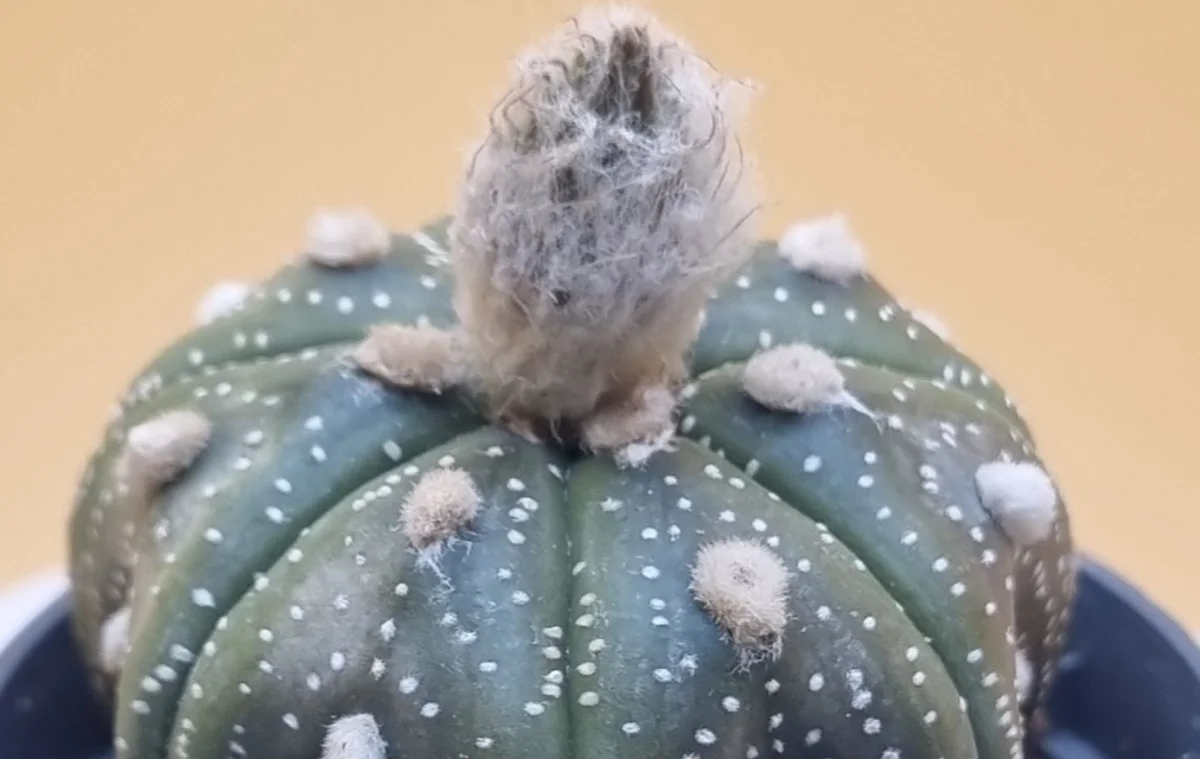
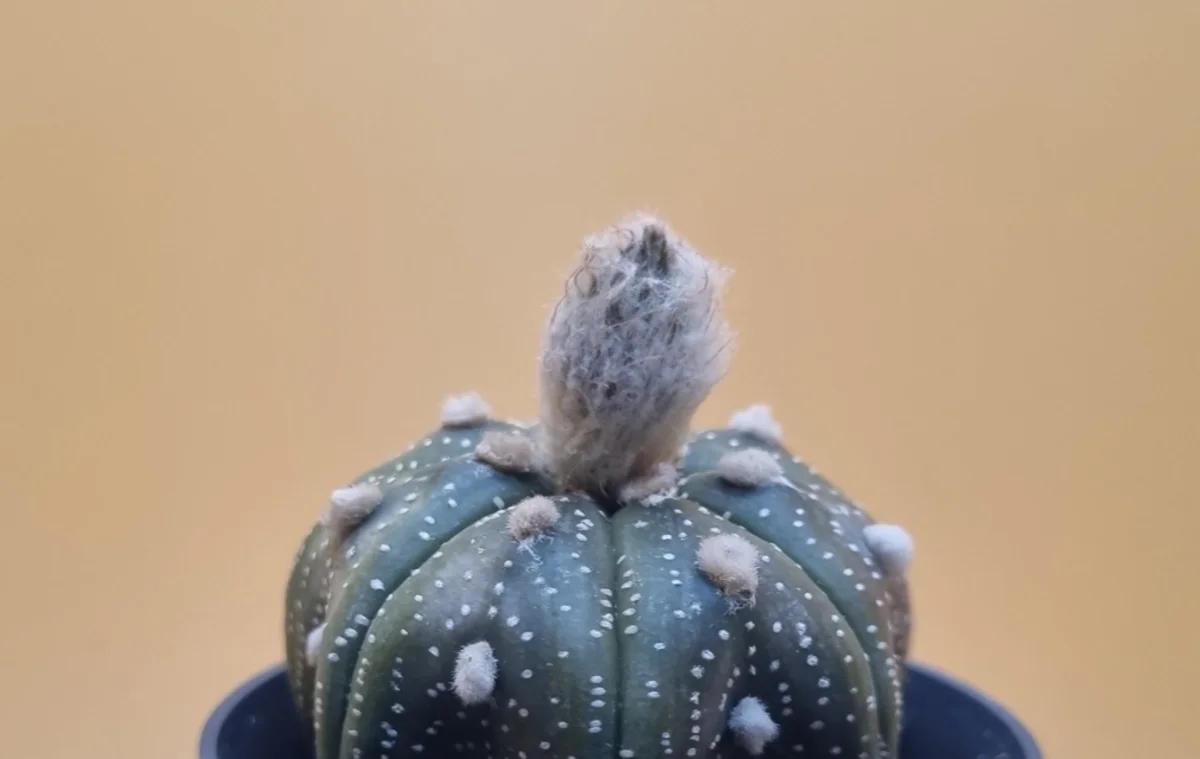
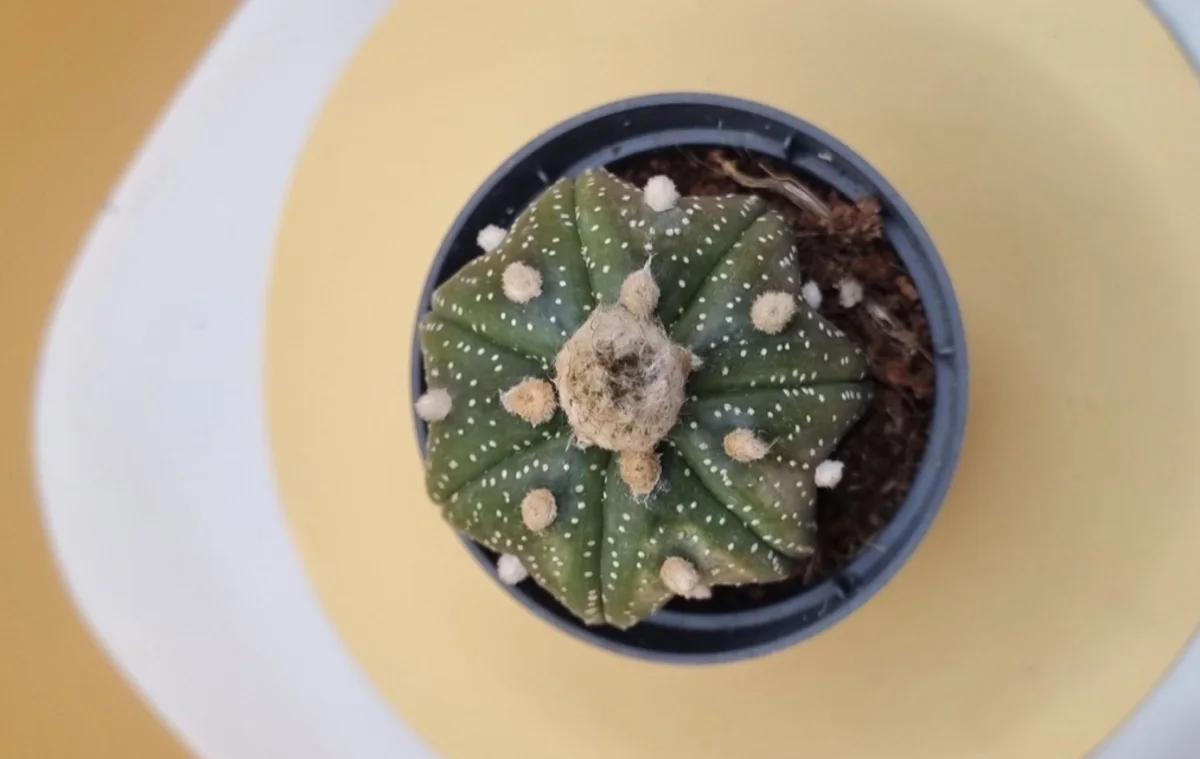
Starshape Nudum
A low, star-shaped body with a clear pattern of white flecks; recorded here under the working collection name Starshape Nudum.
- Origin
- South Texas to northeastern Mexico
- Look for
- Star-shaped · Nudum
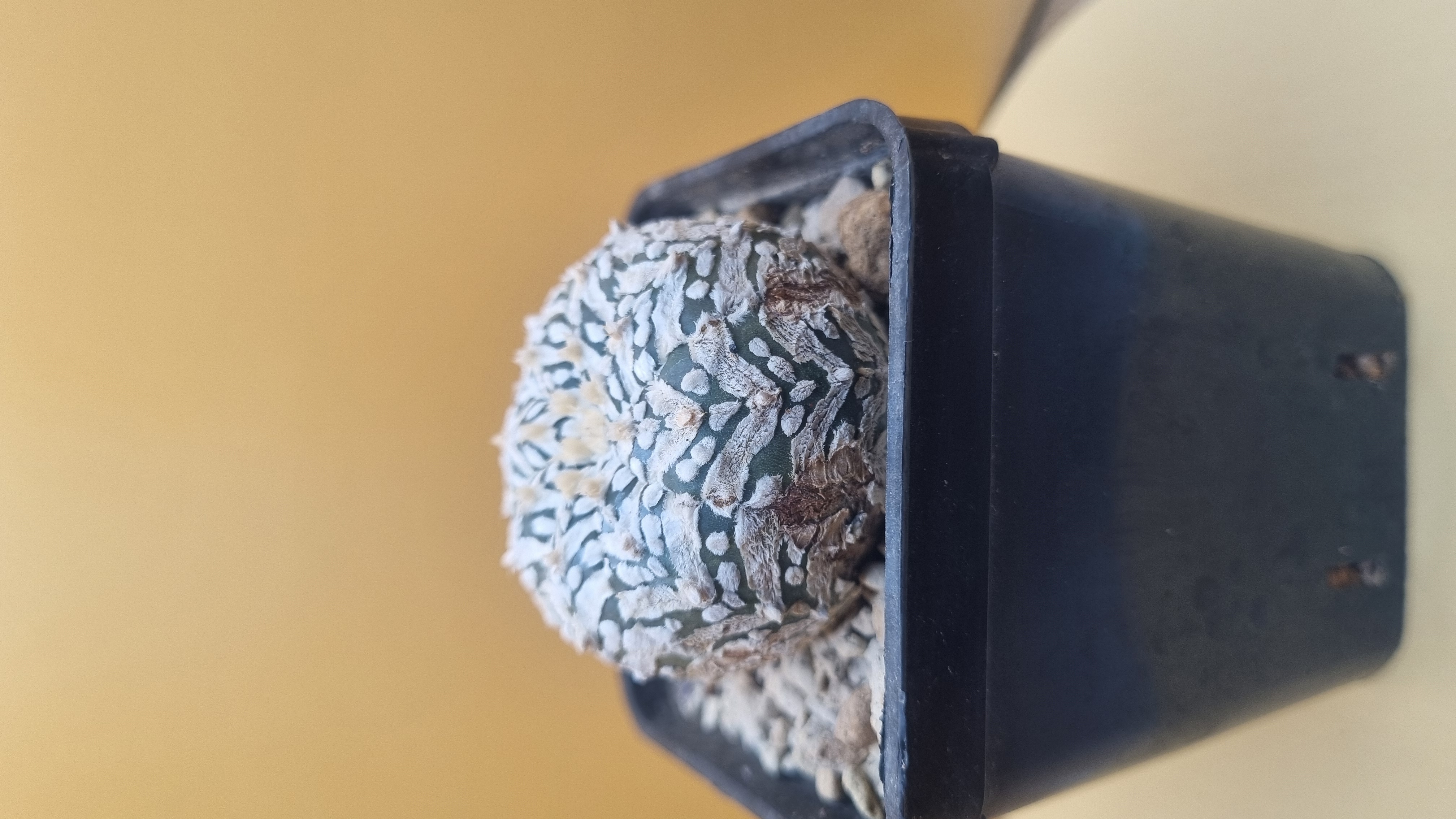
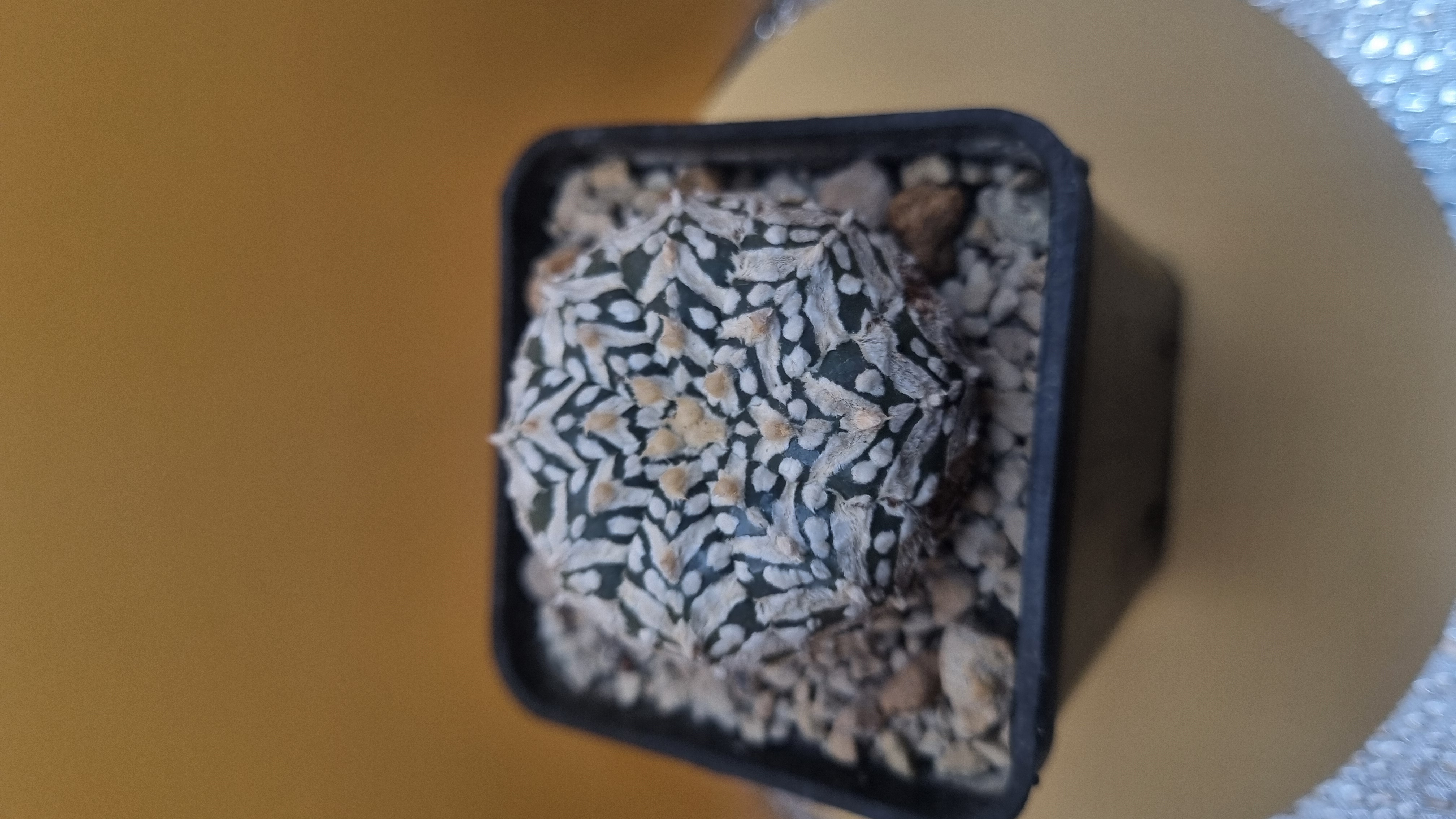
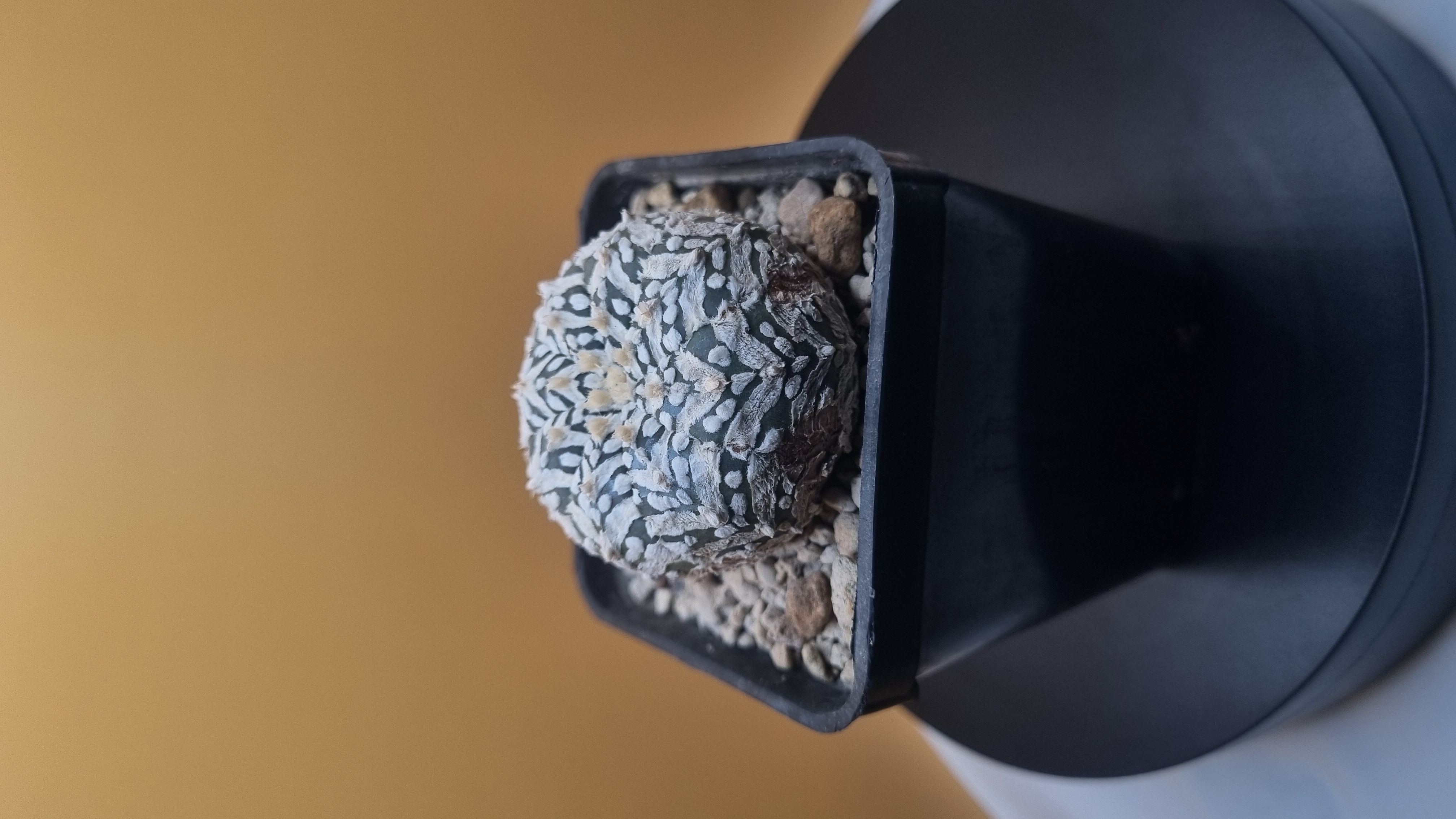
Super Kabuto Snowflake
A densely flecked Snow Type Super Kabuto whose white trichomes almost veil the green body beneath.
- Origin
- Japanese horticultural lineage
- Look for
- Patterned · Spineless
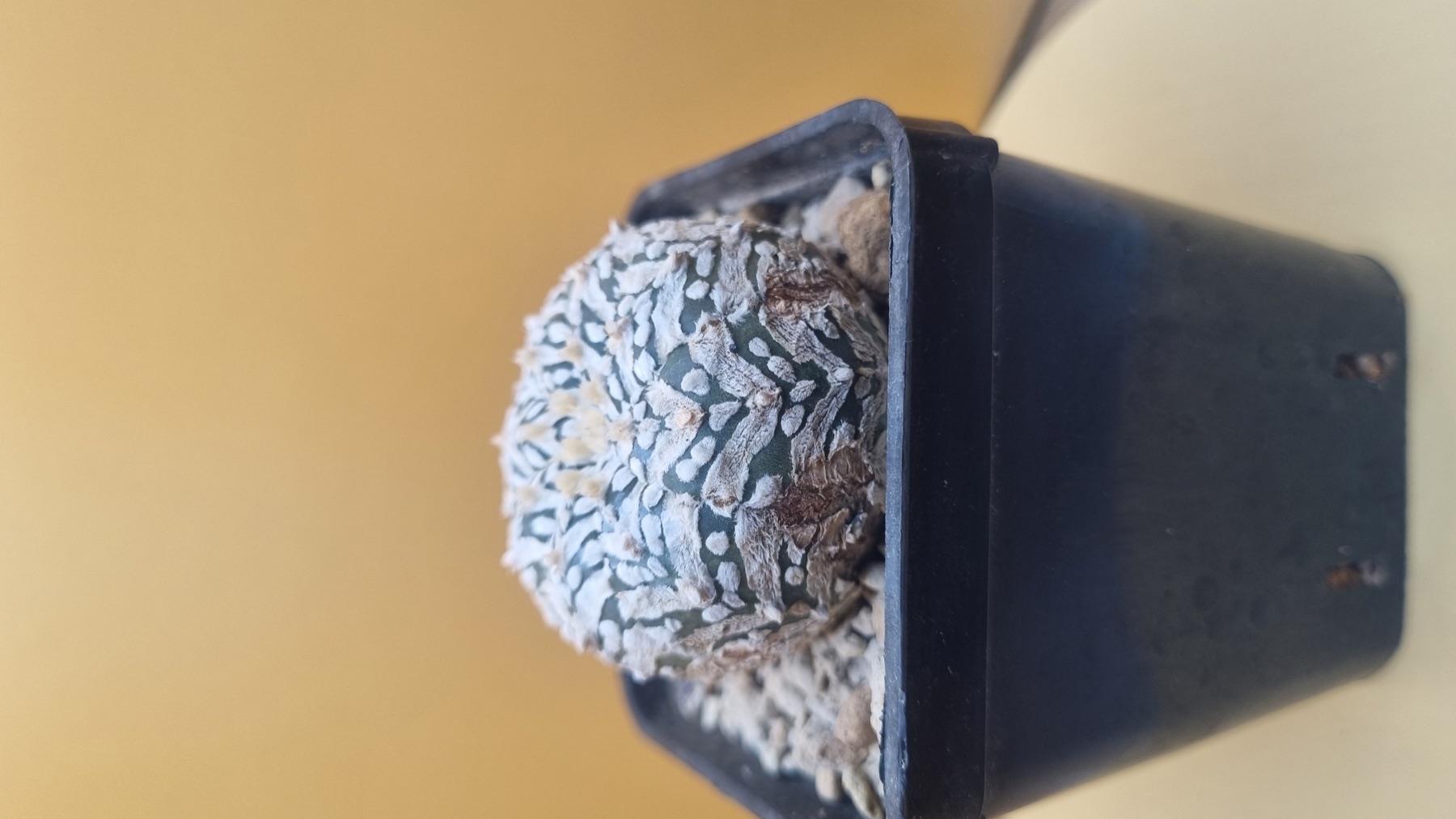
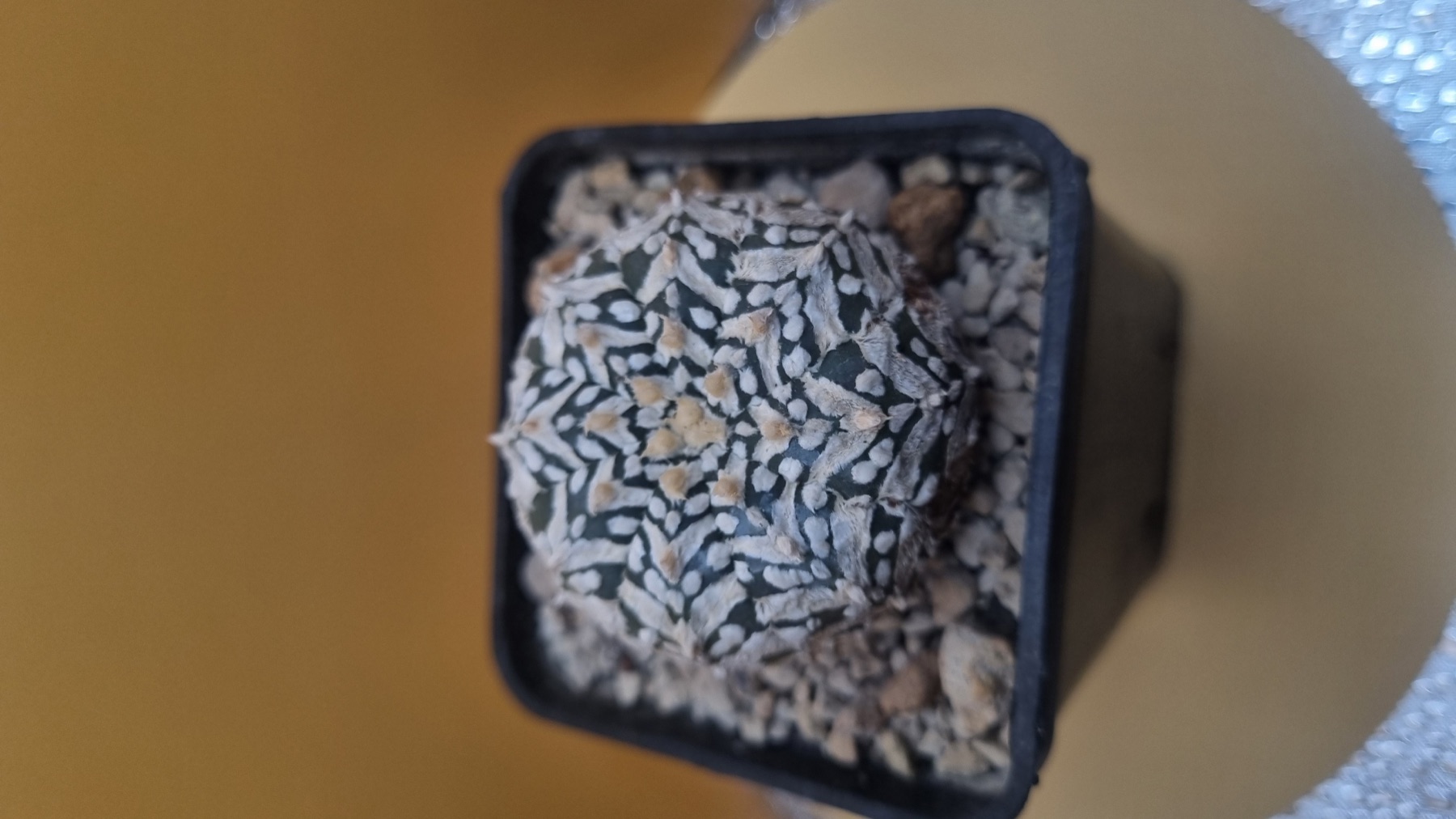
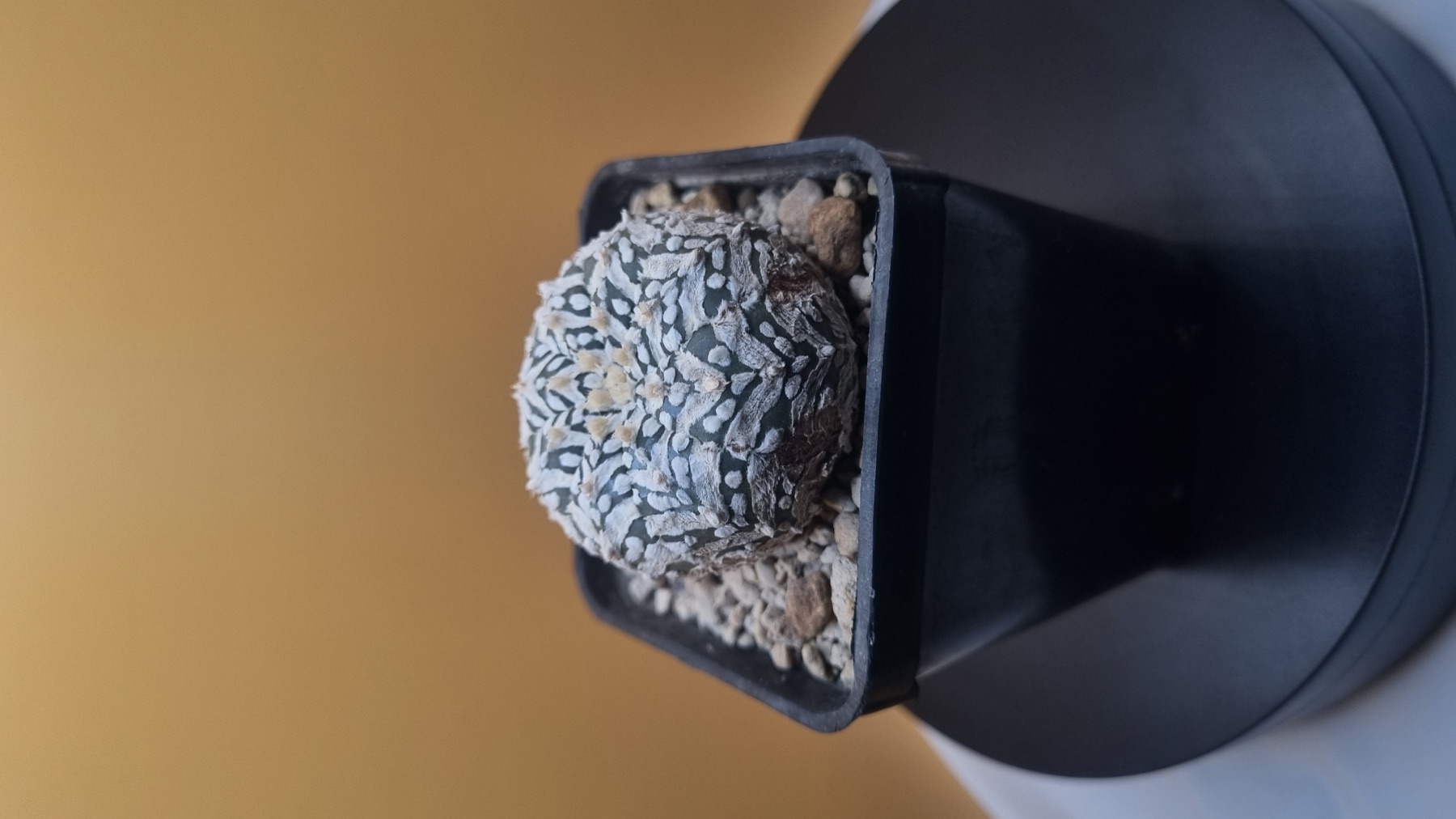
V-Shape Super Kabuto
A green Astrophytum asterias with white trichomes arranged in a directional V-shaped pattern across its ribs.
- Origin
- Garden origin
- Look for
- Patterned · Spineless
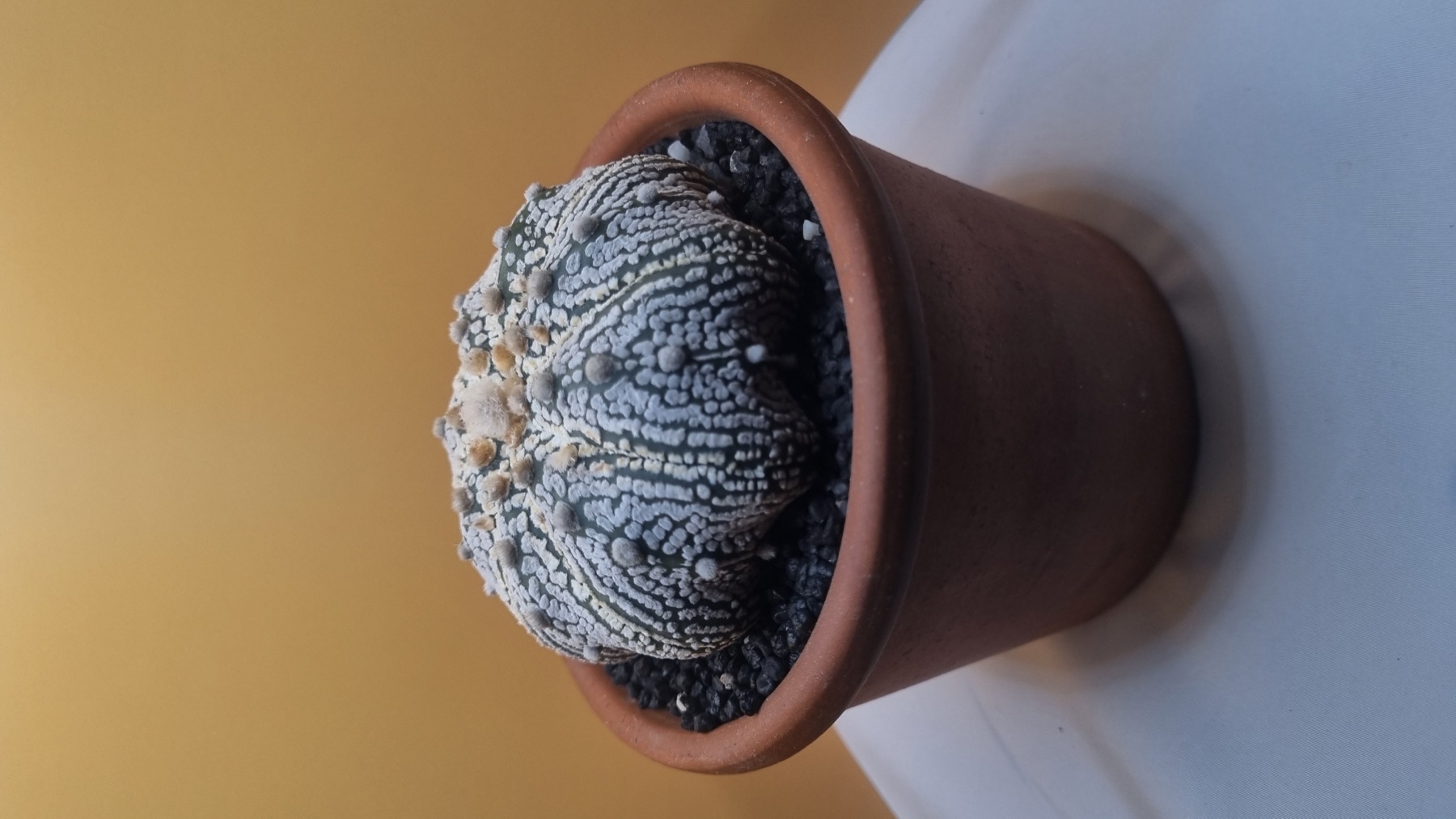
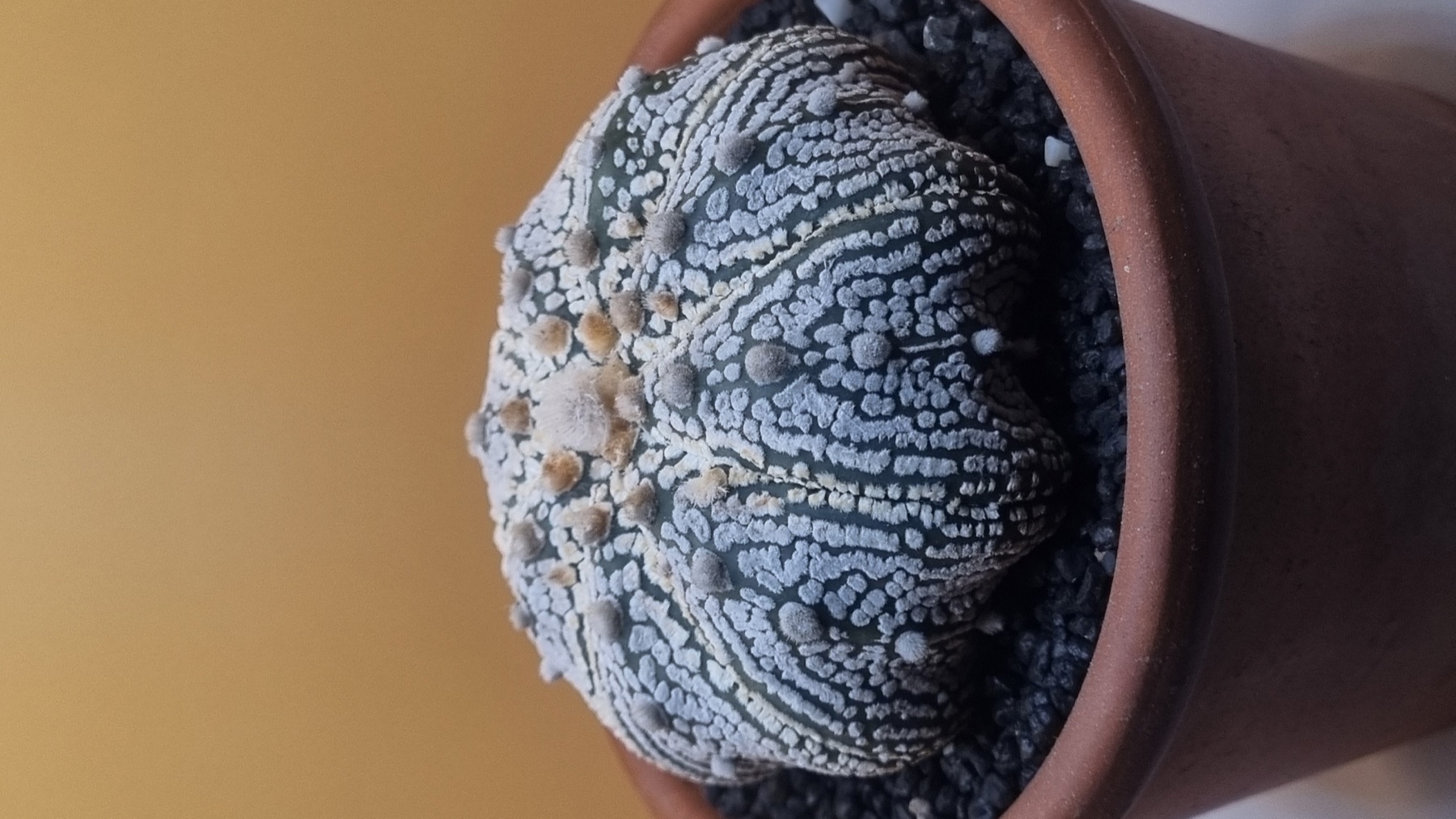
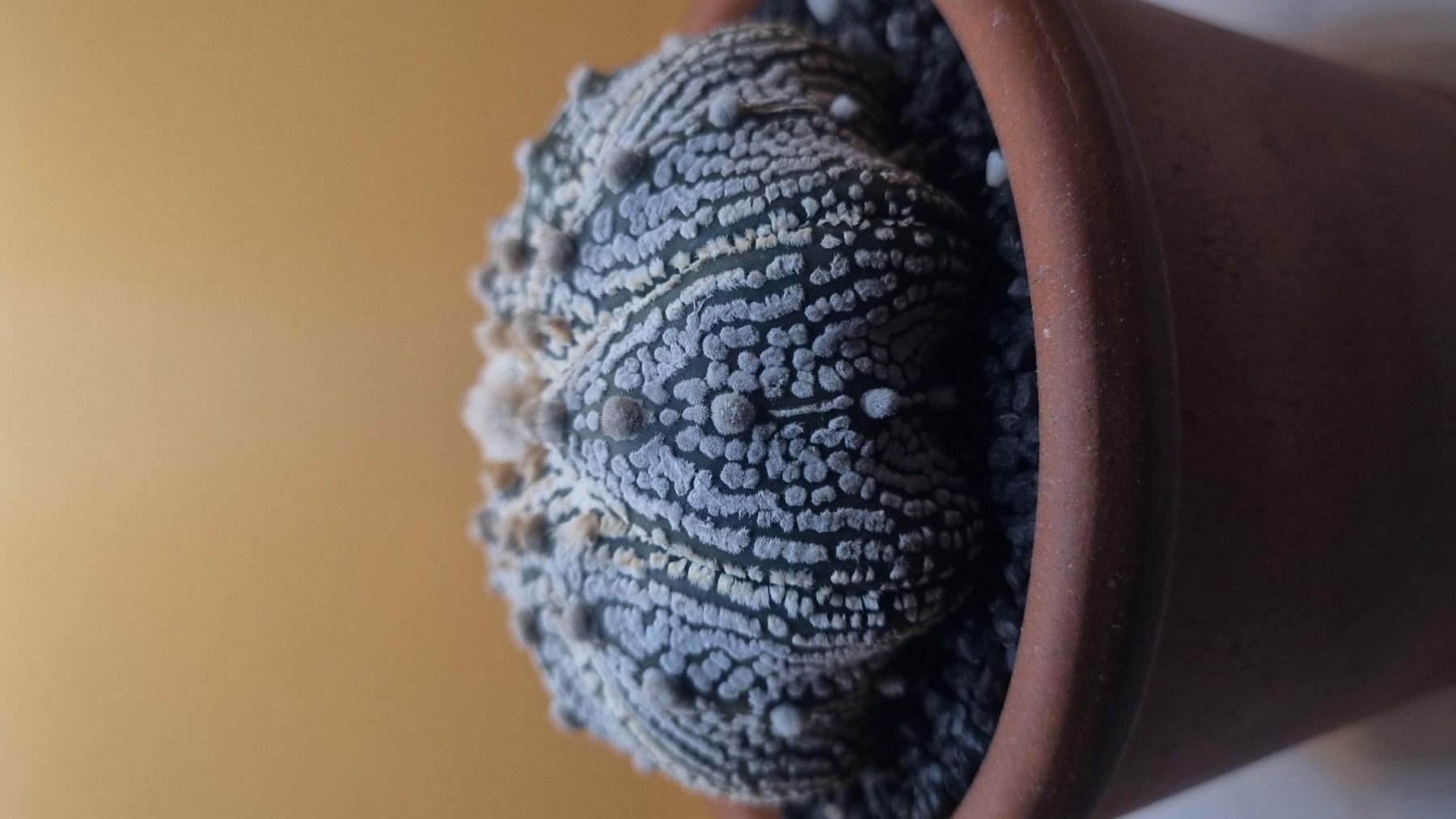
Super Kabuto Star Shape
A dark, densely patterned Super Kabuto with a distinctly star-shaped body and ribs that pull the silhouette into living geometry.
- Origin
- Japanese horticultural lineage
- Look for
- Patterned · Spineless
Astrophytum myriostigma
Spineless architecture explored through rib count, sculptural Kikko relief and named white-pattern lines.
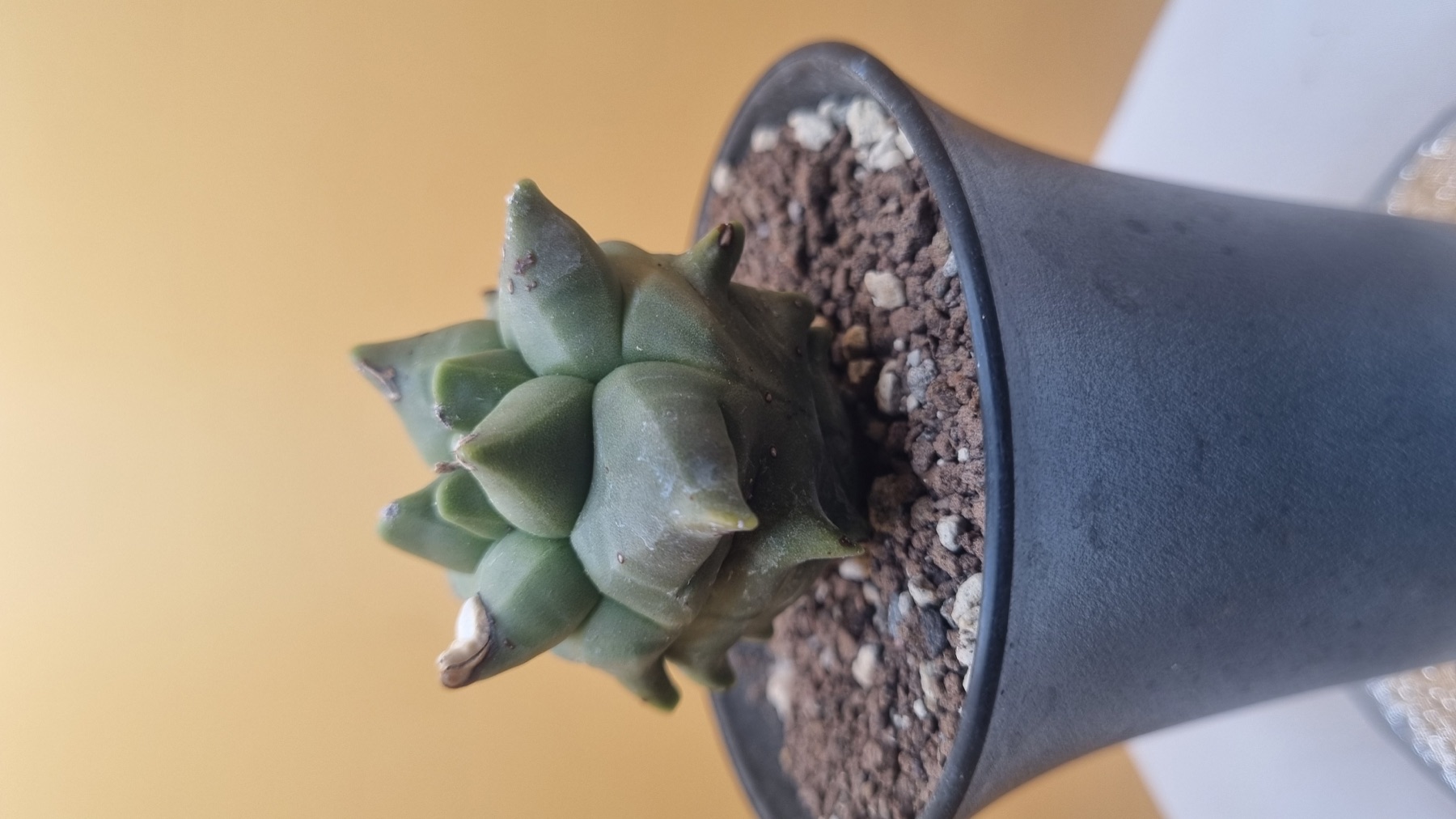
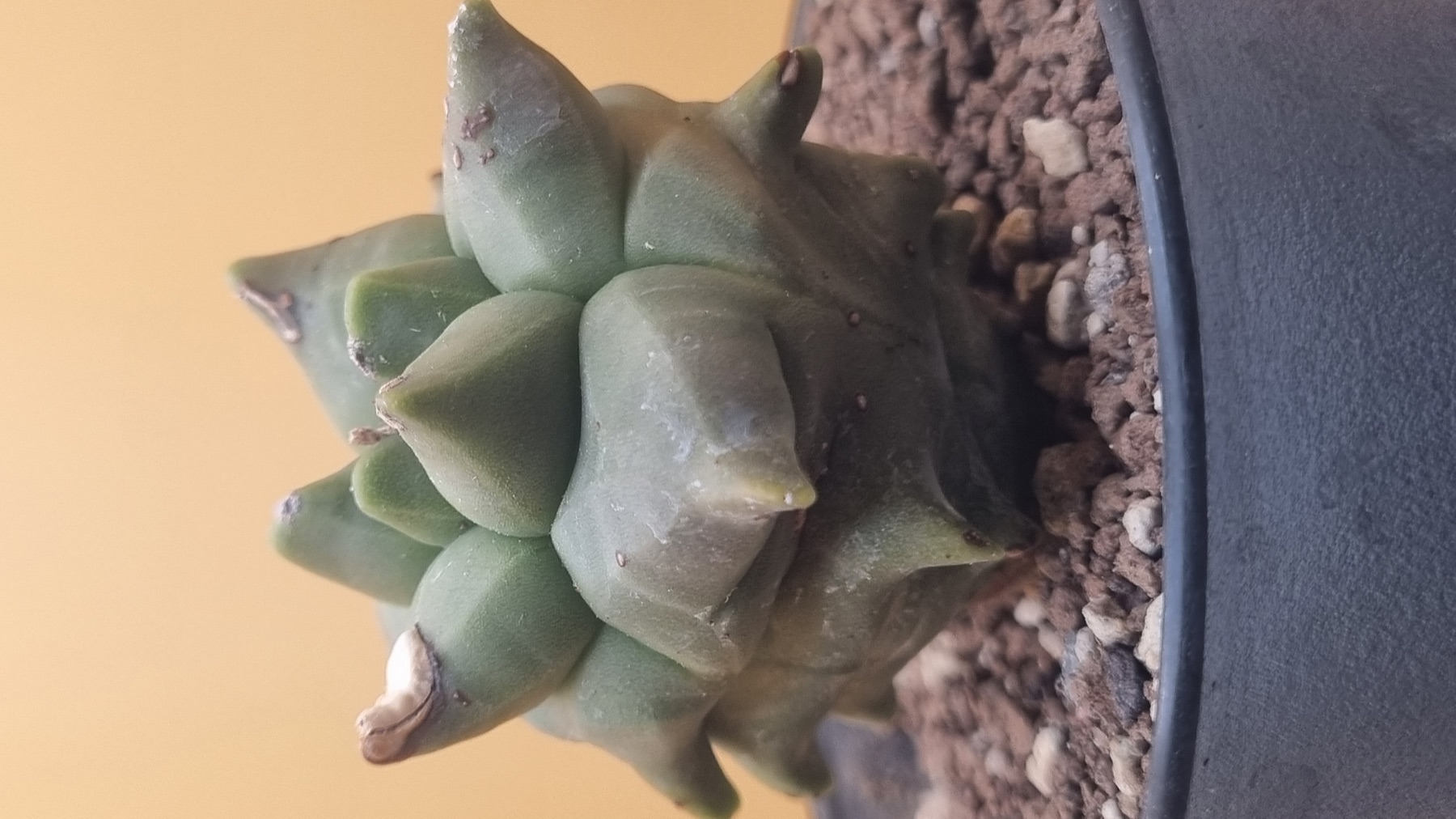
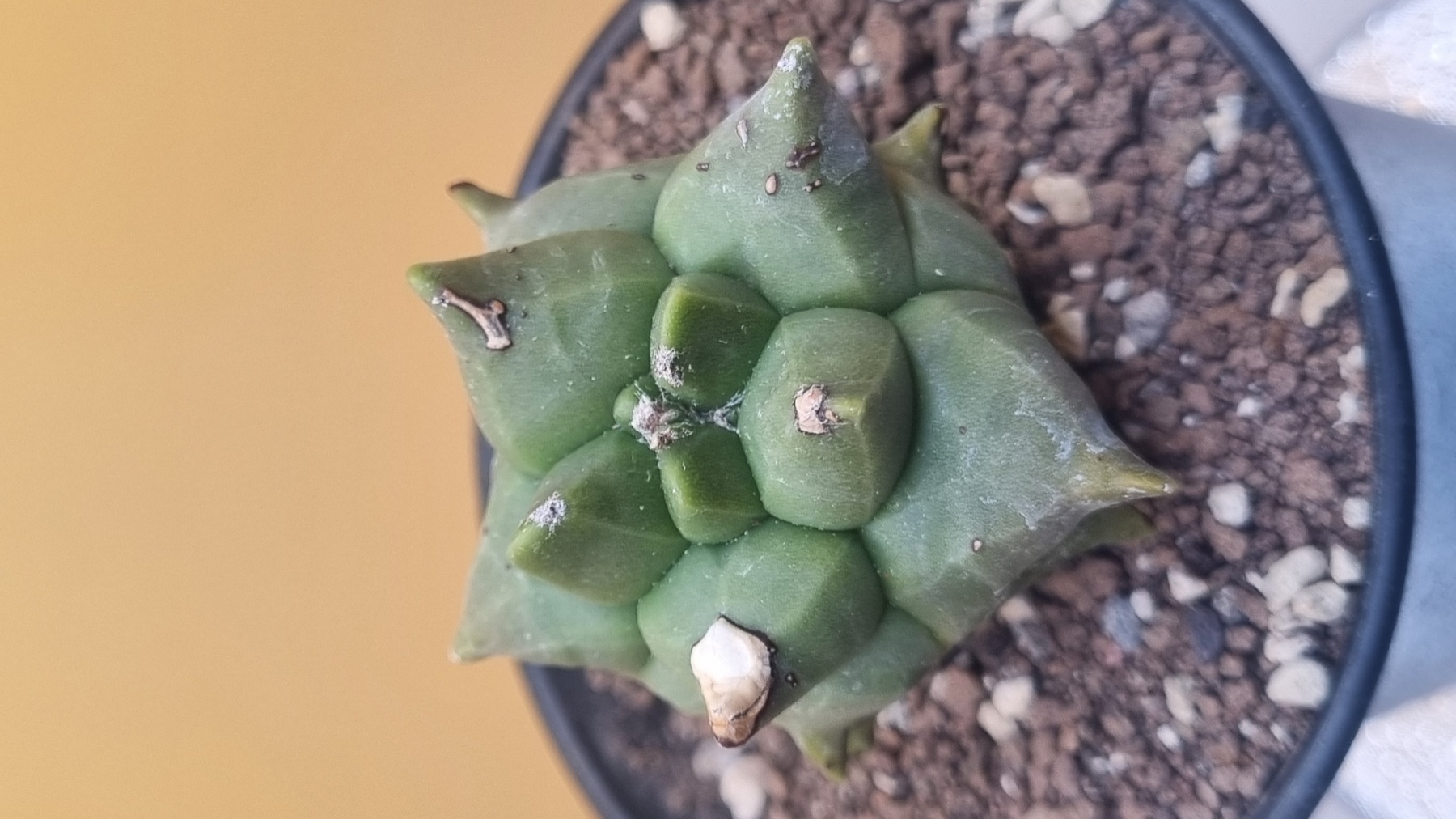
Kikko
A sculptural myriostigma whose raised, tortoise-shell facets turn the familiar ribs into an architectural surface.
- Origin
- Japanese horticultural selection
- Look for
- Geometric · Spineless
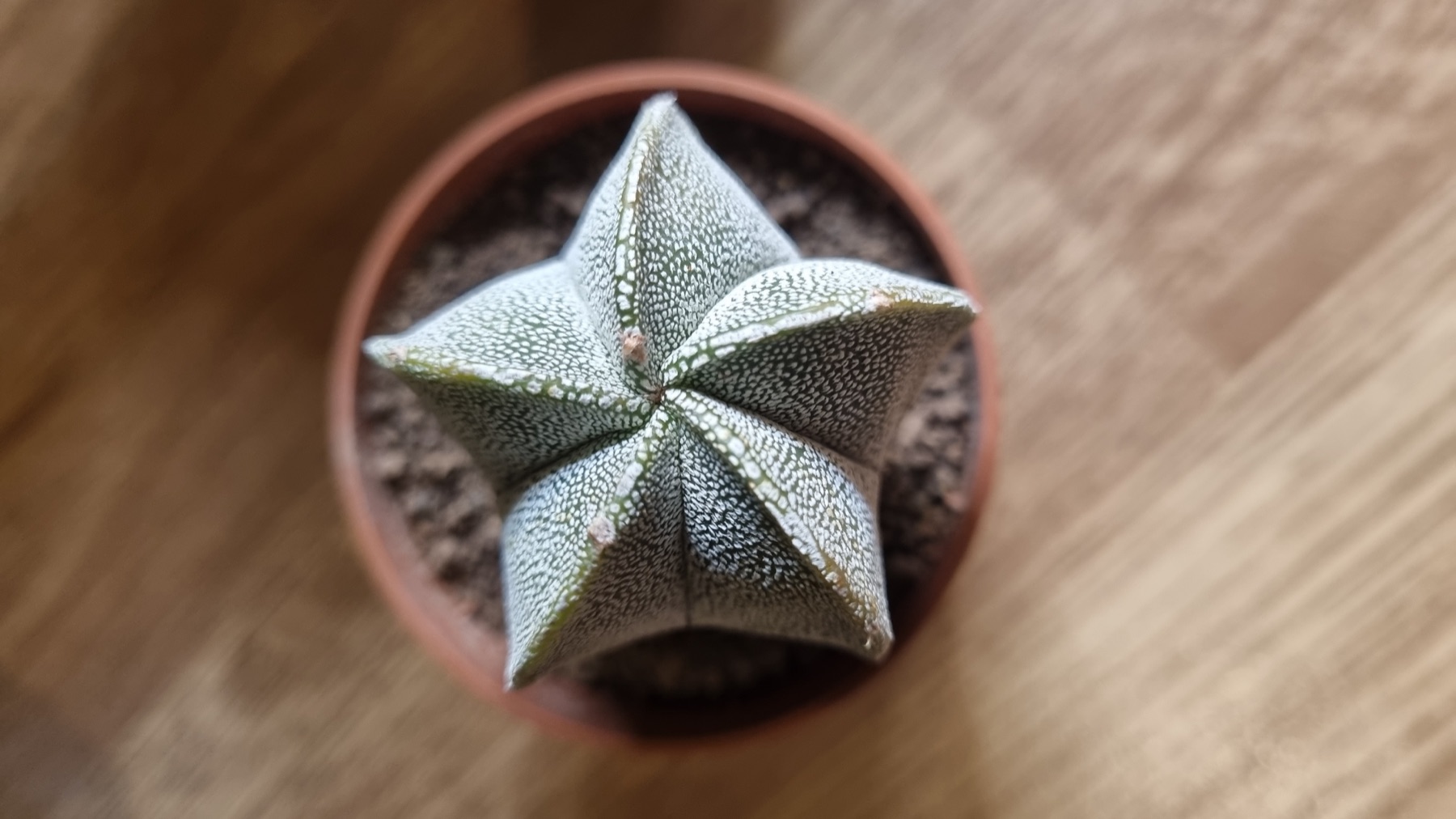
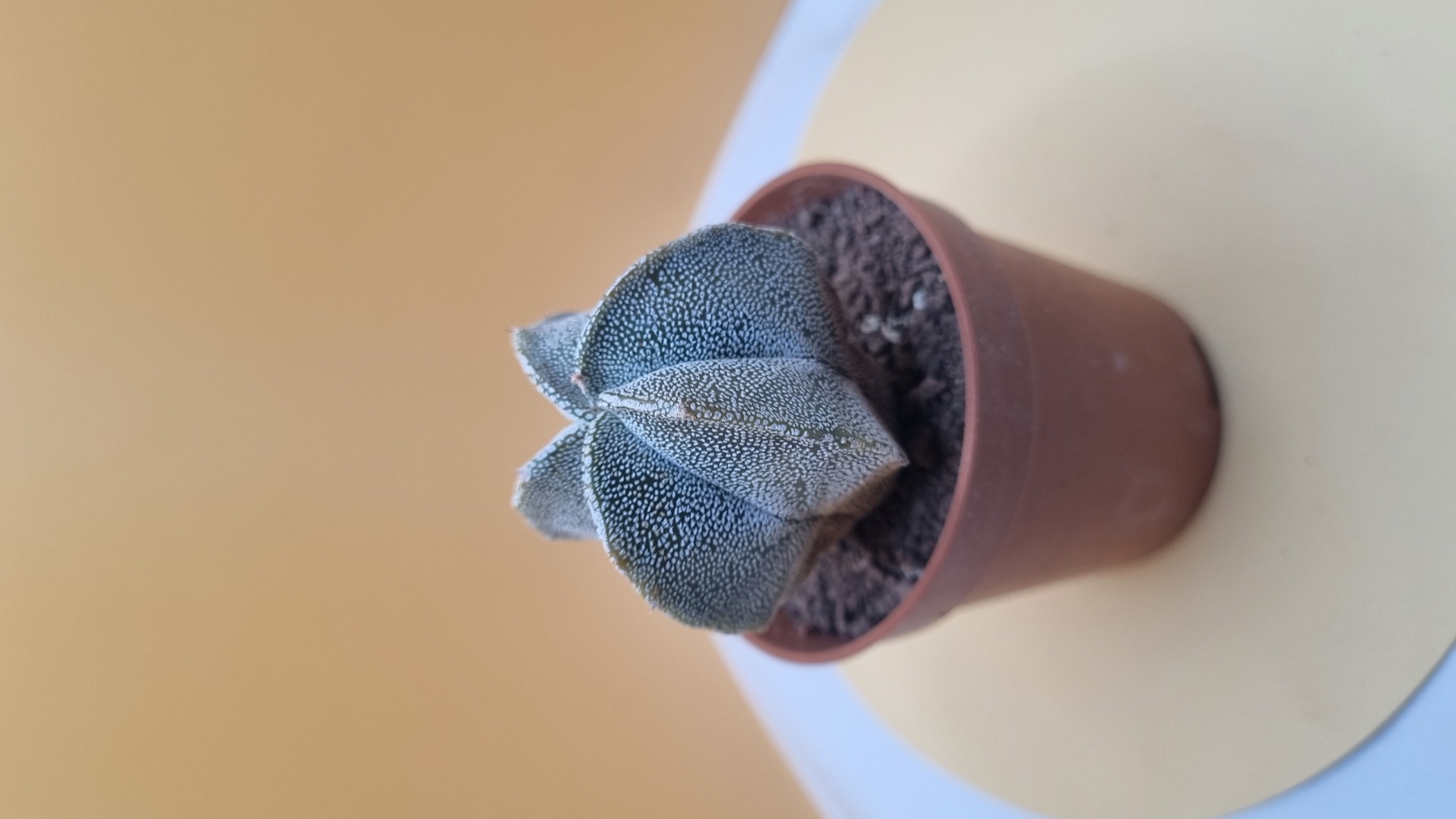
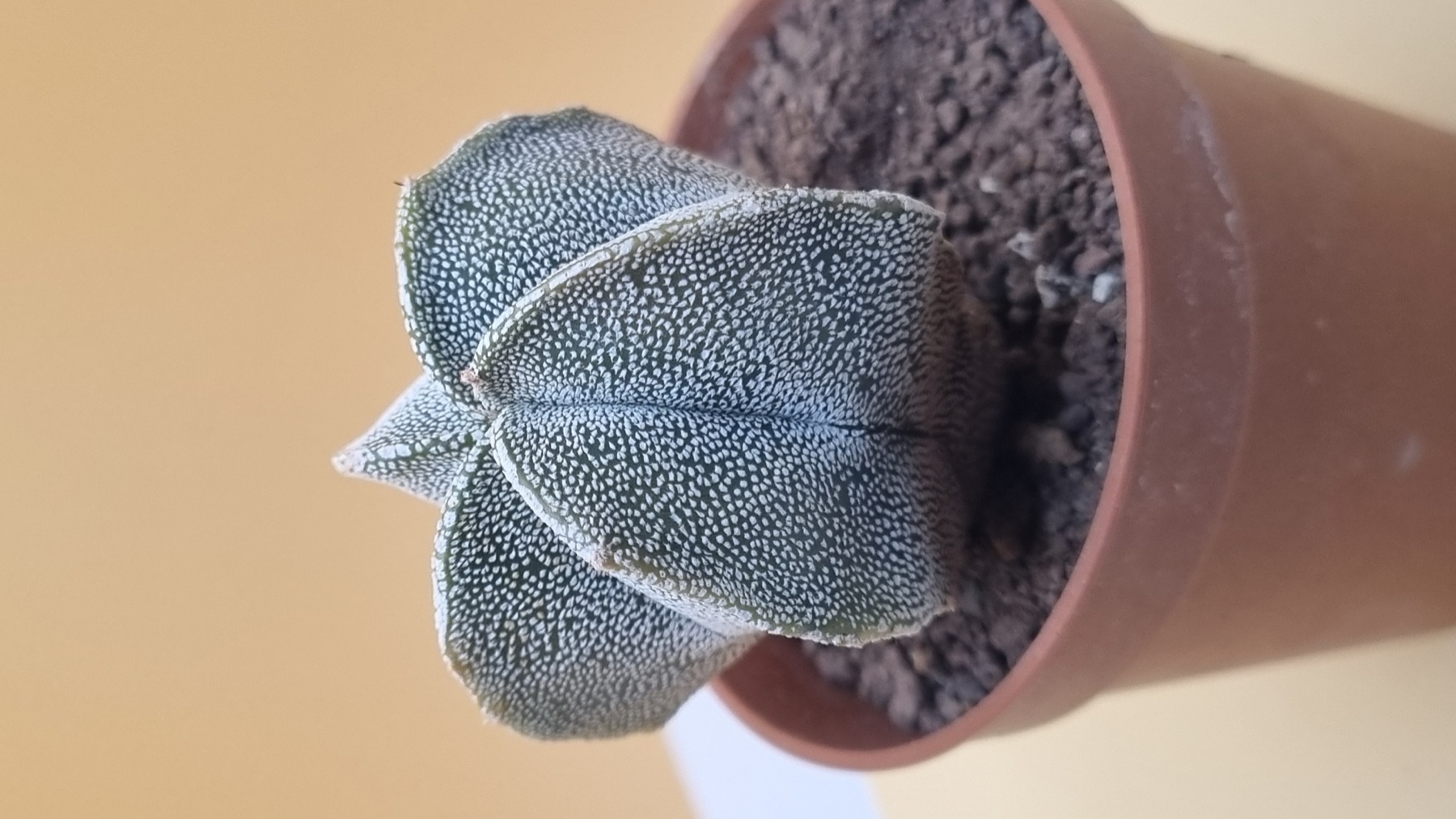
Onzuka
A Japanese-grown myriostigma whose white flecks break the green ribs into a shifting constellation.
- Origin
- Japanese horticultural lineage
- Look for
- Patterned · Geometric
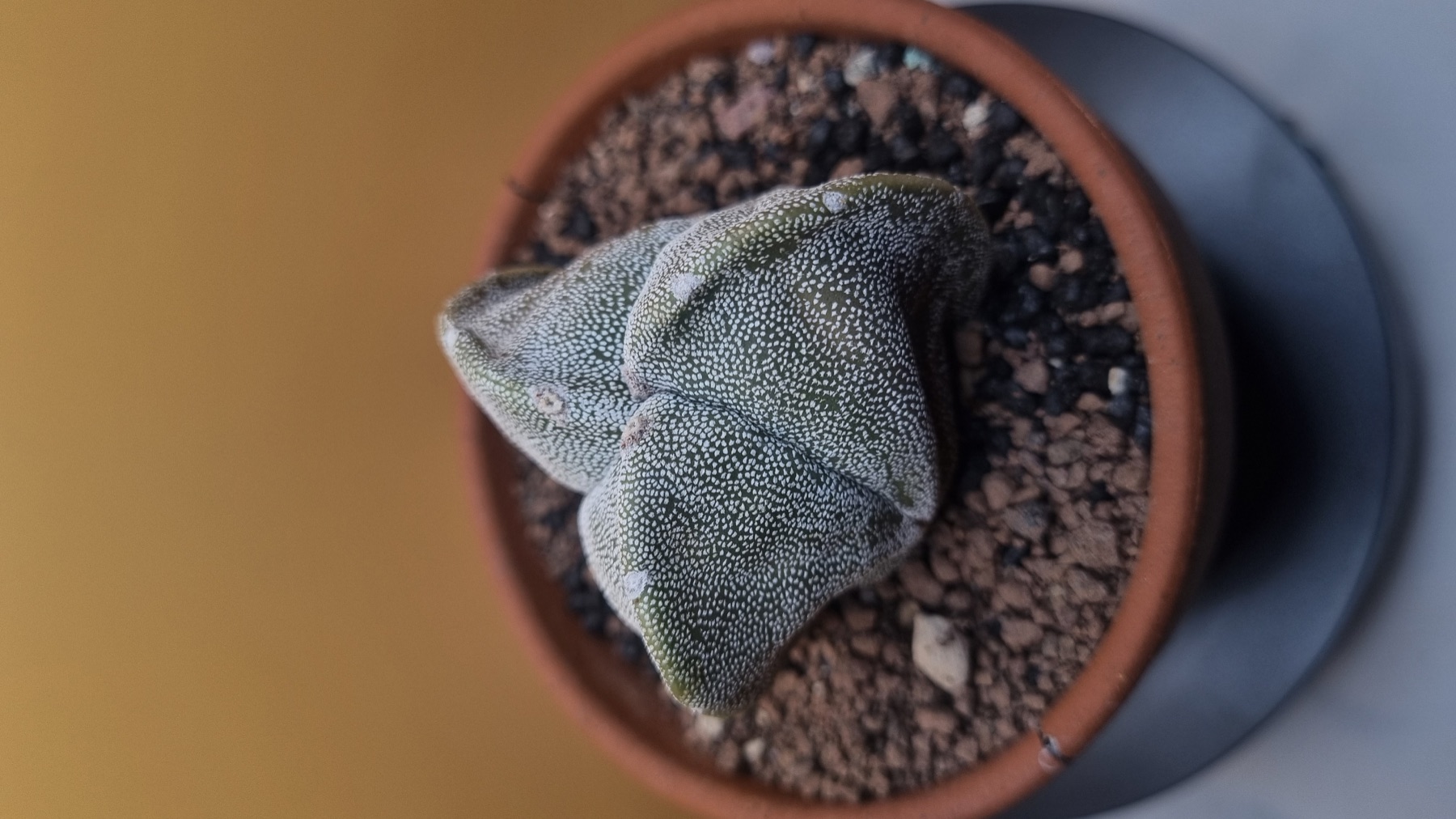
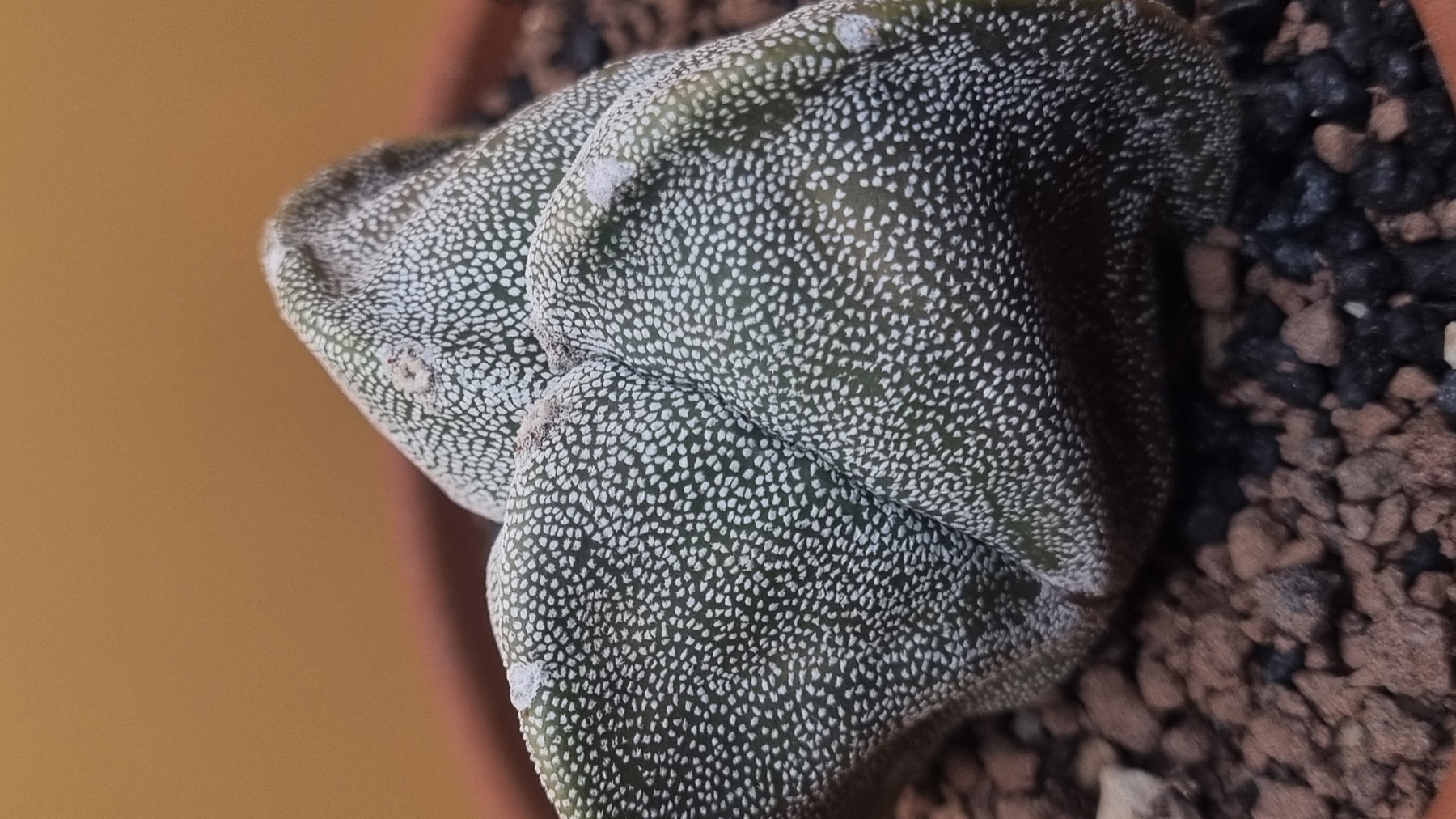
Tricostatum
A rare three-ribbed expression of myriostigma whose triangular plan makes the plant read almost like a designed object.
- Origin
- Horticultural form
- Look for
- Geometric · Spineless
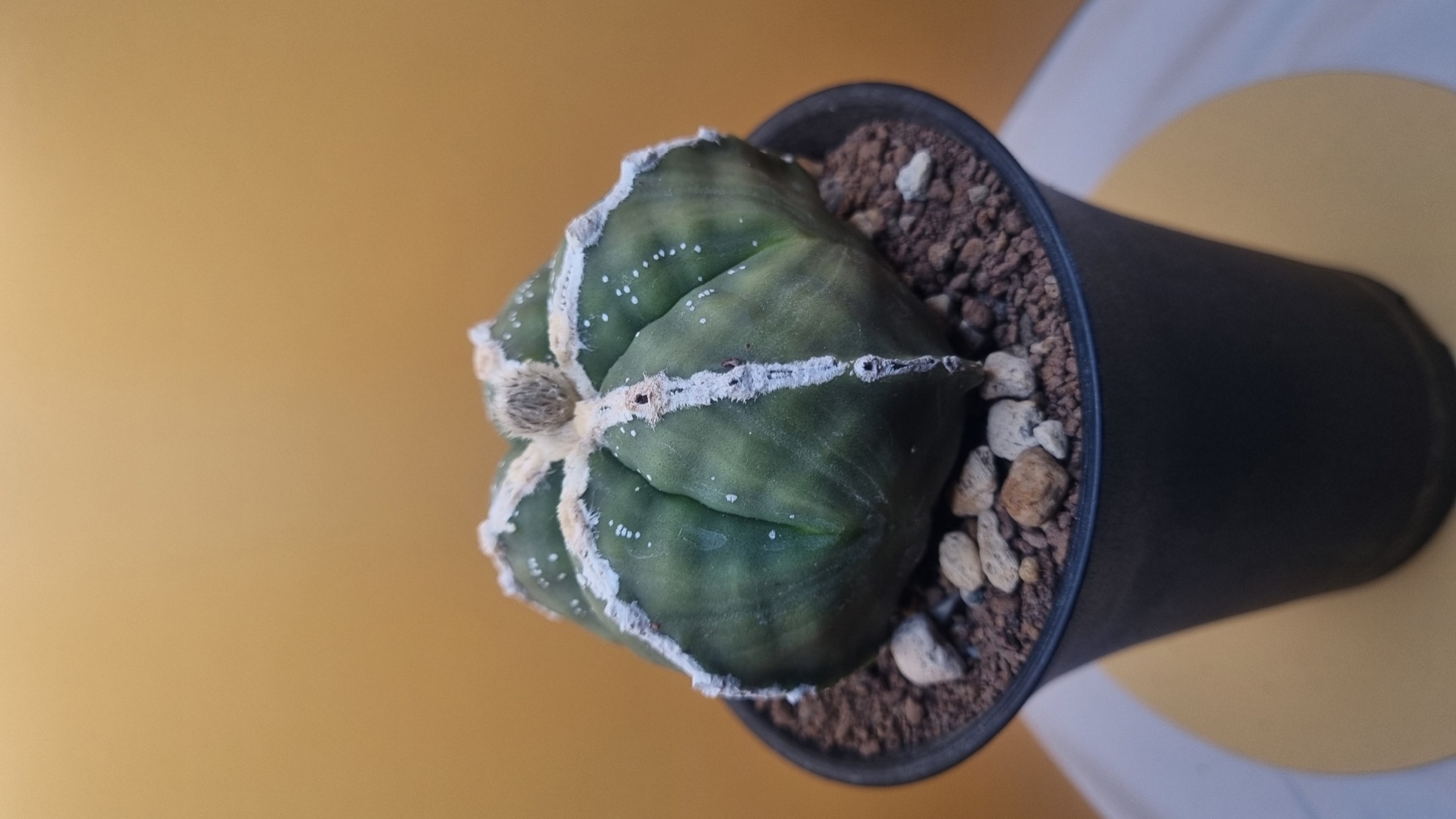
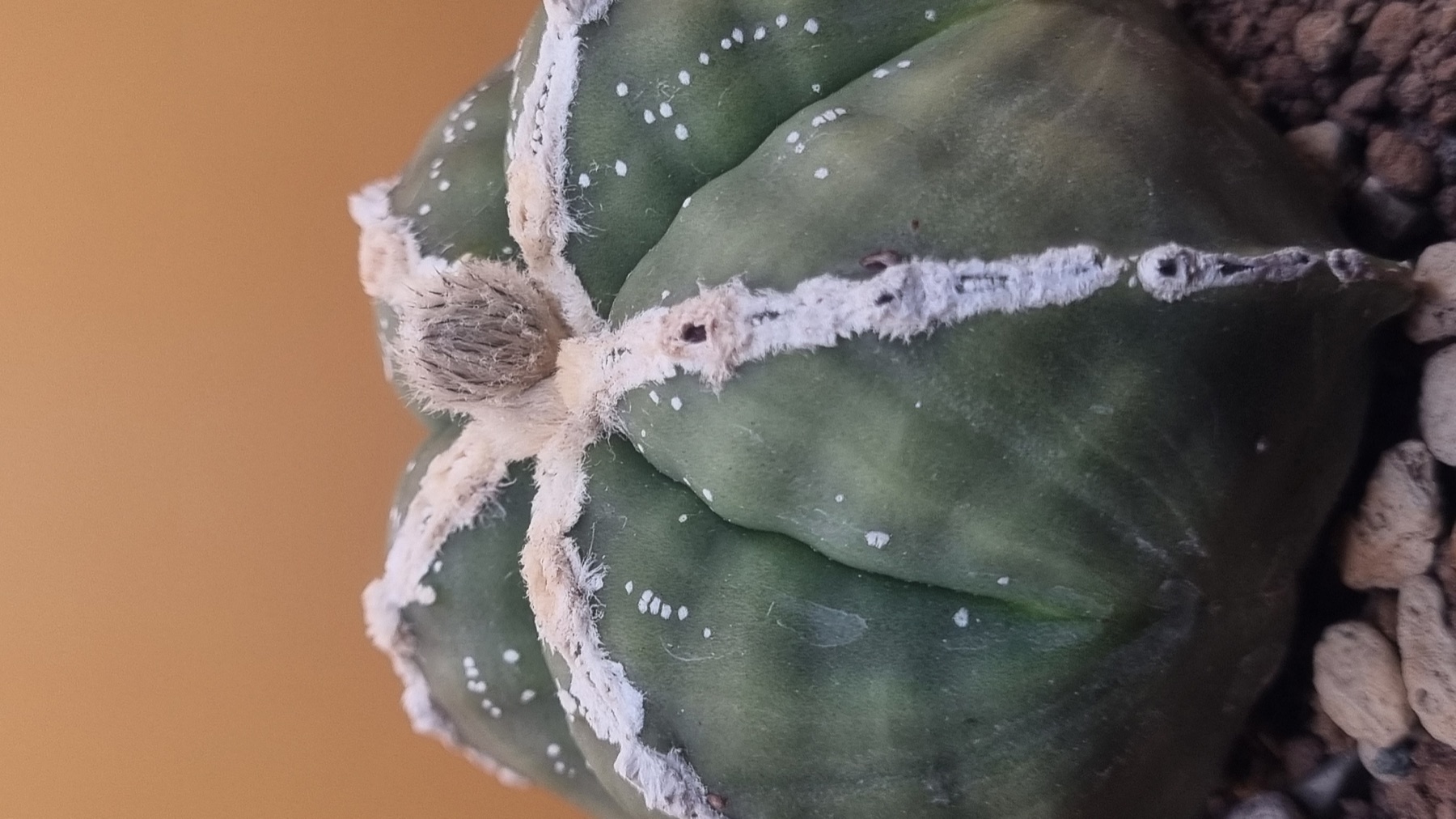
Haku-jo Nudum
A green, strongly ribbed Astrophytum with white felted lines tracing the areoles and rib edges of a Haku-jo nudum form.
- Origin
- Japanese horticultural lineage
- Look for
- Patterned · Spineless
Astrophytum coahuilense
Dense pale flecking and strong rib structure, represented here by a four-rib form and the dramatic Hakuran Kikko.
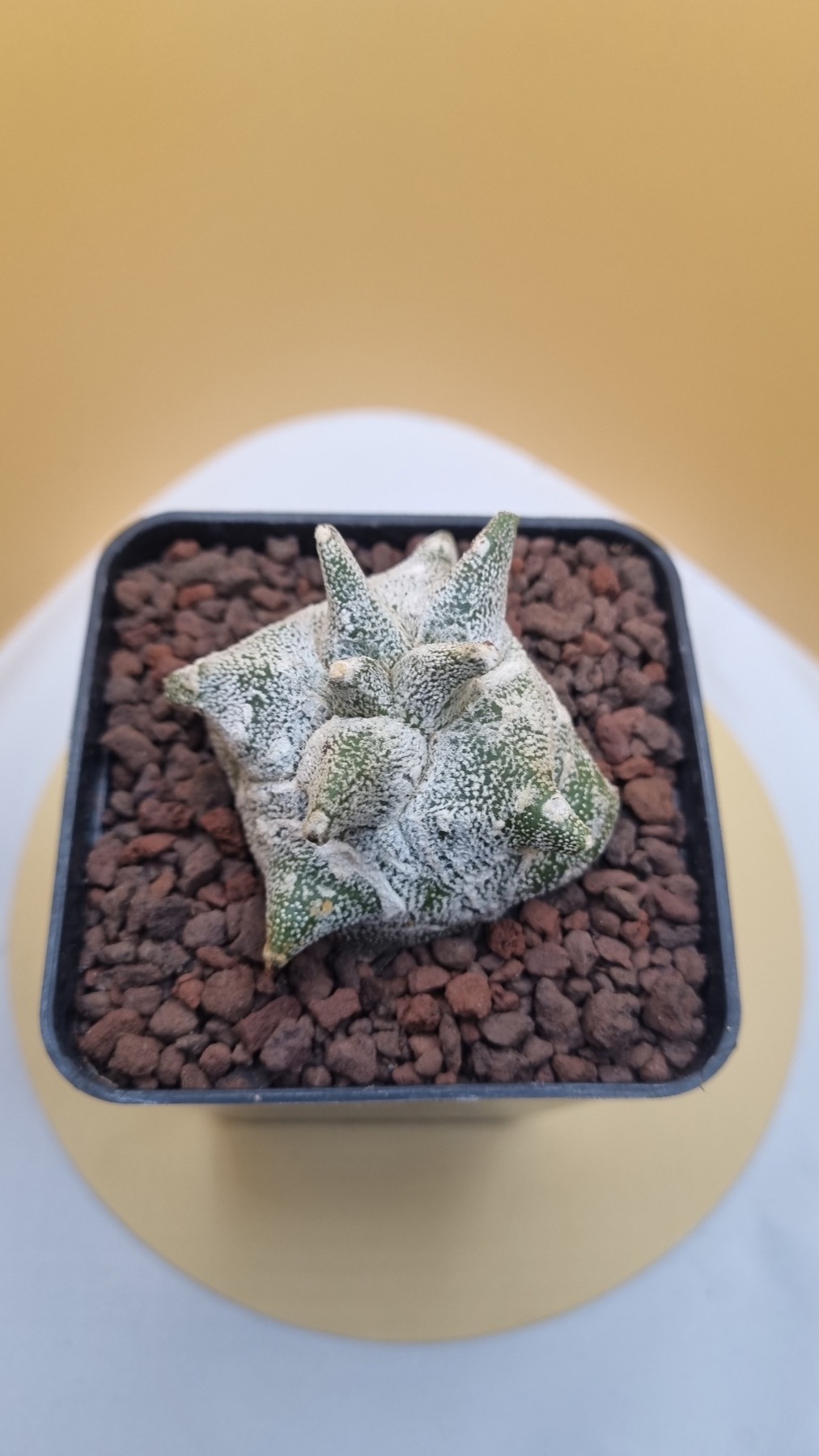
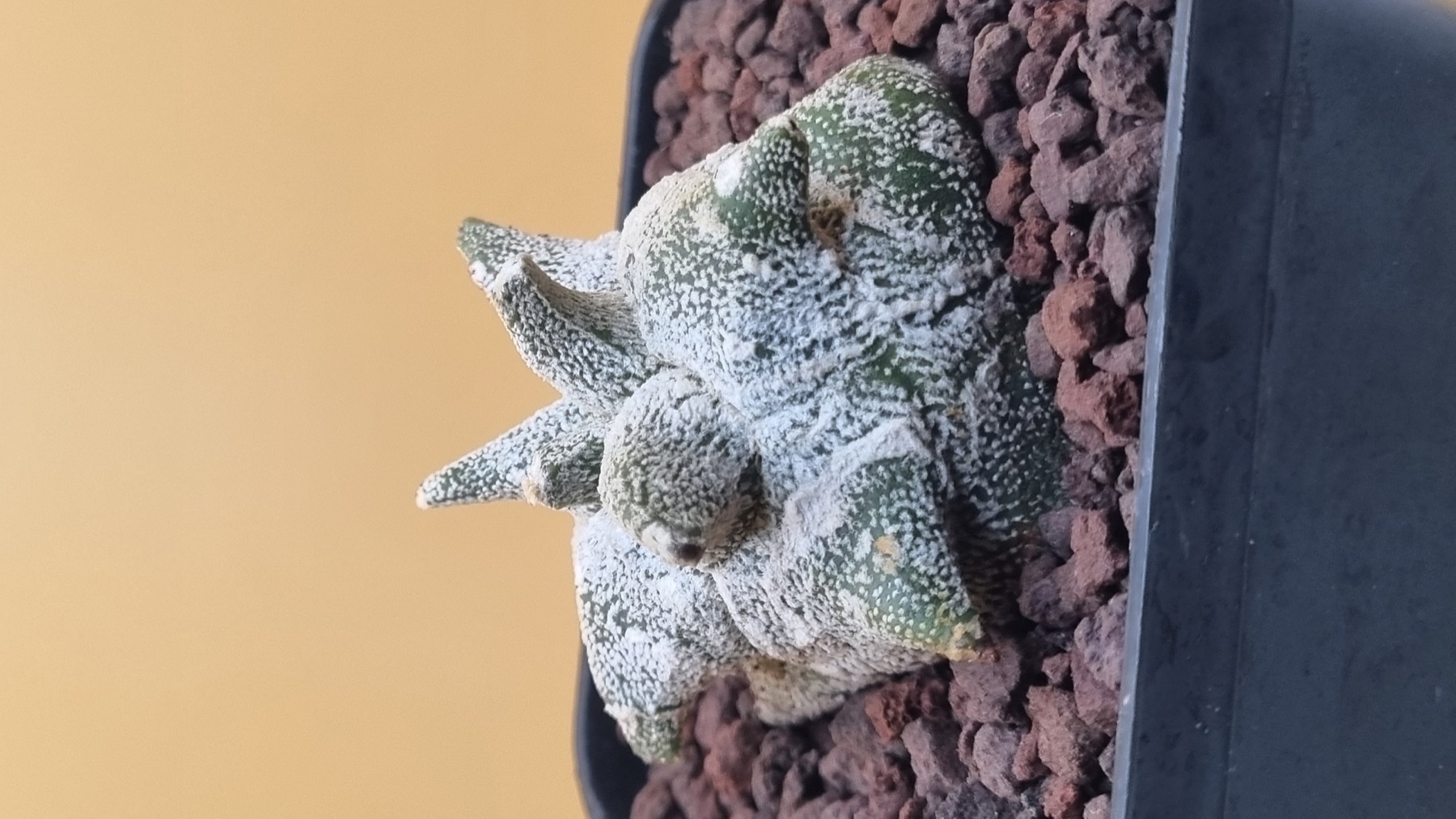
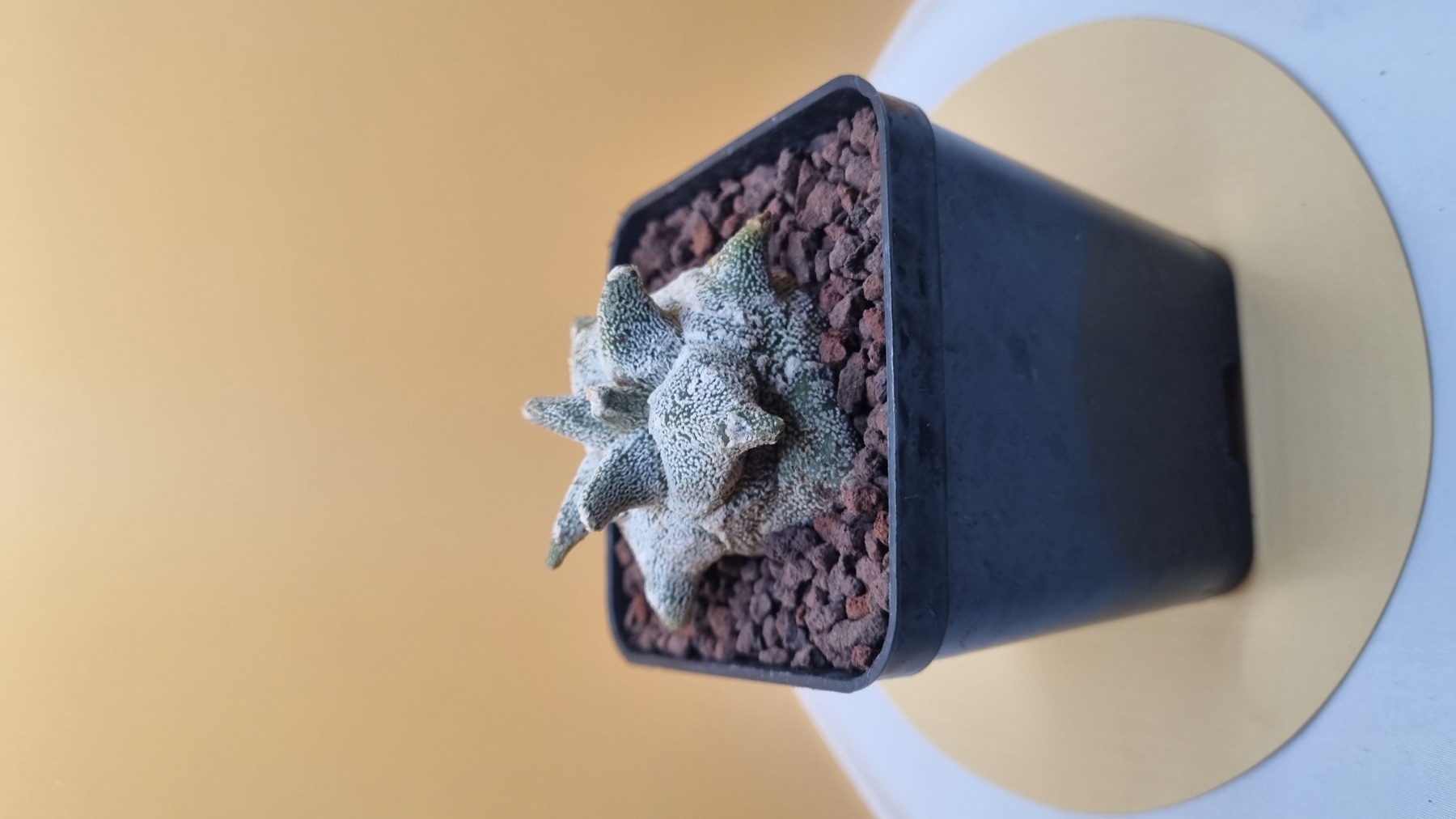
Hakuran Kikko
A dramatic Coahuilense Kikko with long, pointed rib-edge tubercles that make the body look carved rather than rounded.
- Origin
- Japanese horticultural selection
- Look for
- Geometric · Rare forms
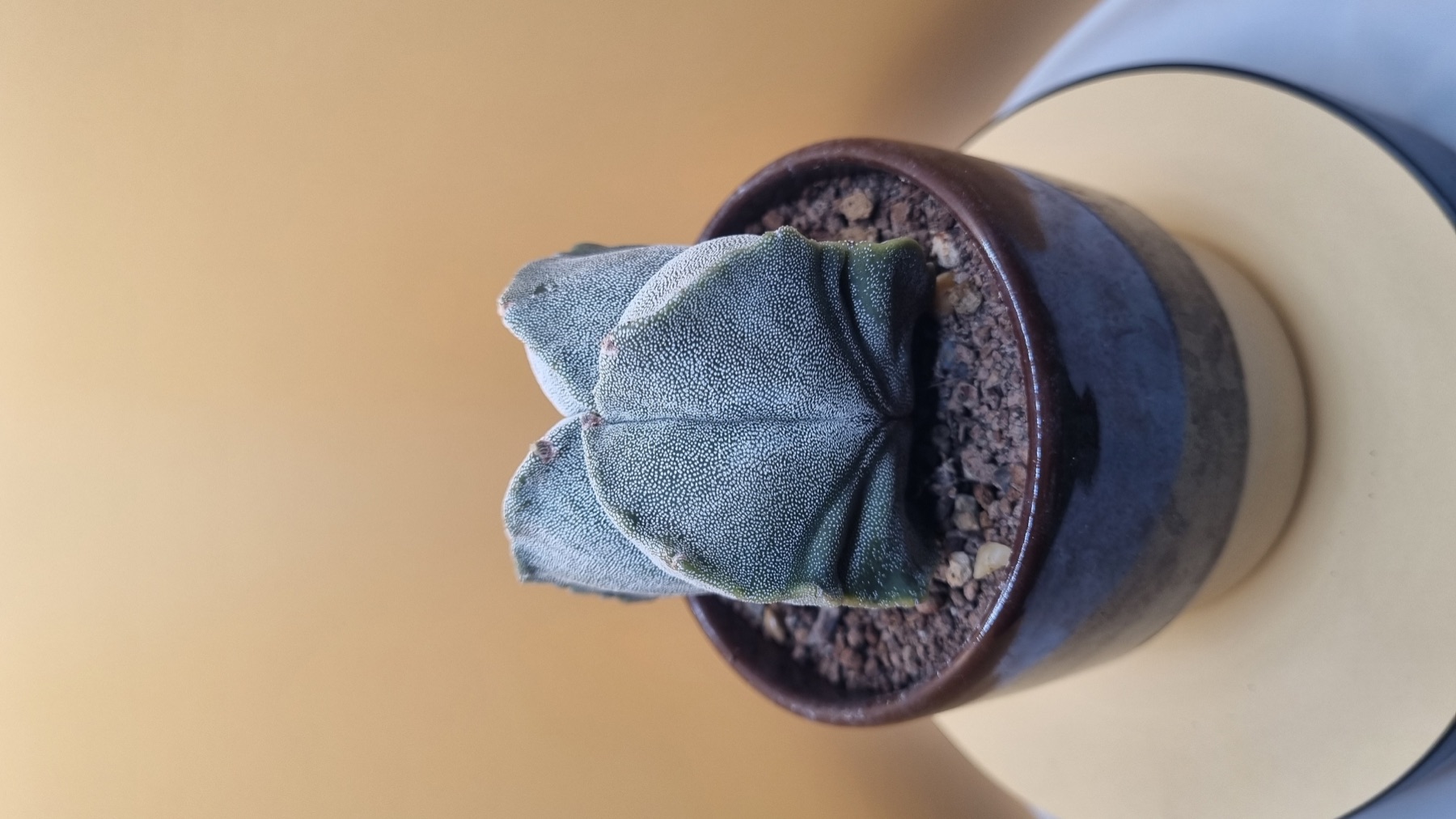
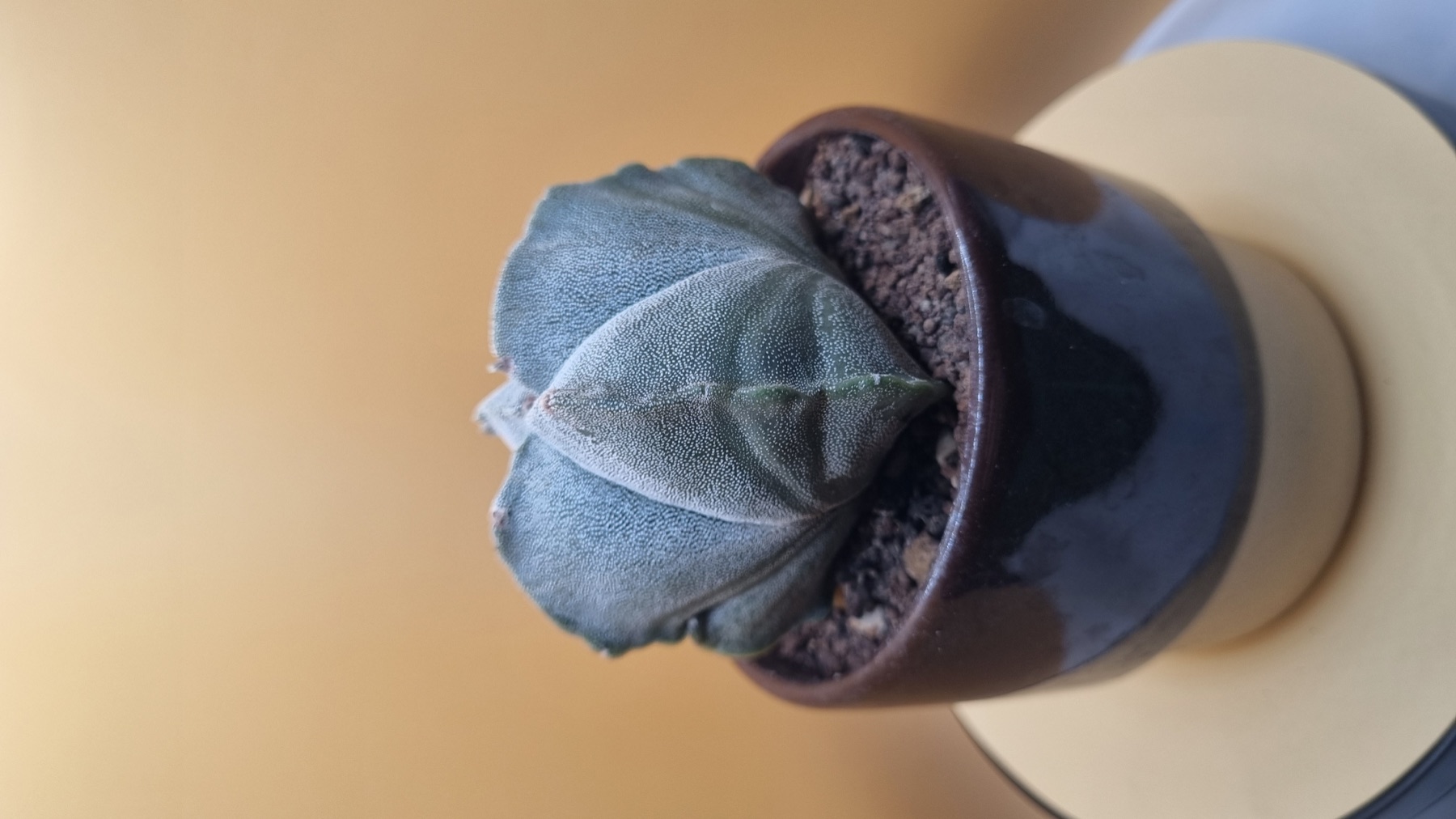
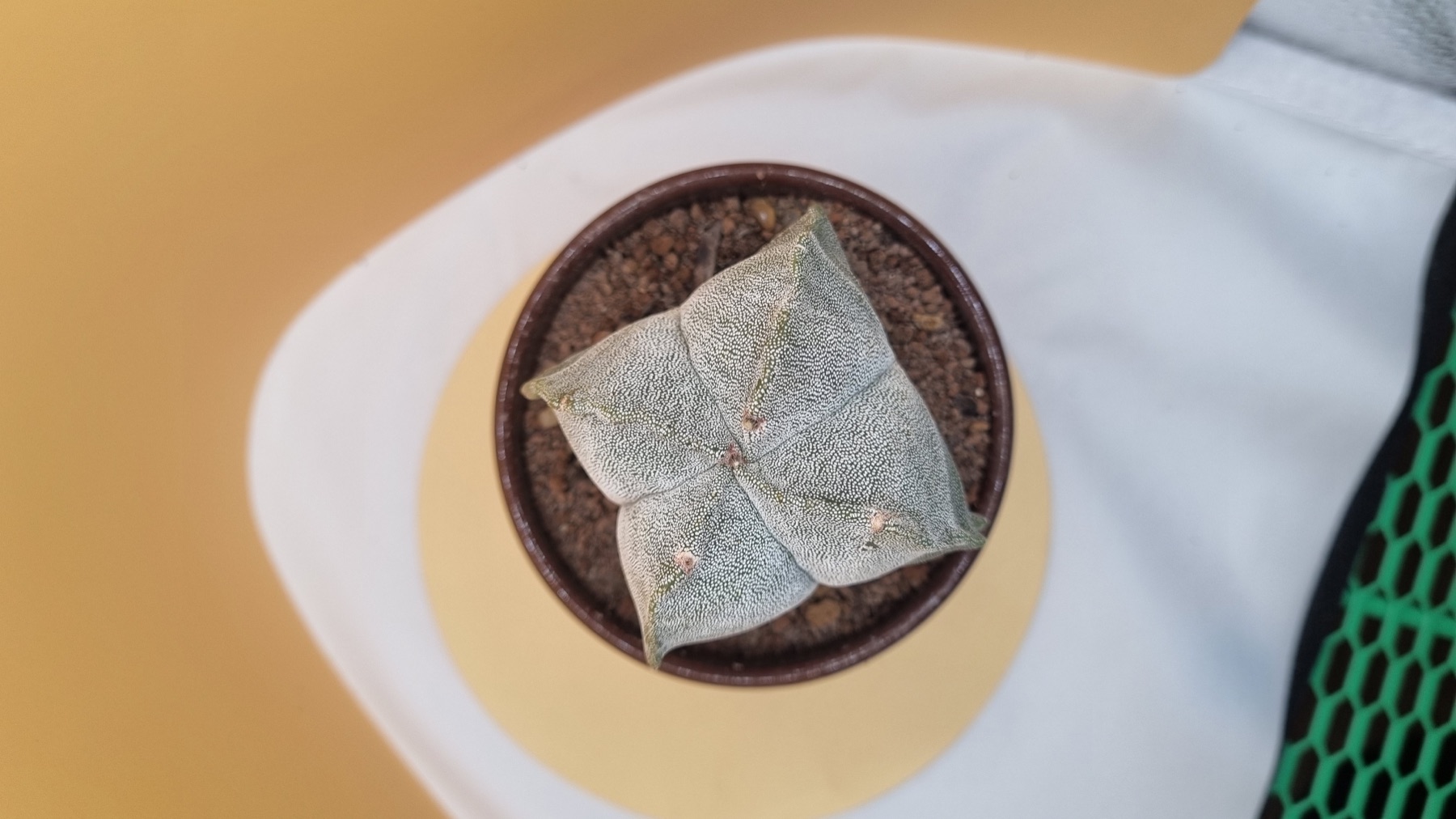
Quadricostatum
A four-ribbed Coahuilense whose reduced rib count creates a clear, almost architectural star plan.
- Origin
- Coahuila, Mexico
- Look for
- Geometric · Four-ribbed
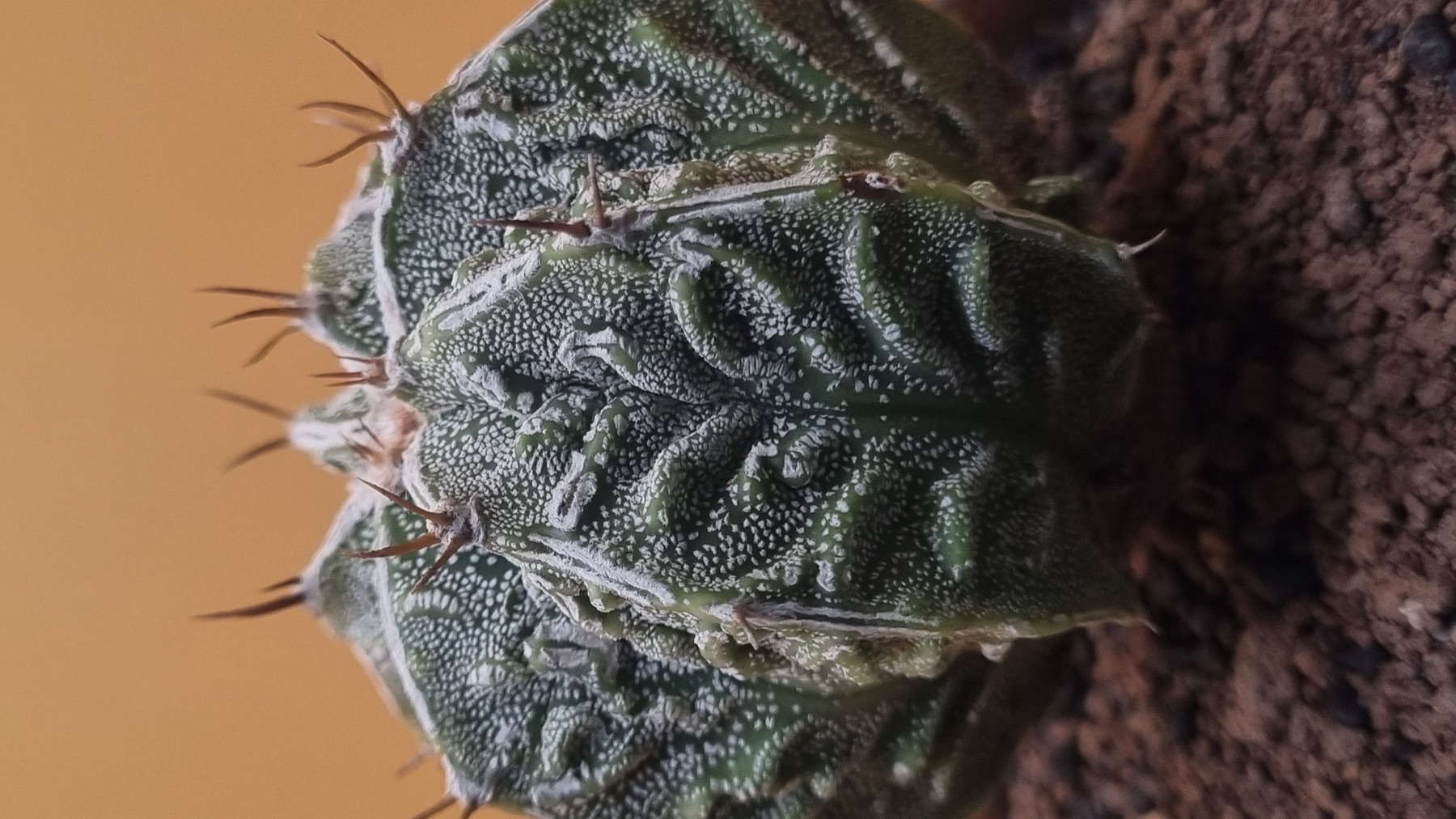
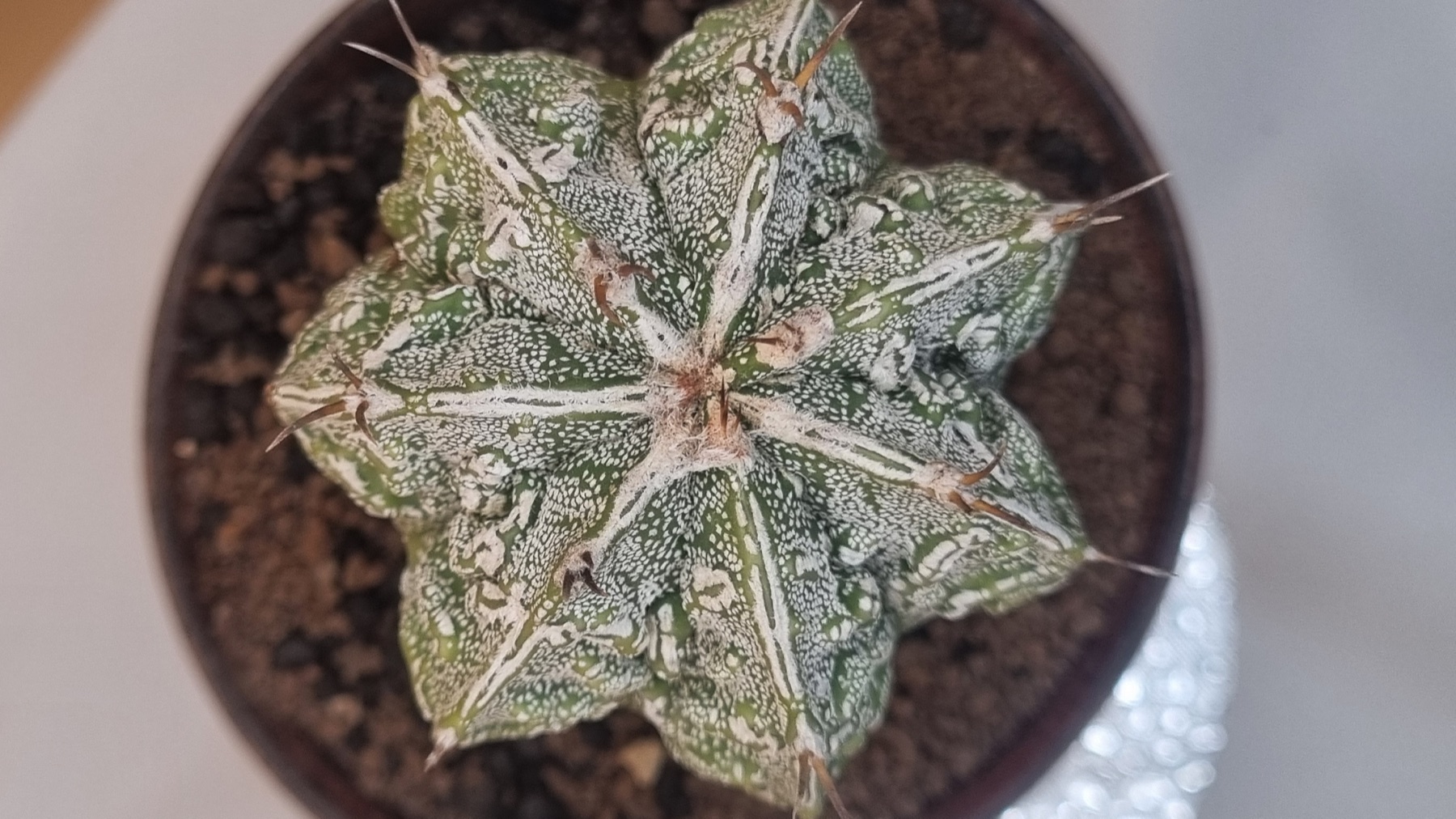
Astrophytum ornatum
A taller, spined species whose cultivated forms can combine extra ribs, white lines and powerful structure.
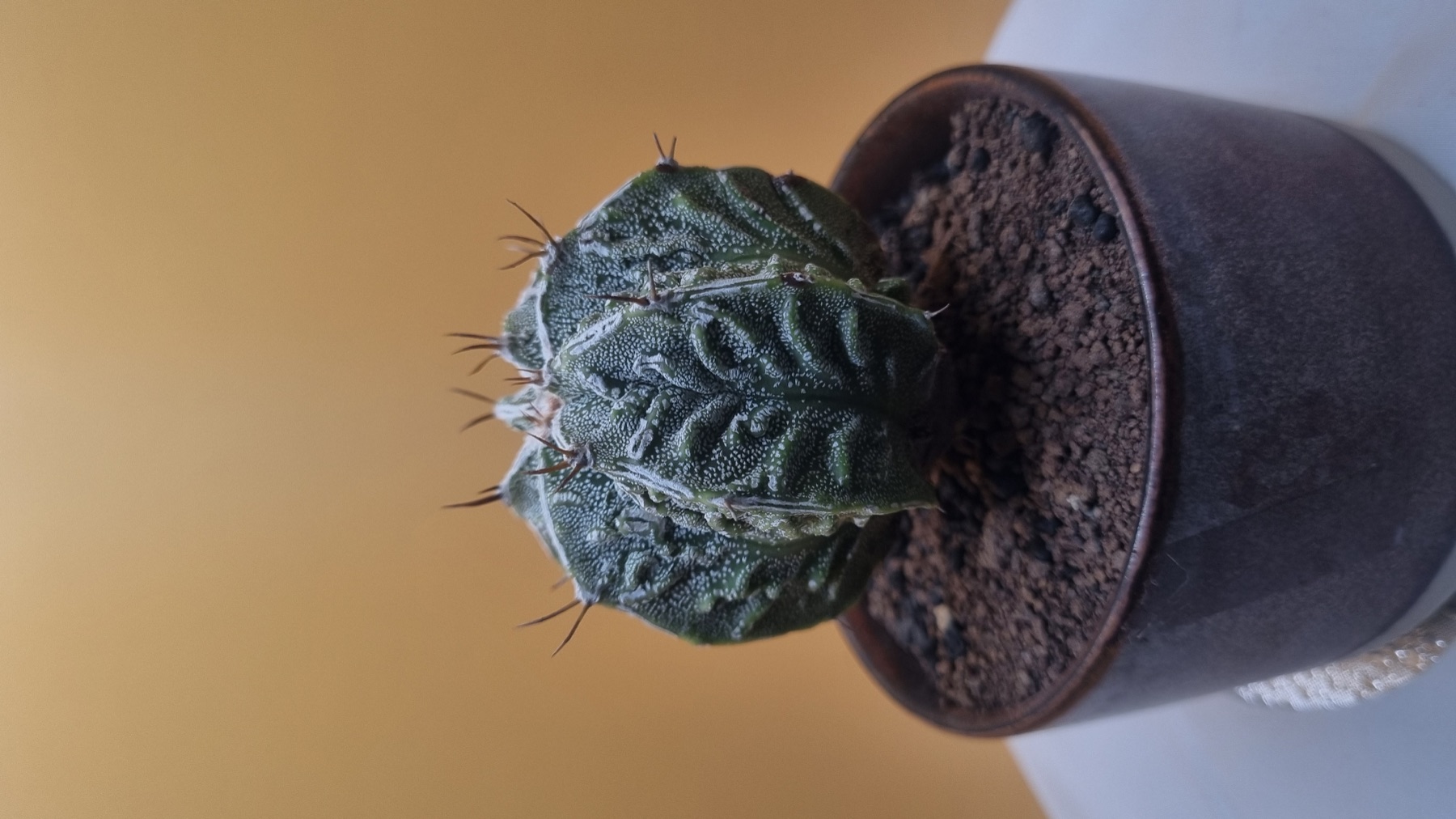
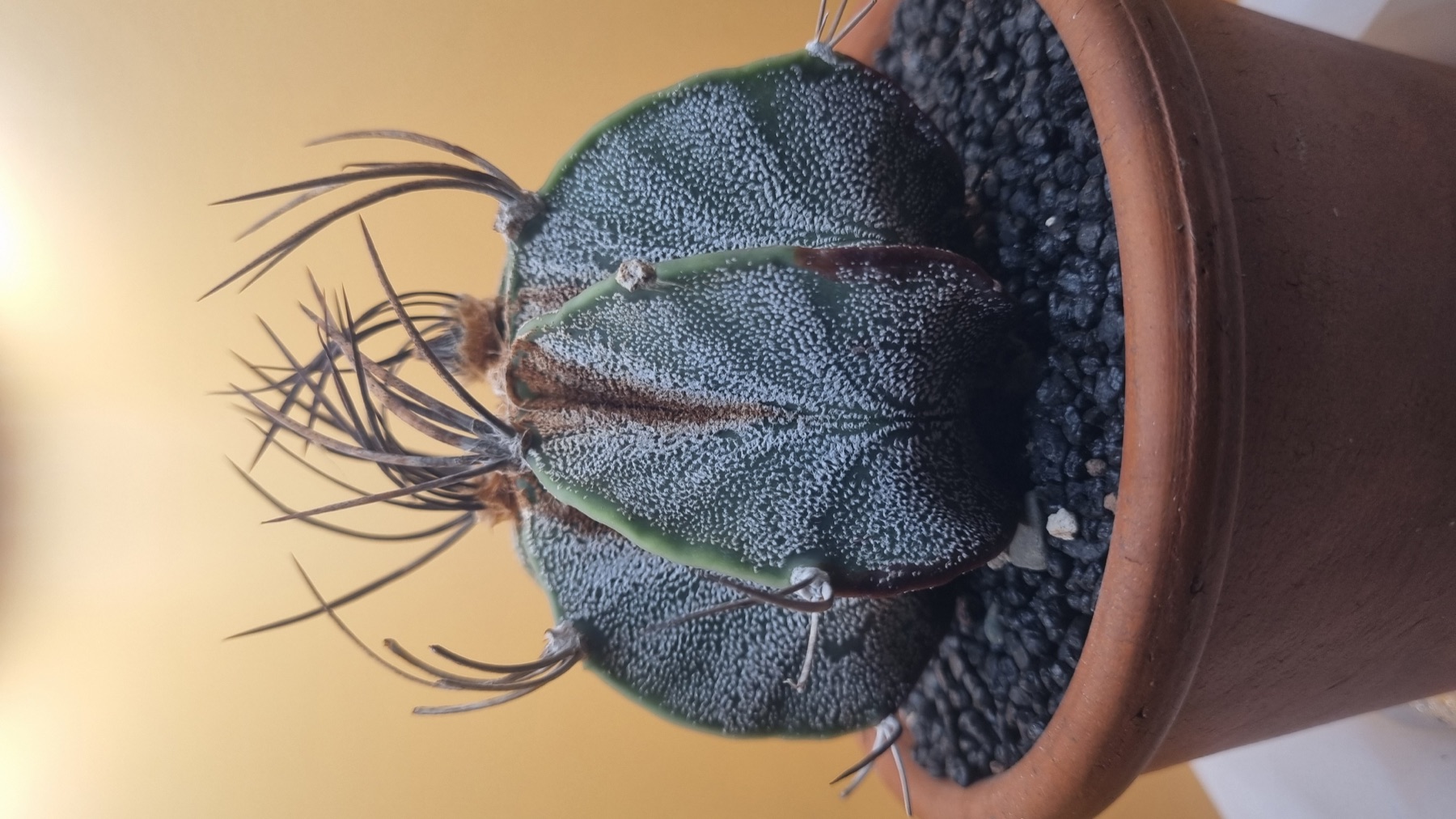
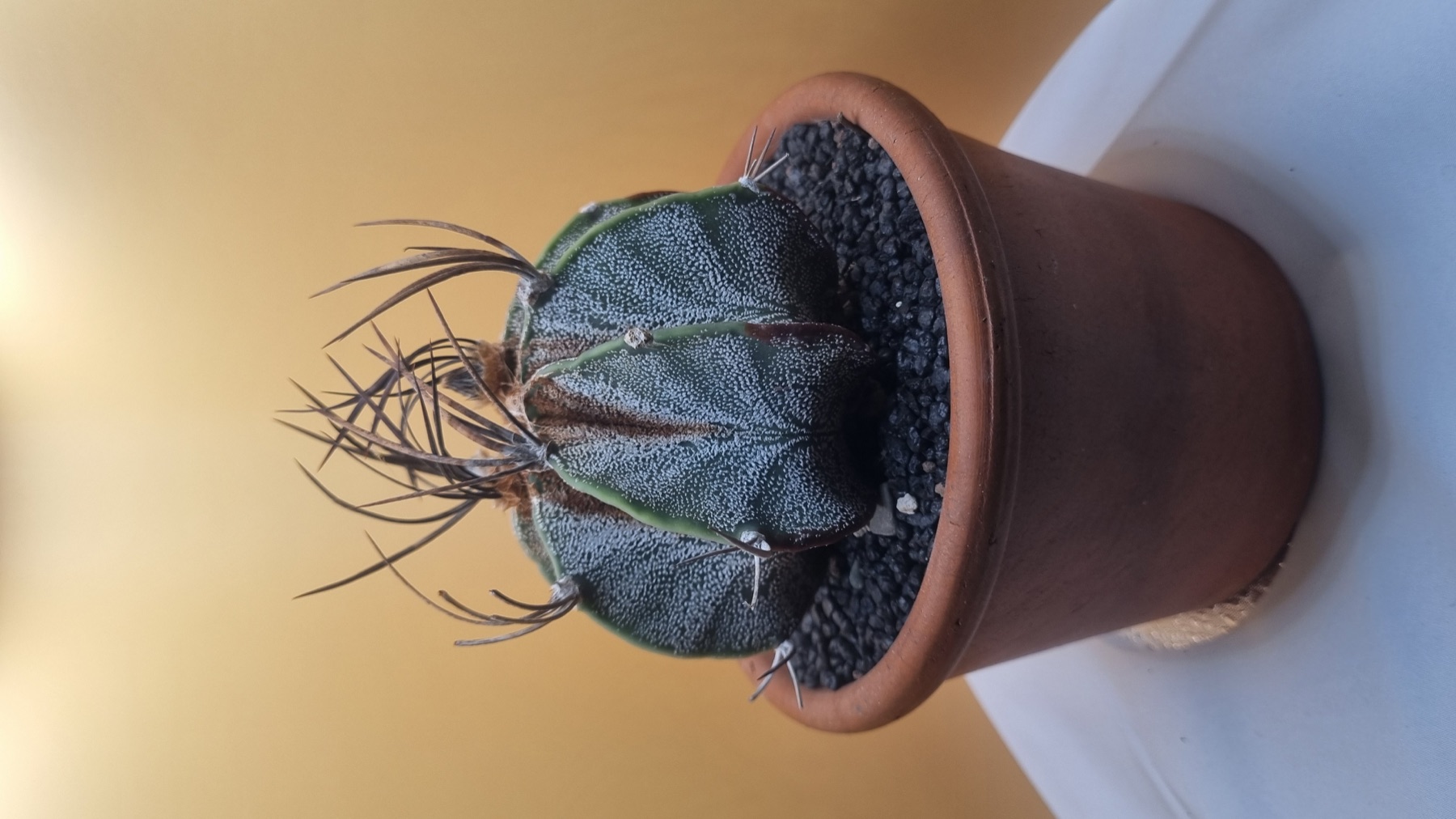
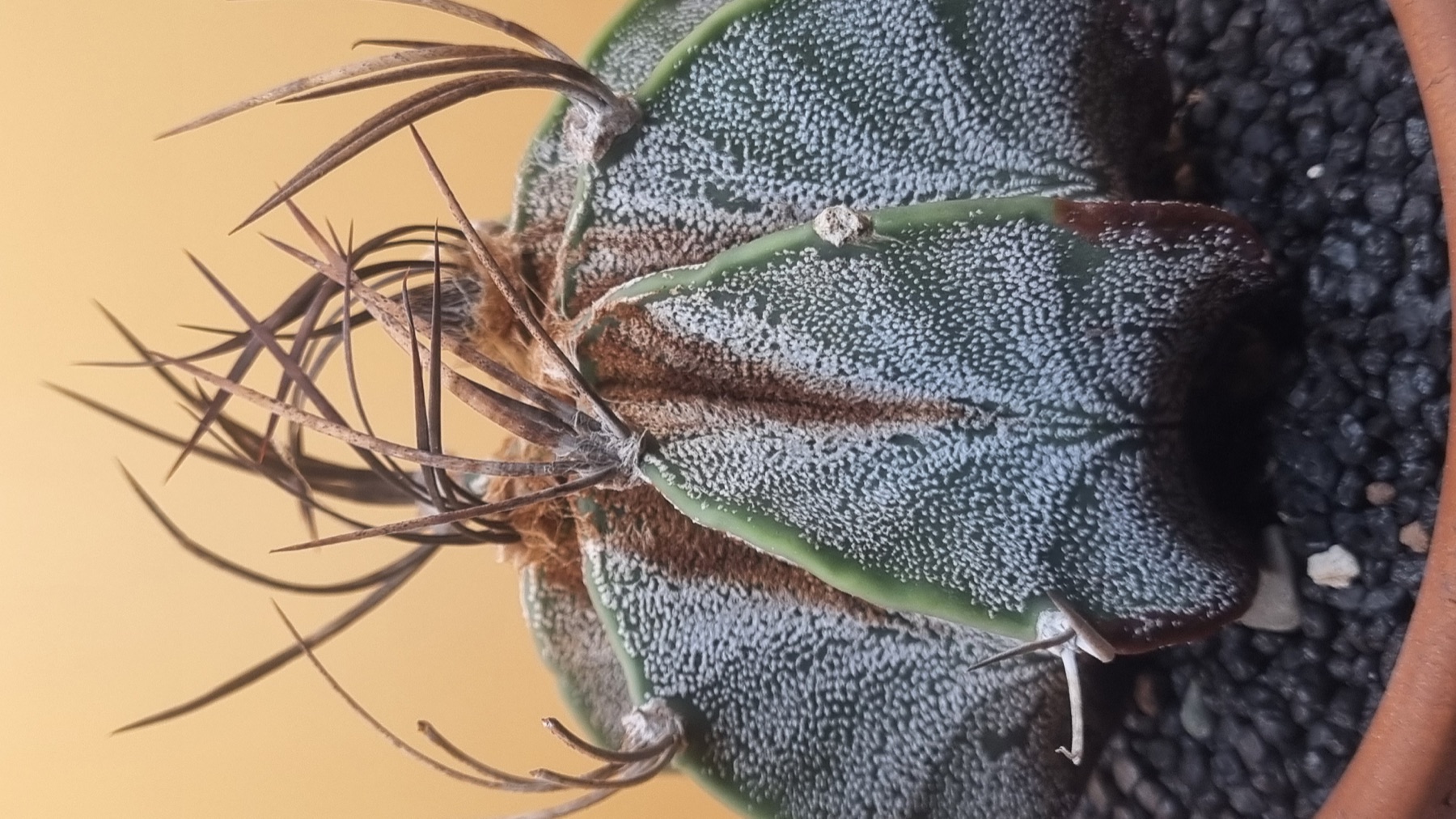
Astrophytum capricorne
A study in contrast: pale trichomes across the body and long, curling spines moving through space.
Comparative study
One idea.
Three species.
Kikko describes tortoise-shell-like relief, but it does not identify a species. Compare Myriostigma Kikko, Asterias Kikko Nudum and Coahuilense Hakuran side by side.
Compare the three KikkosJapan · a horticultural history
How one unusual kabuto became a new visual language.
This timeline follows Super Kabuto—a Japanese horticultural lineage of Astrophytum asterias. It is not a wild species, and it is not the history of the whole genus.
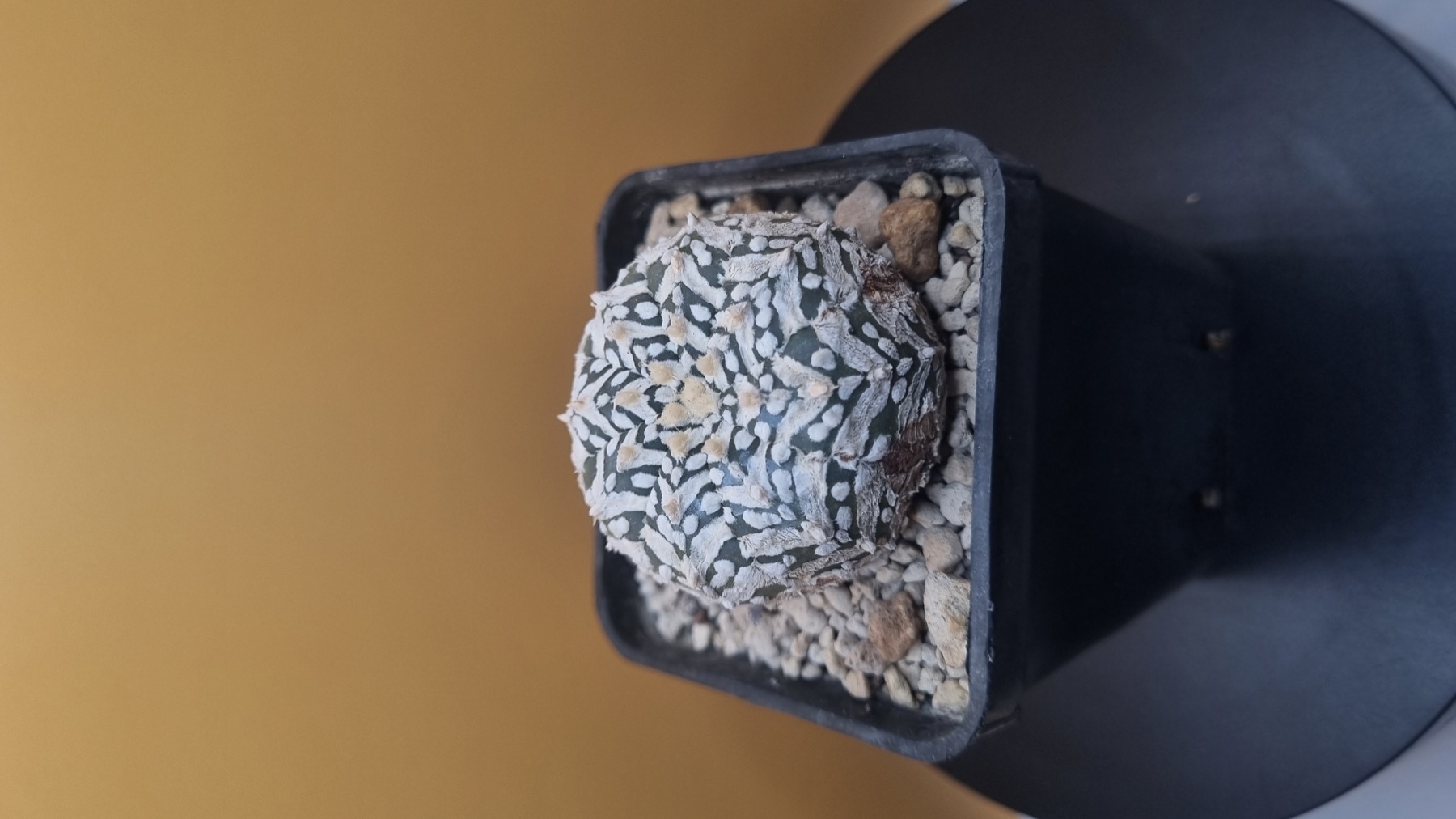
兜丸 — Kabutomaru
Astrophytum asterias was already admired in Japan as kabutomaru. Collectors read it from above: rib count, symmetry, woolly areoles and the distribution of its white flecks.
The unusual plant
Japanese breeder Masaomi Takeo found a discoloured, near-lost A. asterias with unusually large white markings at a nursery in the United States, then restored it to growth.
Super Kabuto appears in Japan
Takeo and Tsutomu Sato selected seed-grown descendants. Japanese succulent reference PUKUBOOK dates the release of Super Kabuto to 1983—and describes it as the form that ignited modern kabuto popularity.
A living design language
Repeated seed selection created an expanding family of expressions: Snow, V-type, Zebra or Tiger, Star Type and many others. Because these lines are usually 実生—seed-grown—every plant develops its own fleck map.
About the genus and cultivar namesRead the short guide
Astrophytum is a small North American cactus genus recognised by its radial ribs and star-like outline. The species in this collection express that architecture through different silhouettes, flecking and spination.
Names such as Super Kabuto, Kikko, Haku-jo and Fukuryu are cultivated selections. The botanical species identifies the foundation; the cultivar name describes the expression selected by growers.
Japanese research behind the timelineView the sources
The 1981 discovery and 1983 release dates come from the Japanese succulent reference PUKUBOOK. Japanese botanical and collector sources were used to check the name kabutomaru, the importance of top-view pattern and the place of Super Kabuto in contemporary Japanese cultivation.
PUKUBOOK ↗GKZ Japanese Plant Encyclopedia ↗Mitsukoshi Isetan · Botanize ↗