A star-shaped plant.
A label to verify.
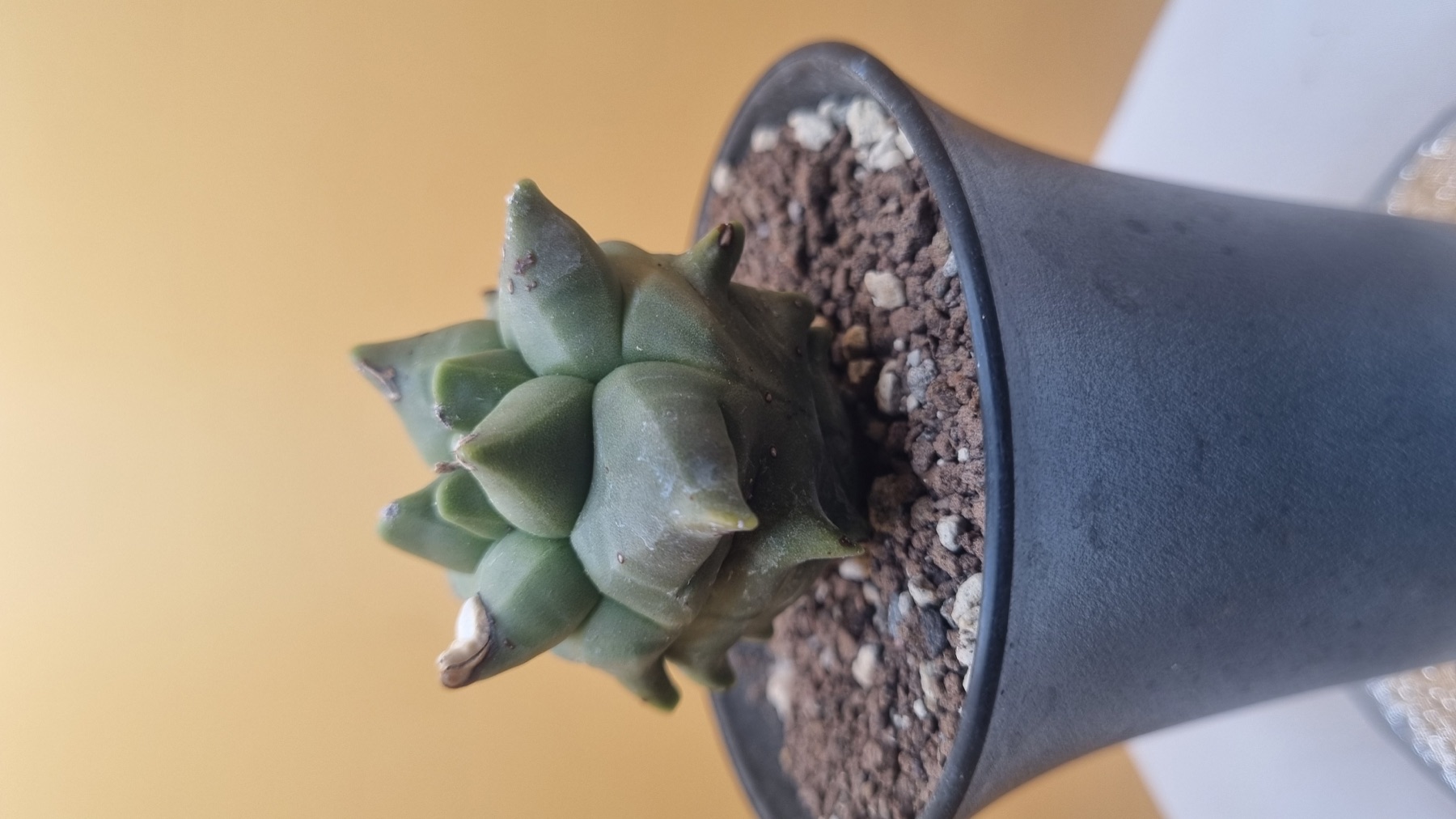
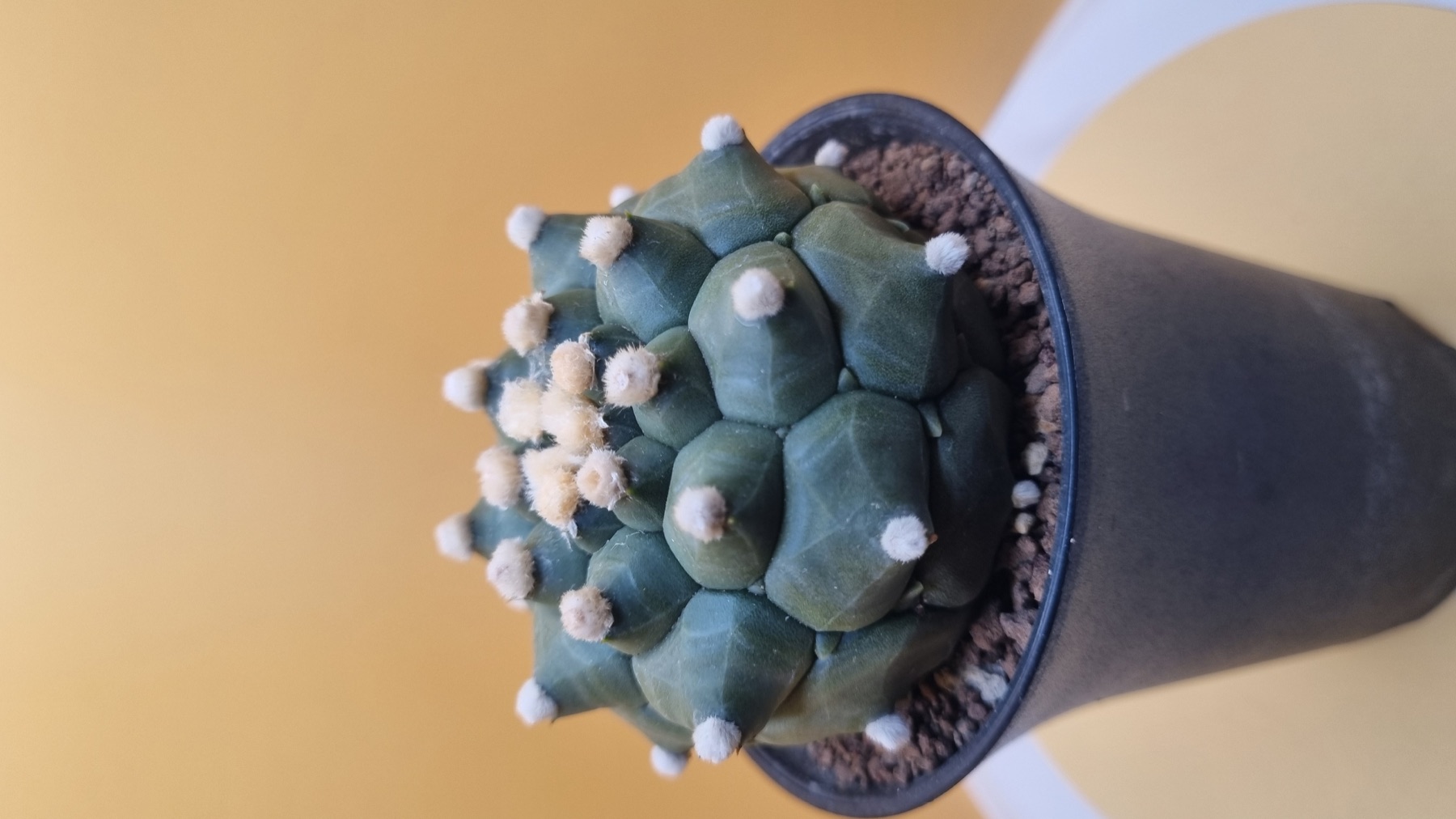
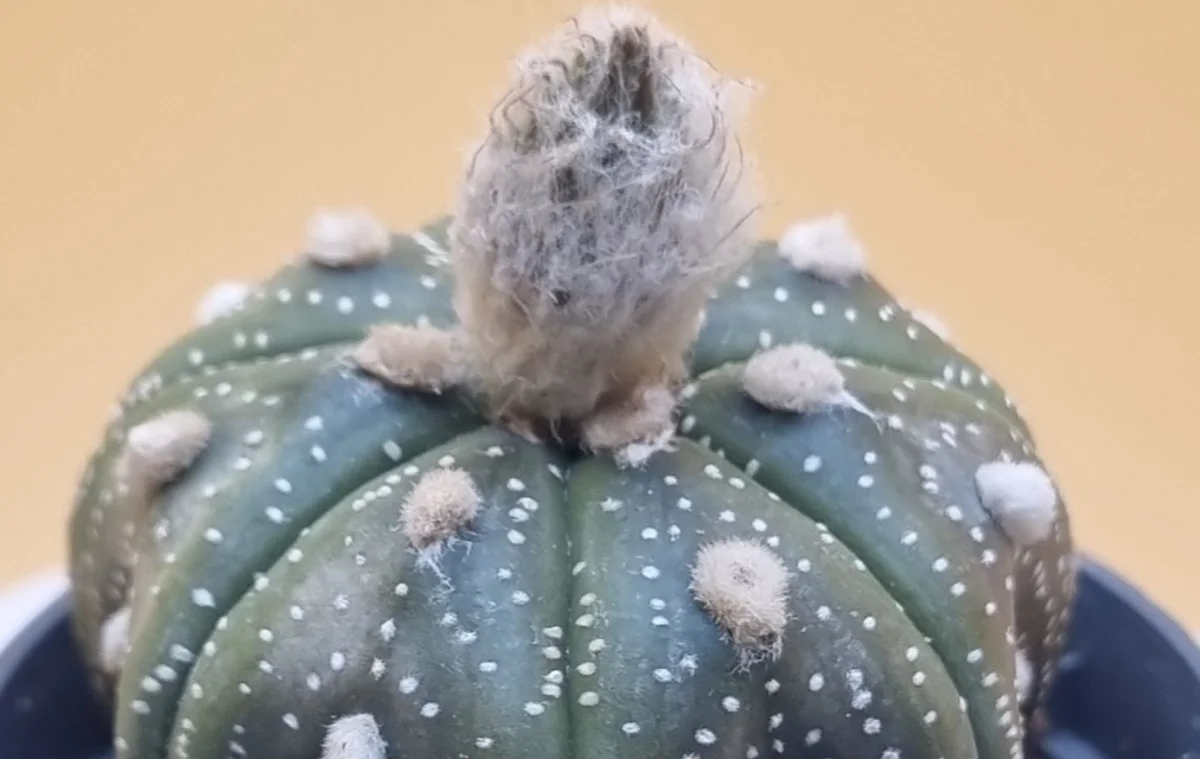
These photographs show a low, eight-ribbed body, a clear radial outline and plenty of white flecks. “Starshape Nudum” is the working name in this collection; the visible pattern leaves one part of that label open to question.
I’m keeping this plant separate from the other Astrophytum asterias records. The front and top views make its star-like shape easy to read, while the close views show flecks scattered over the green ribs. That surface is why I don’t want to treat “nudum” as a confirmed identification without the original label or a reliable grower’s record. For now, the passport gives the species name and leaves the collection name clearly provisional.
There is a real botanical history behind the species. The U.S. Fish and Wildlife Service’s recovery plan traces the first recorded collection to Baron von Karwinsky in Tamaulipas in 1843. Joseph Zuccarini named it Echinocactus asterias in 1845; Charles Lemaire placed it in Astrophytum in 1868. “Asterias” means star-like, a name that needs little explaining when the plant is seen from above.
The word “nudum” has a documented taxonomic history too. Y. Itō published Astrophytum asterias var. nudum in 1981, but Kew now treats that name as a synonym of A. asterias, not as a separate accepted variety. In cultivation, growers use “nudum” for plants with reduced or absent white flecking. This individual has conspicuous flecks, so the photographs are evidence to keep beside the label—not a reason to quietly rewrite it.
I don’t have a recorded acquisition date, nursery, breeder or original tag for this specimen. Nor have I found a dependable source that identifies the first grower or date for a cultivar called “Starshape Nudum.” The record begins with what can be checked: these photographs, its star-shaped form and the accepted species name. A future tag or flower may help sharpen the identification.
Research trail
- Kew · Astrophytum asterias — accepted name, authorship and distribution.
- Kew · A. asterias var. nudum — published by Y. Itō in 1981; now treated as a synonym.
- International Plant Names Index — nomenclatural record for the varietal name.
- U.S. Fish & Wildlife Service · Star Cactus Recovery Plan (2003) — early collection and naming history, habitat, threats and conservation background.
- Texas Parks & Wildlife · Star Cactus — species description, range and current Texas listing.
- Kew · CITES and Cacti (2019) — Appendix I trade context for A. asterias.