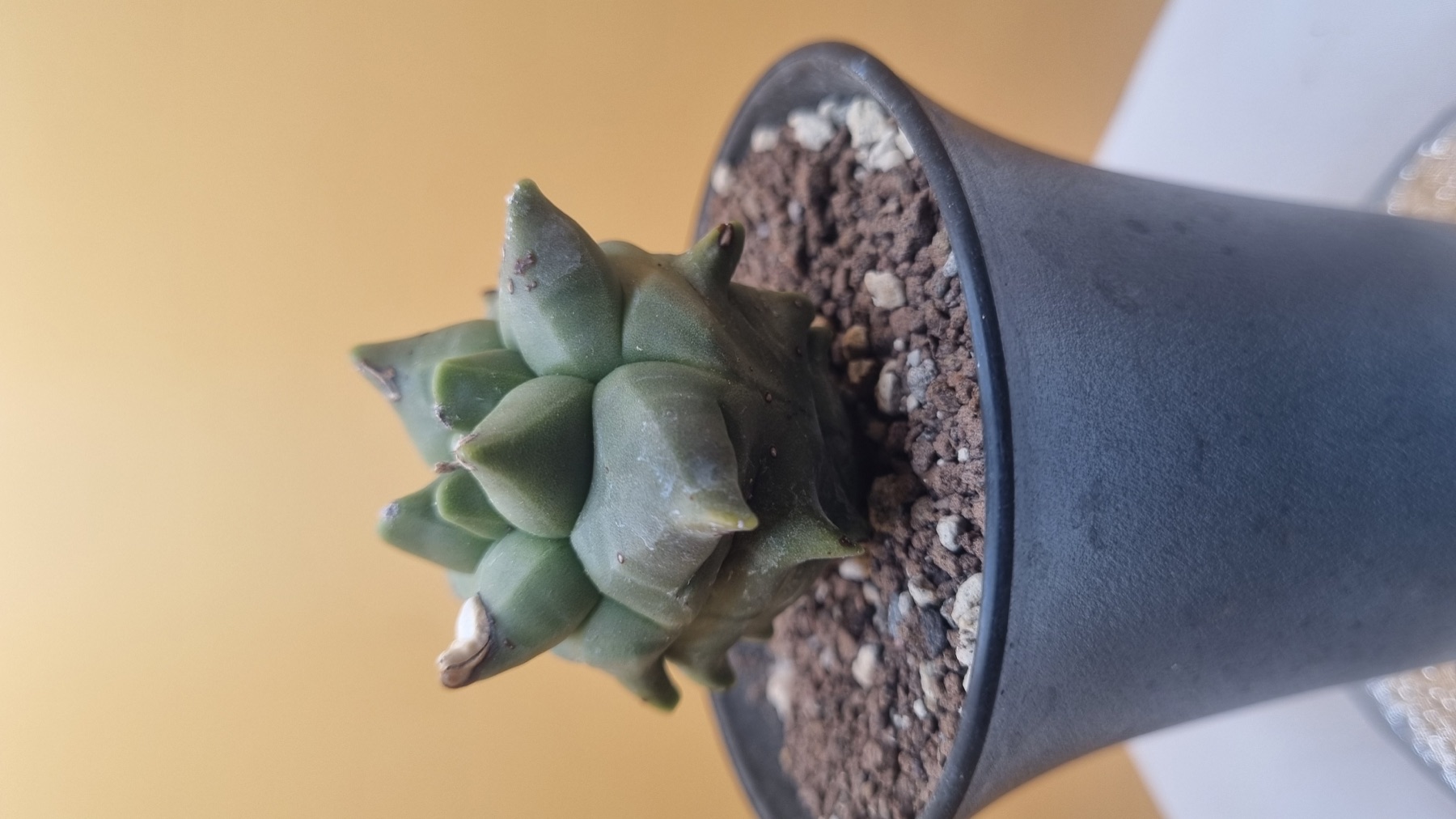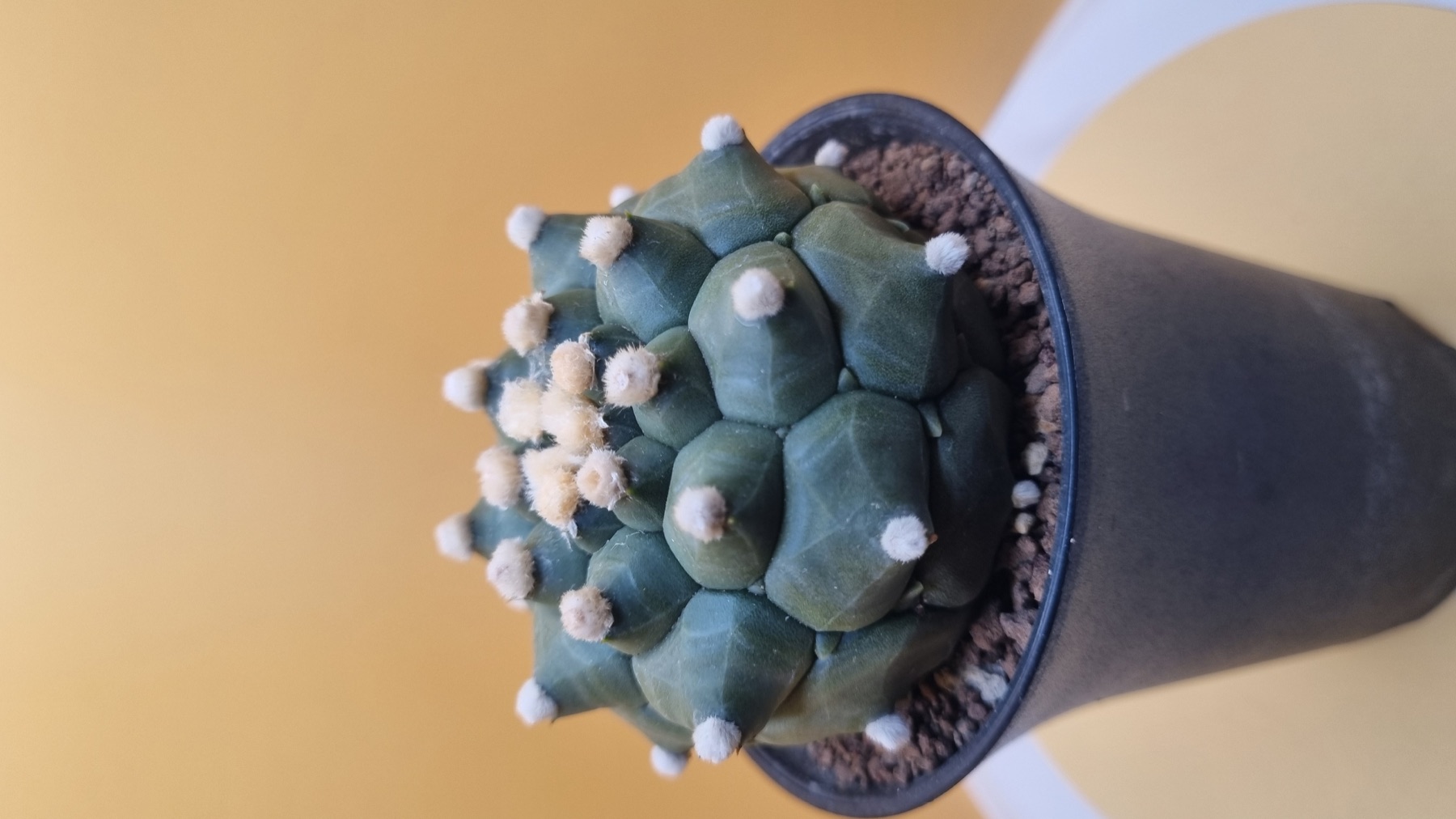
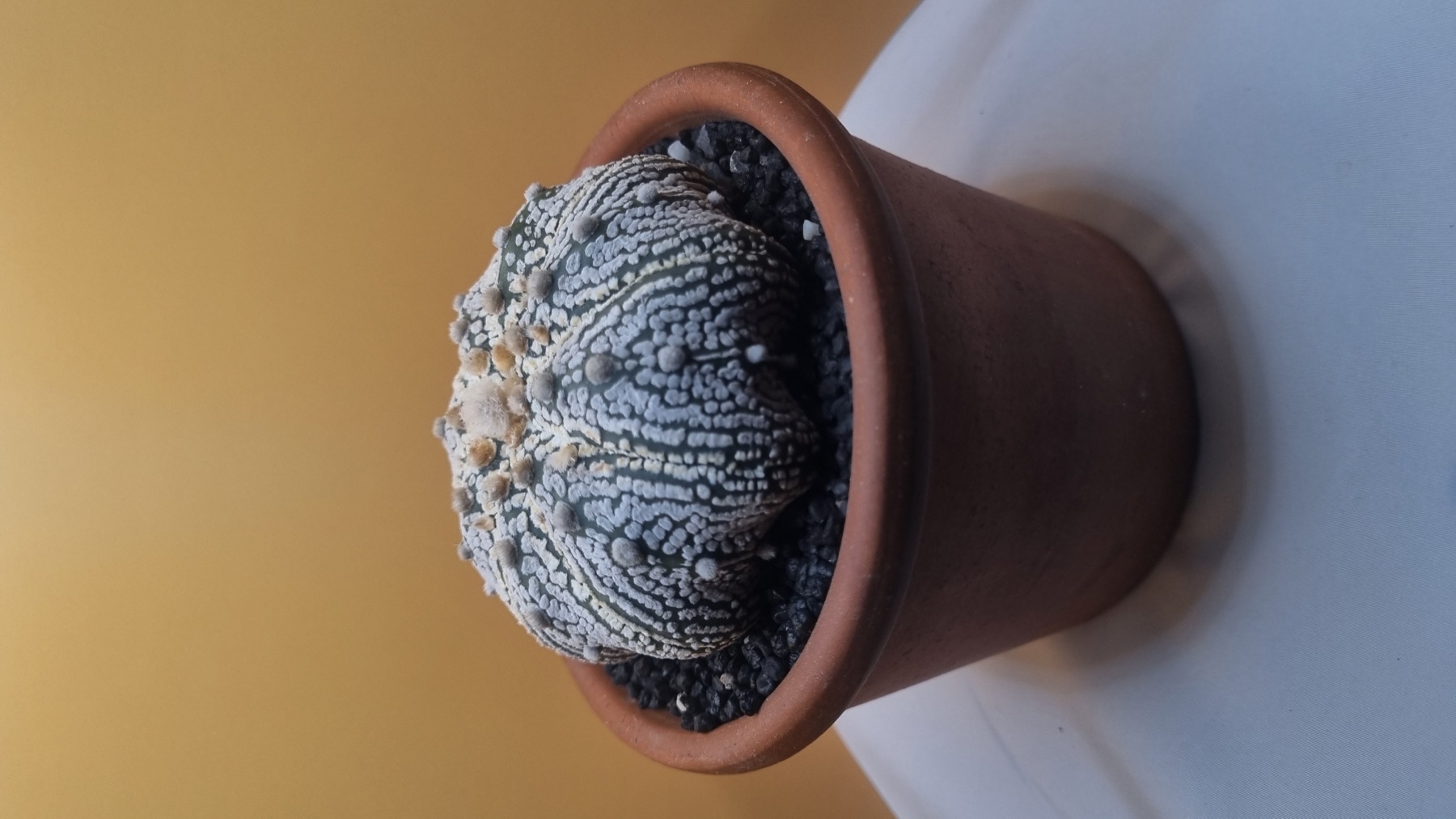
A star in outline.
A mosaic on the skin.
Here, the silhouette matters as much as the white Super Kabuto flecking: the ribs pull the body into a pronounced star.
From above, the ribs make the outline unmistakable. From the side, the valleys deepen and the white areole pattern becomes a close-set mosaic. “Star Type” points to that body shape; “Super Kabuto” describes the cultivated pattern. Both are useful observations, but neither tells us who first selected this individual line.
Super Kabuto is associated with Japanese growers from the early 1980s, though specialist histories differ on the precise introduction story. I have not found a dated source for the Star Type specifically, so I am not assigning it the broader line’s origin as though the pedigree were proven. This entry records the label and the visible plant, leaving the cultivar’s finer history open.
The wild parent species, Astrophytum asterias, was collected by Karwinsky in Tamaulipas in 1843 and described by Zuccarini in 1845. Wild star cactus has a naturally geometric outline, but not this selected Super Kabuto surface. The field photographs below show the species in Texas, not this named horticultural form.
Stirling Baker · Super Kabuto account · U.S. Fish & Wildlife Service · Star Cactus history · Kew · A. asterias.