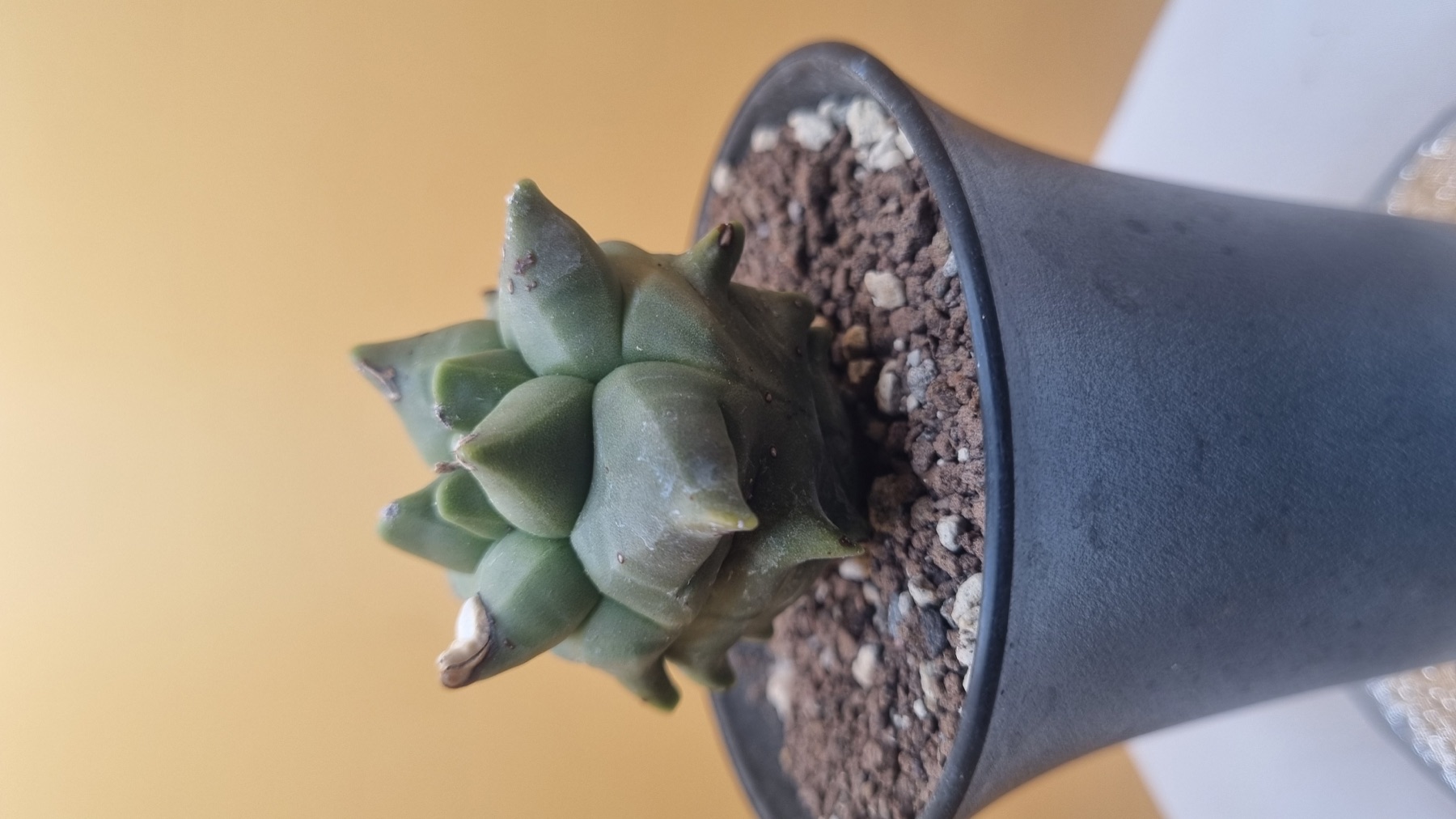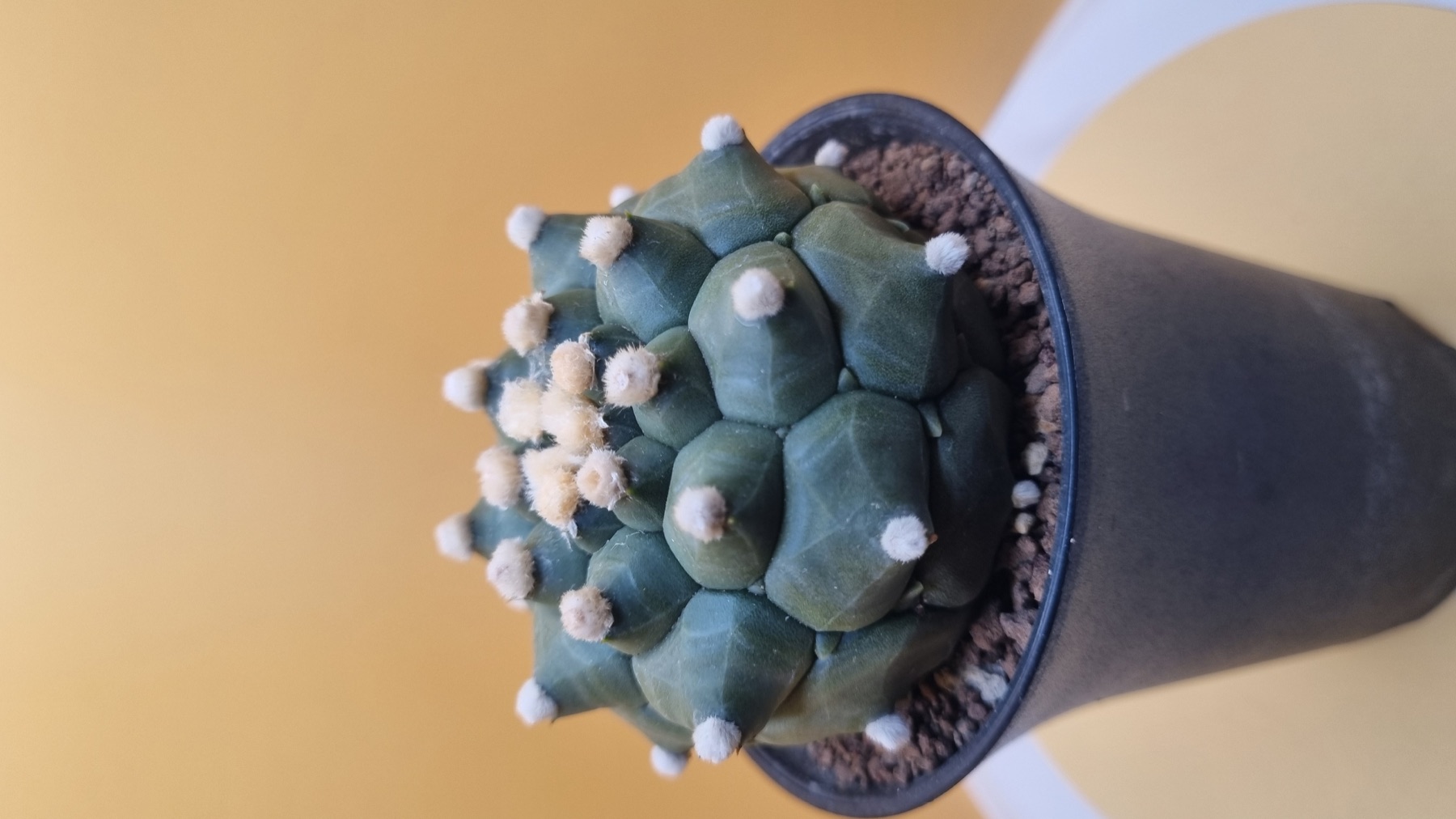
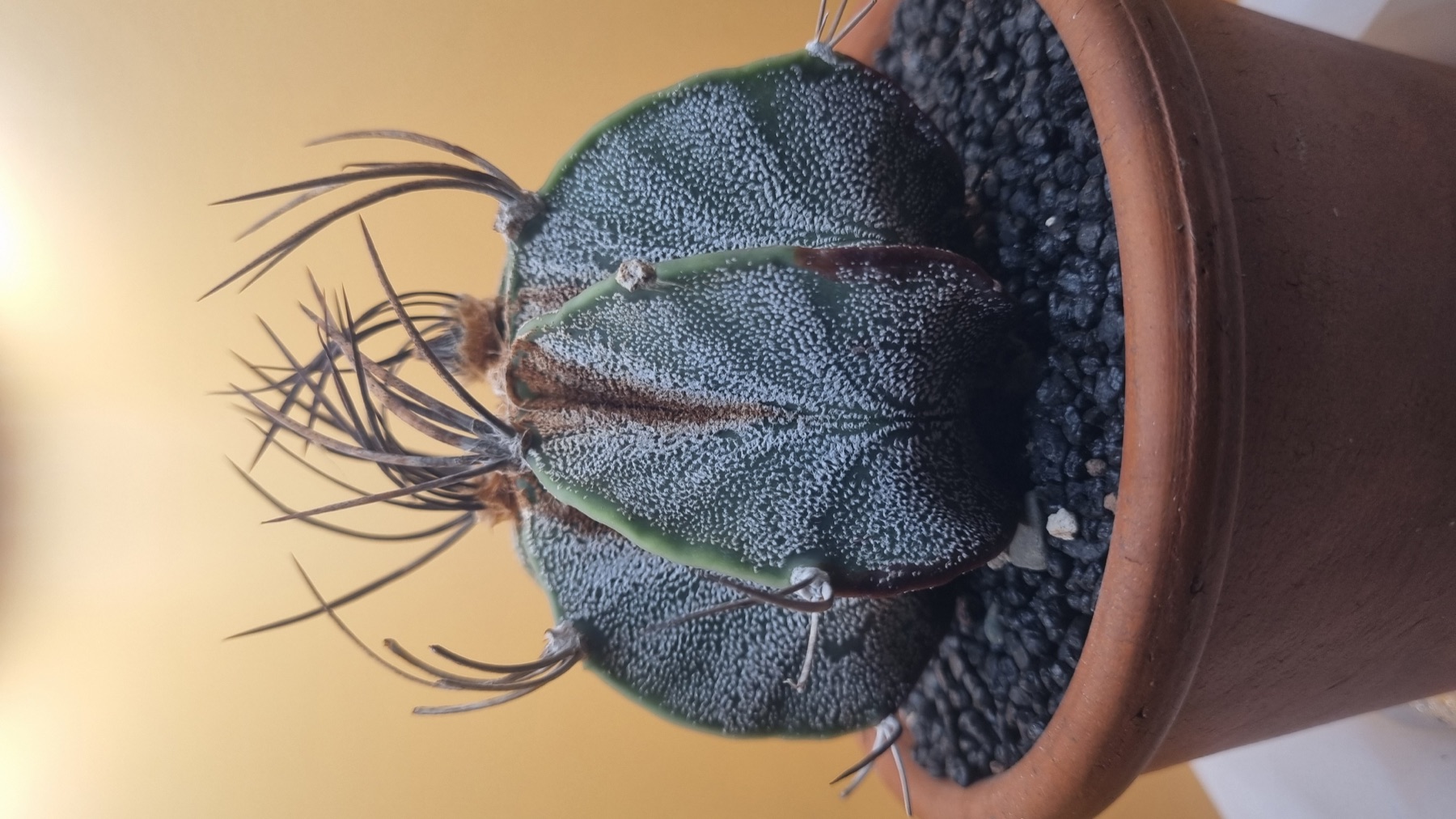
A snowy skin.
And a crown of spines.
The white flecking and long, curling spines make this one of the collection’s most tactile Astrophytum forms.
The name niveum means snow-white, a reference to the dense pale covering that distinguishes this form. Here it softens the body without hiding the long, dark spines. I like the contrast: the surface looks almost powdered, while the spines draw a loose cage around it.
The taxonomic wording has shifted over time. Karl Kayser published the name Echinocactus capricornis var. niveus in 1933; modern treatments place it within the A. capricorne complex, though ranks and combinations vary. The original wild form is associated with the Cuatro Ciénegas region of Coahuila. That history belongs to the taxon, not to this plant’s undocumented nursery route.
The field image is deliberately labelled only as A. capricorne. I could not verify that the photographed plant is the niveum form, so it offers a view of the species, not a claim about this particular white-coated expression.
IPNI · Kayser’s 1933 name record · CACT.CZ · notes on niveum and its name · Kew · capricorne treatment.