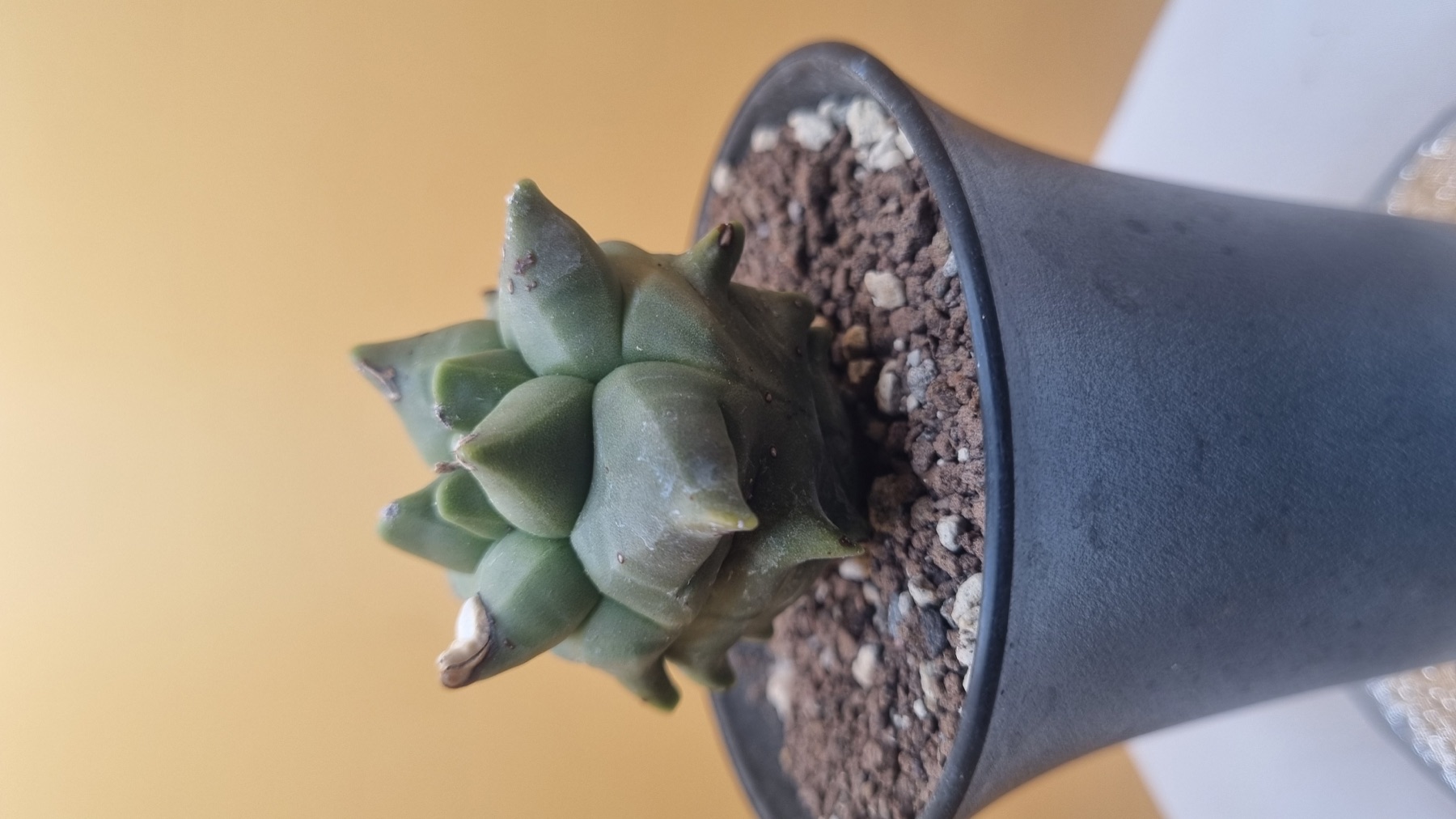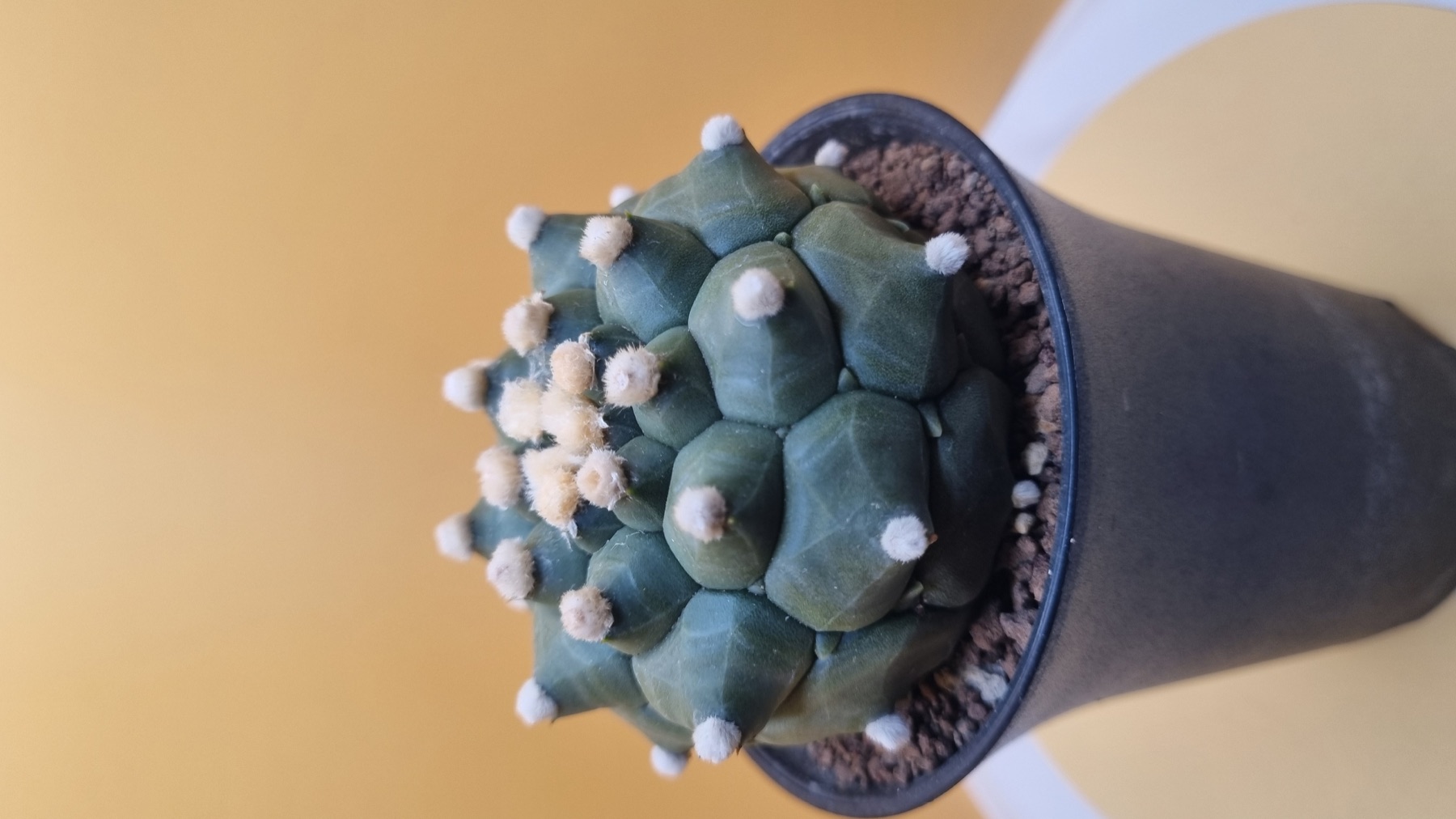
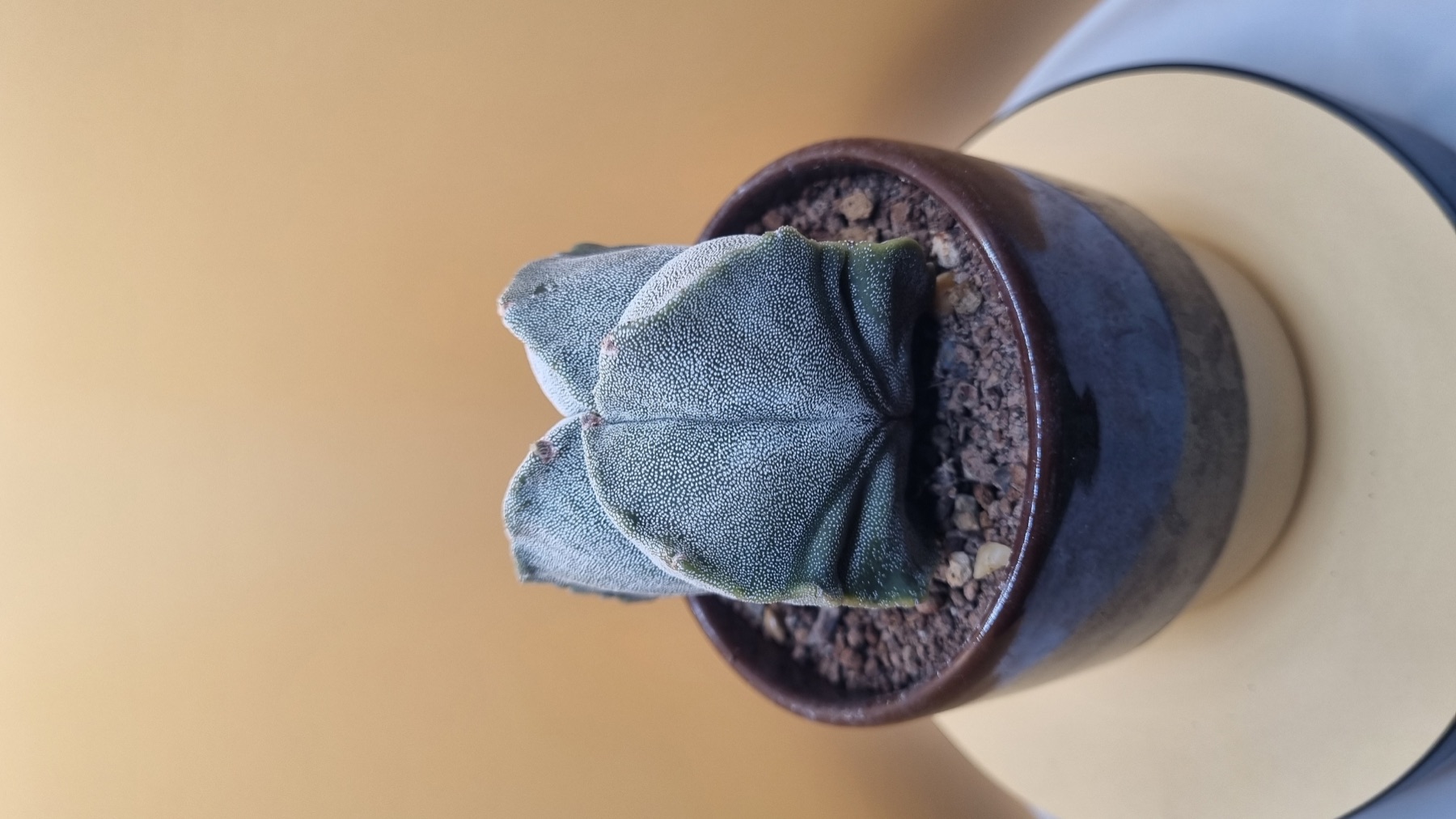
Four ribs,
one question.
The label says coahuilense var. quadricostatum. Four ribs are easy to count; the name’s history is less settled.
From above, the body resolves into four strong planes. That simple count changes everything: the crown looks less like a usual many-ribbed Astrophytum and more like a small piece of carved geometry. The value of this specimen is that the structure is visible without interpretation.
I’m keeping the name as it appears in this record, but not treating “quadricostatum” as proof of a particular lineage. Specialist accounts discuss a four-ribbed A. myriostigma form from the Jaumave valley in Tamaulipas; that is a separate reference, not evidence that this plant belongs to it. Rib number can also change as some plants mature. The label and the plant should be read together.
Astrophytum coahuilense is native to the dry country of southwestern Coahuila and adjacent Durango. The field study by Espinosa-Pérez and colleagues examines climatic niche shifts and conservation pressures on that species. Neither its range nor the field photo below identifies this cultivated individual’s origin.
Pavel Tůma · rib-count forms and the Jaumave myriostigma line · Espinosa-Pérez et al. · coahuilense ecology and conservation · Kew · accepted species record.