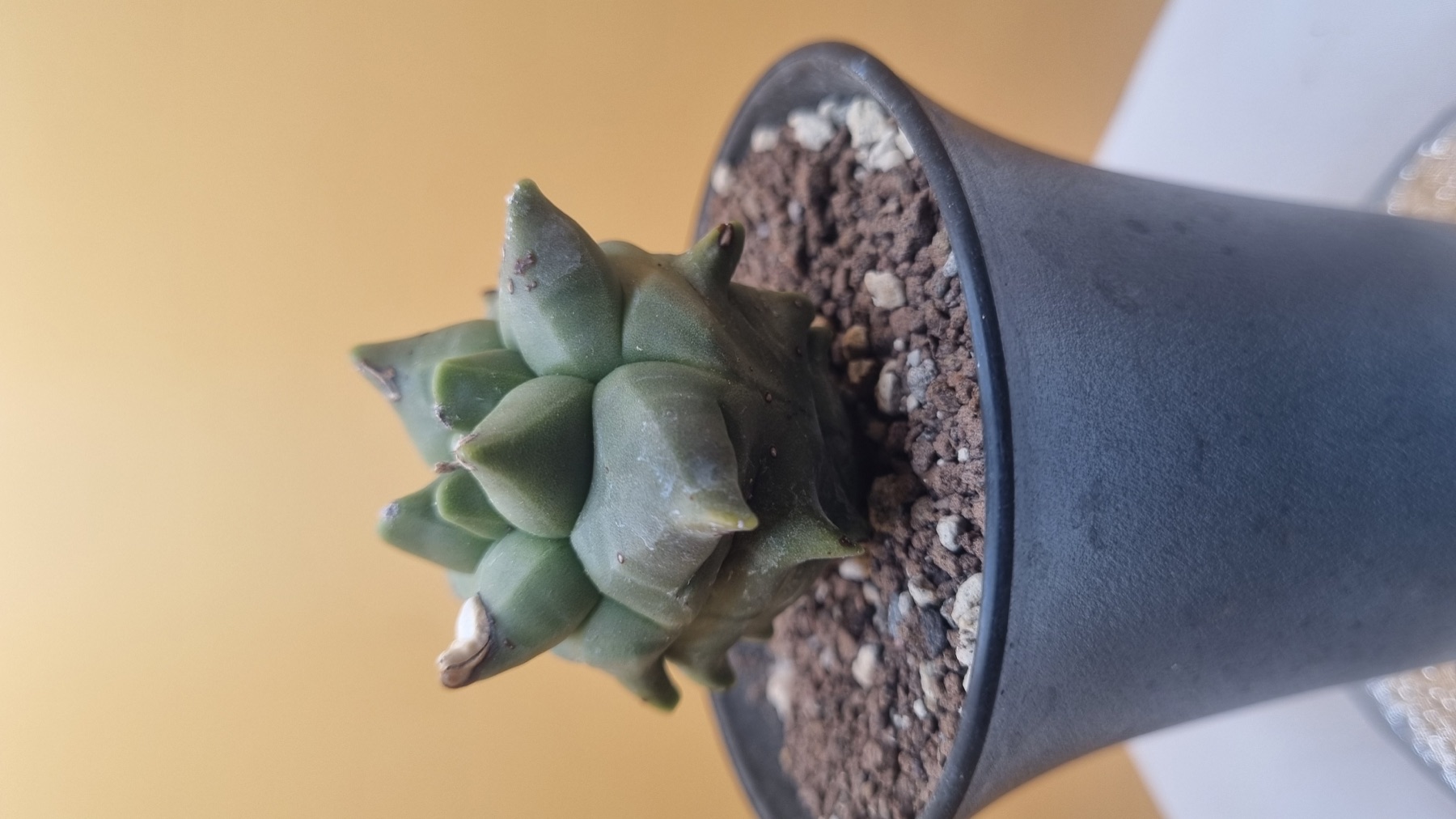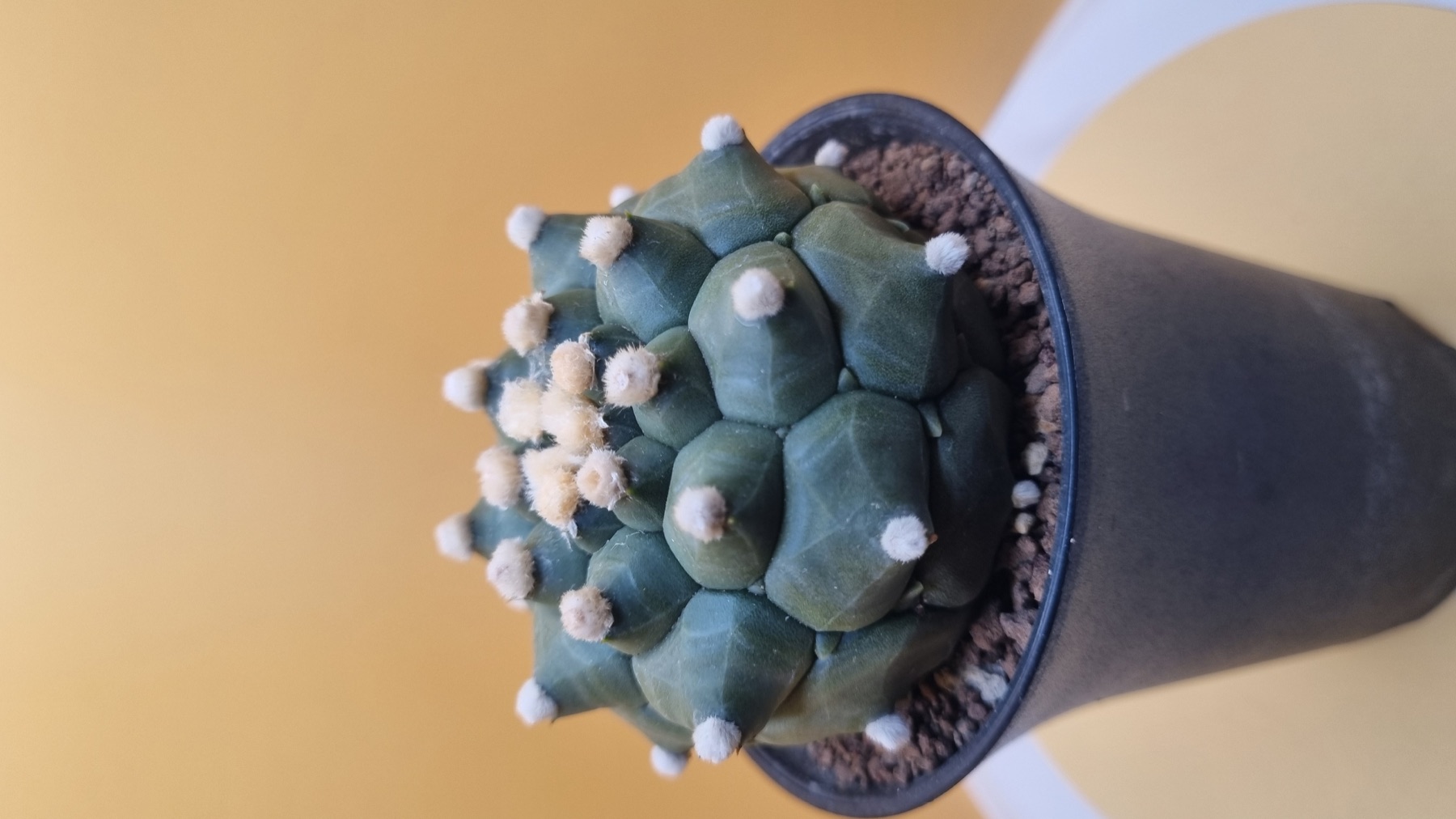
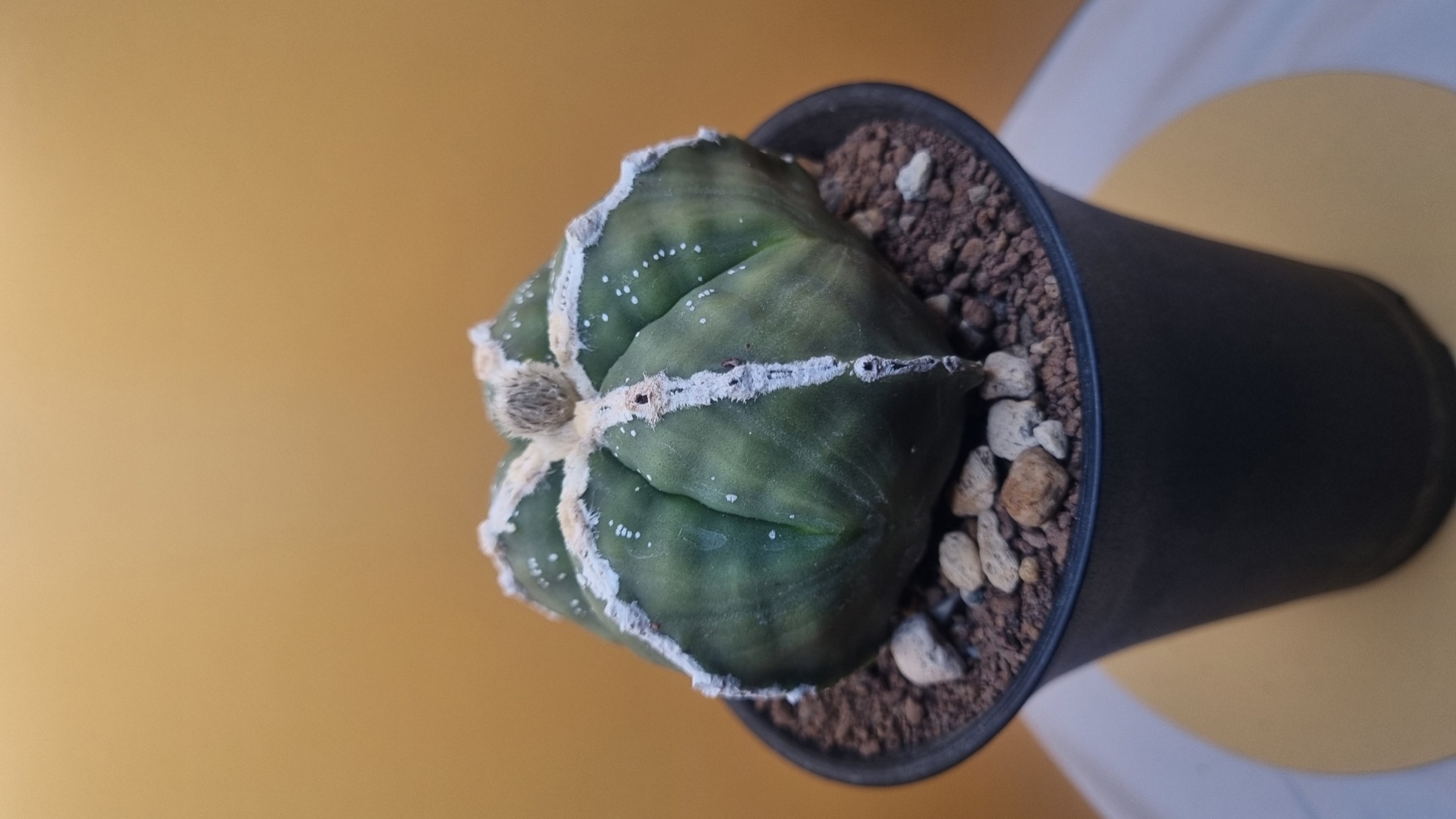
Green ribs,
drawn in white.
The body stays mostly green; felted white lines trace the ribs and gather around each areole.
That restrained pattern is what separates this plant from the Snow Type. Rather than a white mosaic spread across the whole body, the markings form narrow lines that let the green ribs remain visible. The eye follows those lines toward the crown.
The supplied name combines “Haku-jo,” used by growers for white, woolly markings along the ribs, with “nudum,” a horticultural term for a comparatively bare or un-flecked body. Names in this group overlap between nurseries, and I have not found a dependable source naming the first grower or date for this exact combination. This record therefore preserves the owner-confirmed label without inventing a Japanese origin story.
The underlying species, A. myriostigma, was described by Charles Lemaire in 1839 and is native to northeastern Mexico. The wild photographs show the species, not this Haku-jo selection. They offer a point of comparison for the ribbed body that cultivation has marked in white.