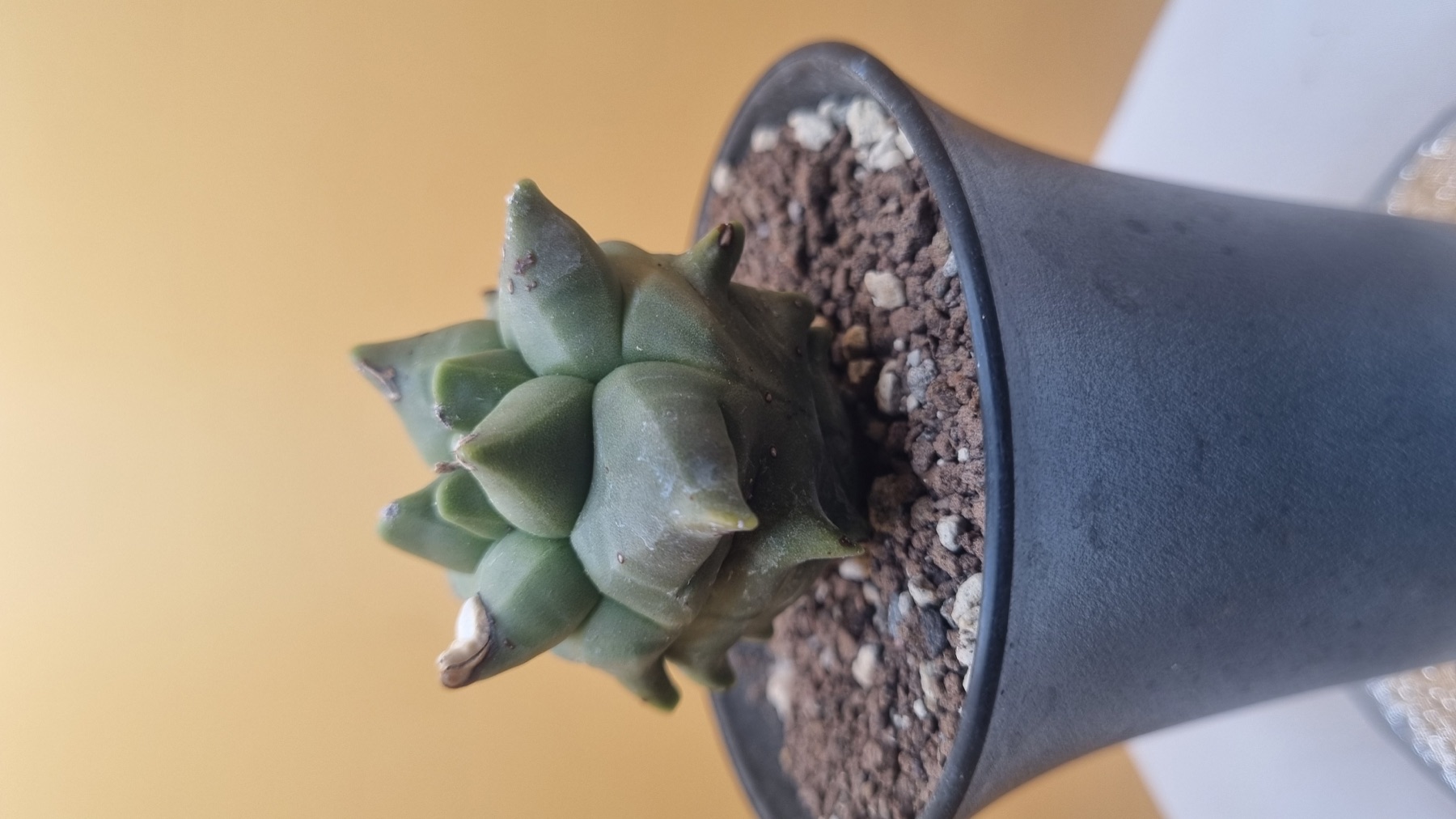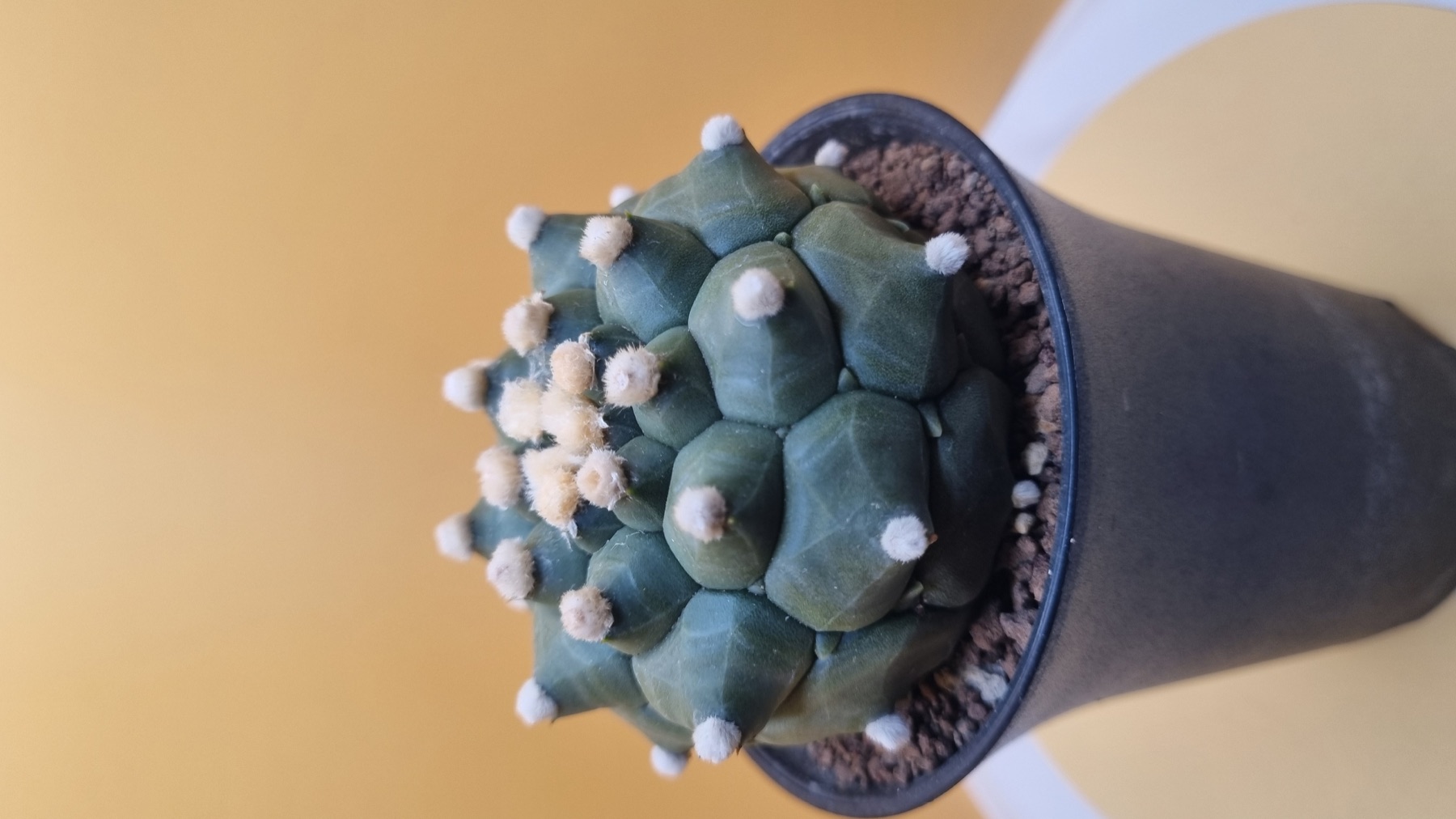
Three sides
to a familiar star.
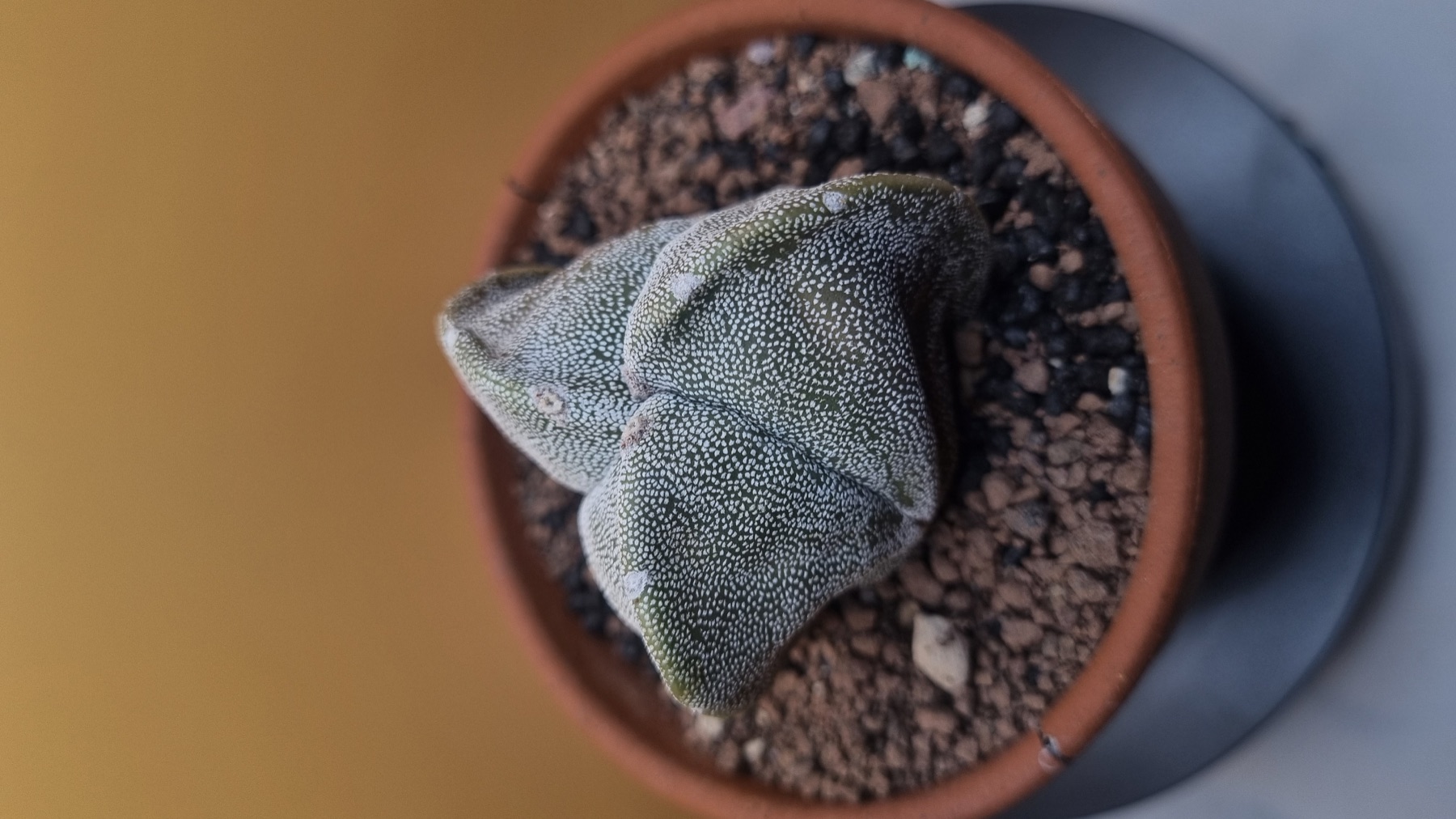
Three ribs turn the usual rounded outline of myriostigma into a distinct triangular body plan.
Seen from above, the crown is almost diagrammatic. Three ribs meet around the centre and give the plant a triangular rhythm that persists down the body. It is a small change in count, but a large change in how the cactus reads.
“Tricostatum” describes that three-ribbed form; it does not establish a different species or a wild locality. Specialist grower Pavel Tůma recounts a documented cultivation history for three-ribbed A. myriostigma: in 1925, V. Viereck sent a group of three-ribbed plants to Europe, after which Robert Gräser selected a stable line. Three-ribbed plants can also occur naturally, so the label alone does not prove that this specimen descends from that line.
The broader species was published by Charles Lemaire in 1839 and is native to northeastern Mexico. The field photographs show ordinary wild A. myriostigma, not Tricostatum. They help place the cultivated form beside the species from which its geometry is selected.
Pavel Tůma · history of three- and four-ribbed forms · Kew · A. myriostigma and 1839 publication.