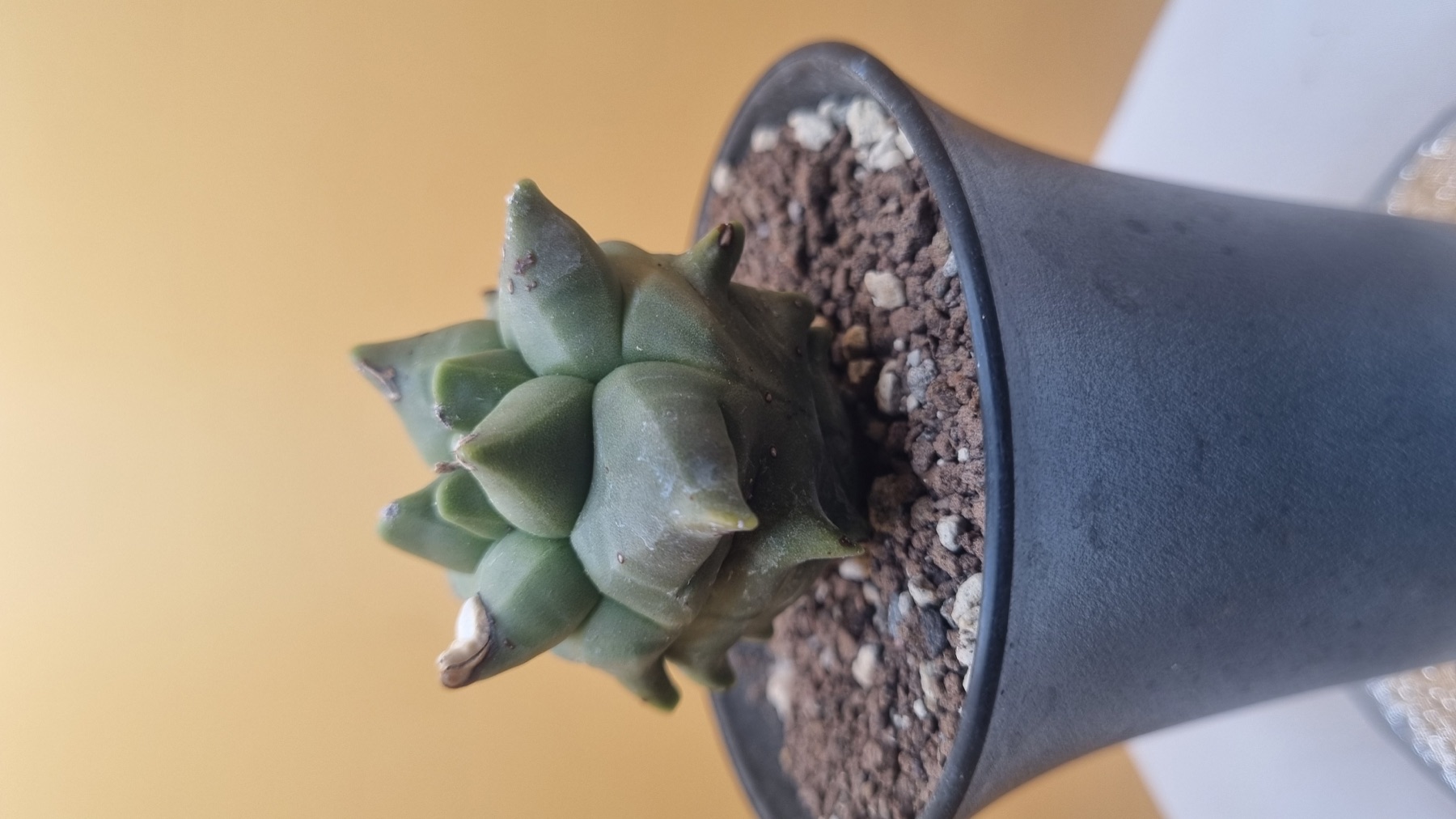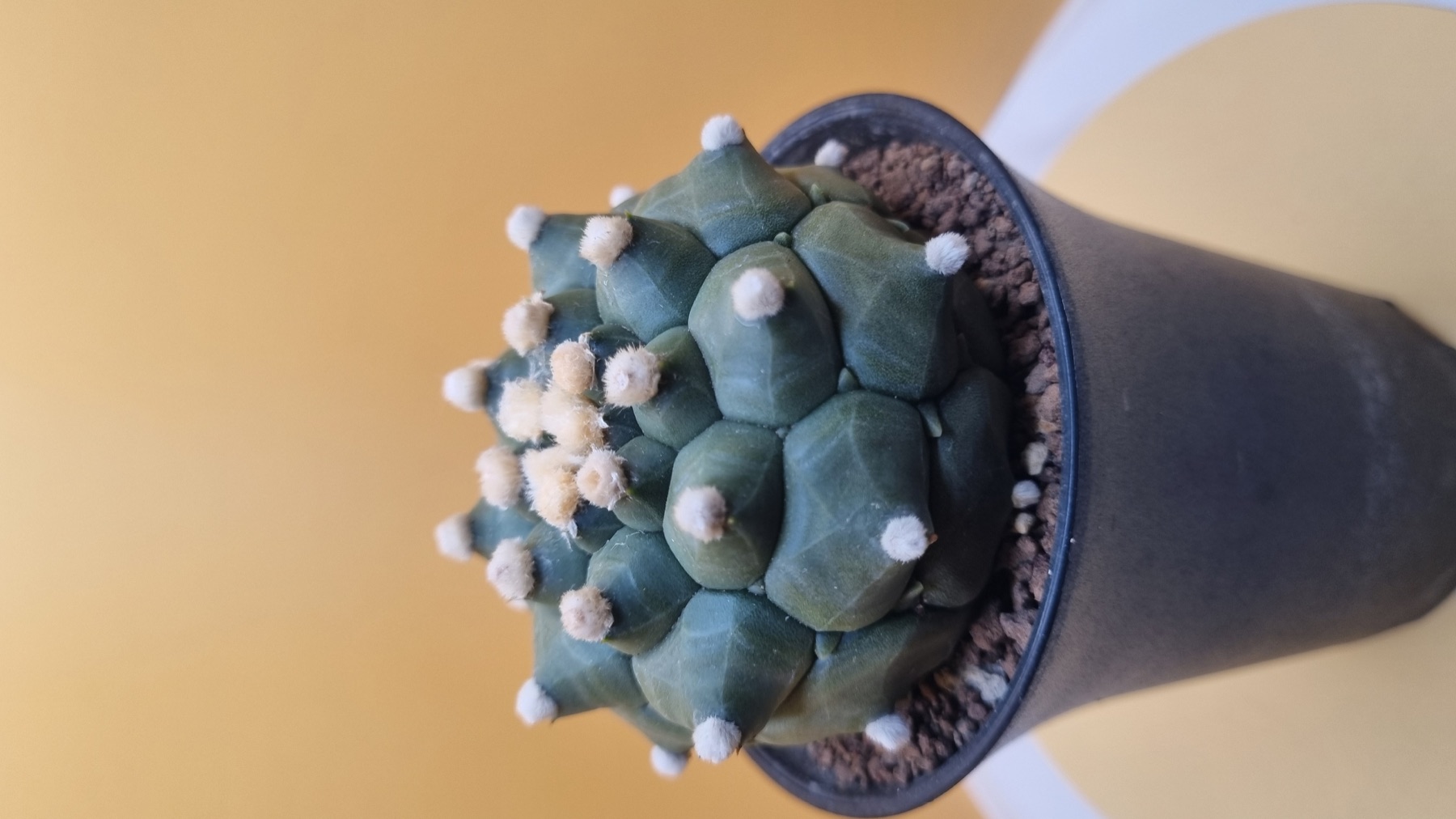
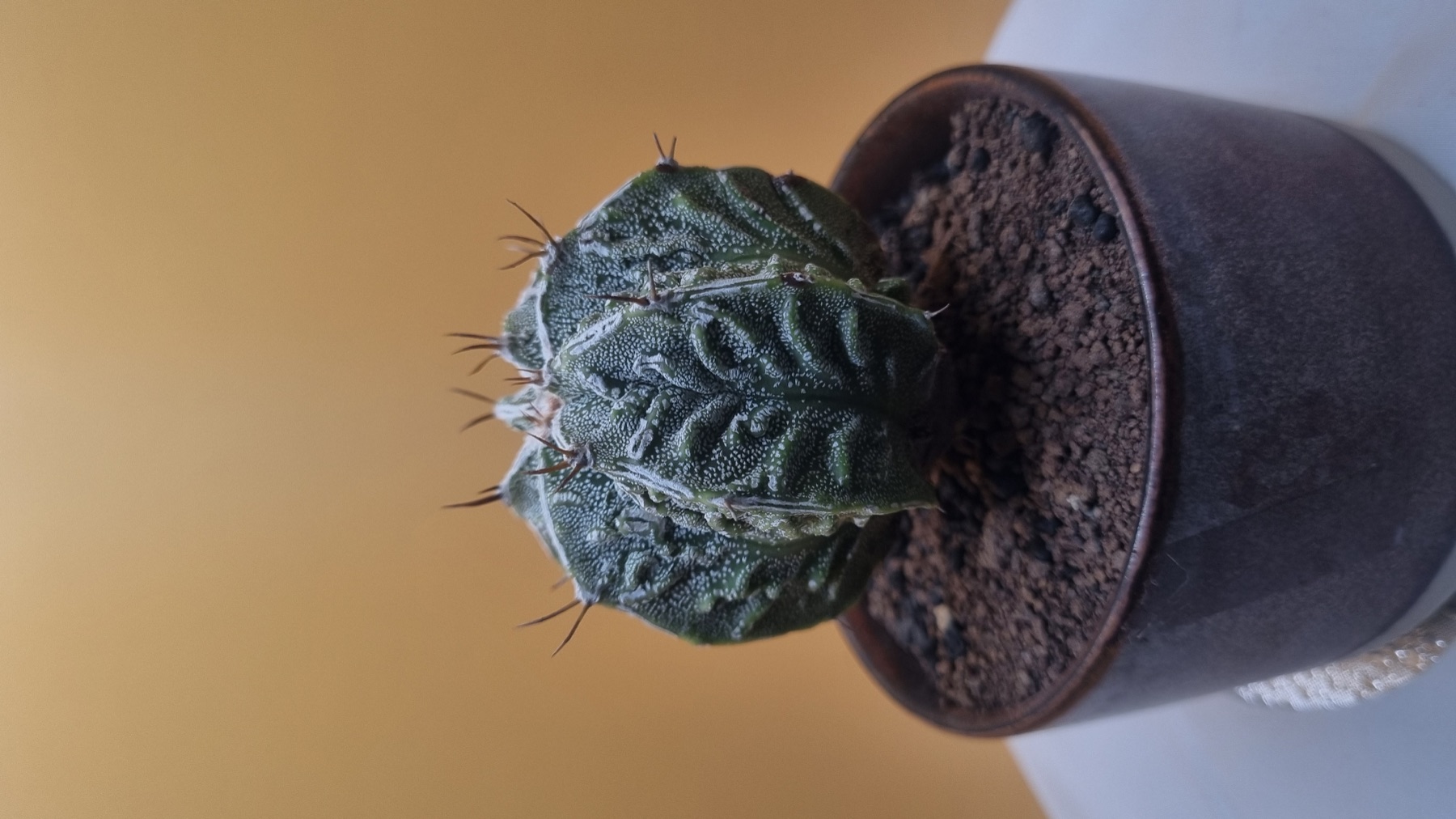
Ribs within ribs.
Lines of white.
This label brings together two horticultural ideas: Fukuryu structure and Haku-jo’s pale, felted lines.
Astrophytum ornatum already has a strong, upright frame. On this specimen, the eye catches the irregular ridges first, then the white markings following the rib edges. The combination gives the body a layered look: a rib system, then smaller lines laid over it.
In collector usage, “Fukuryu” commonly describes extra ribs or accessory ridges; “Haku-jo” refers to white, woolly lines associated with the areoles. Spellings and boundaries vary between growers, and I have not found a reliable source that identifies the first breeder, year or Japanese city for this combined form. The compound name is therefore retained as the collection’s horticultural label, not presented as a formal botanical variety.
The wild species has a separate geography. A. ornatum grows in central Mexico, including the states of Querétaro, Hidalgo and Guanajuato. The photograph below shows the species in Querétaro; it is not a Fukuryu Haku-jo plant and says nothing about this specimen’s provenance.
Pavel Tůma · Fukuryu forms · Pavel Tůma · Haku-jo forms · Kew · A. ornatum.