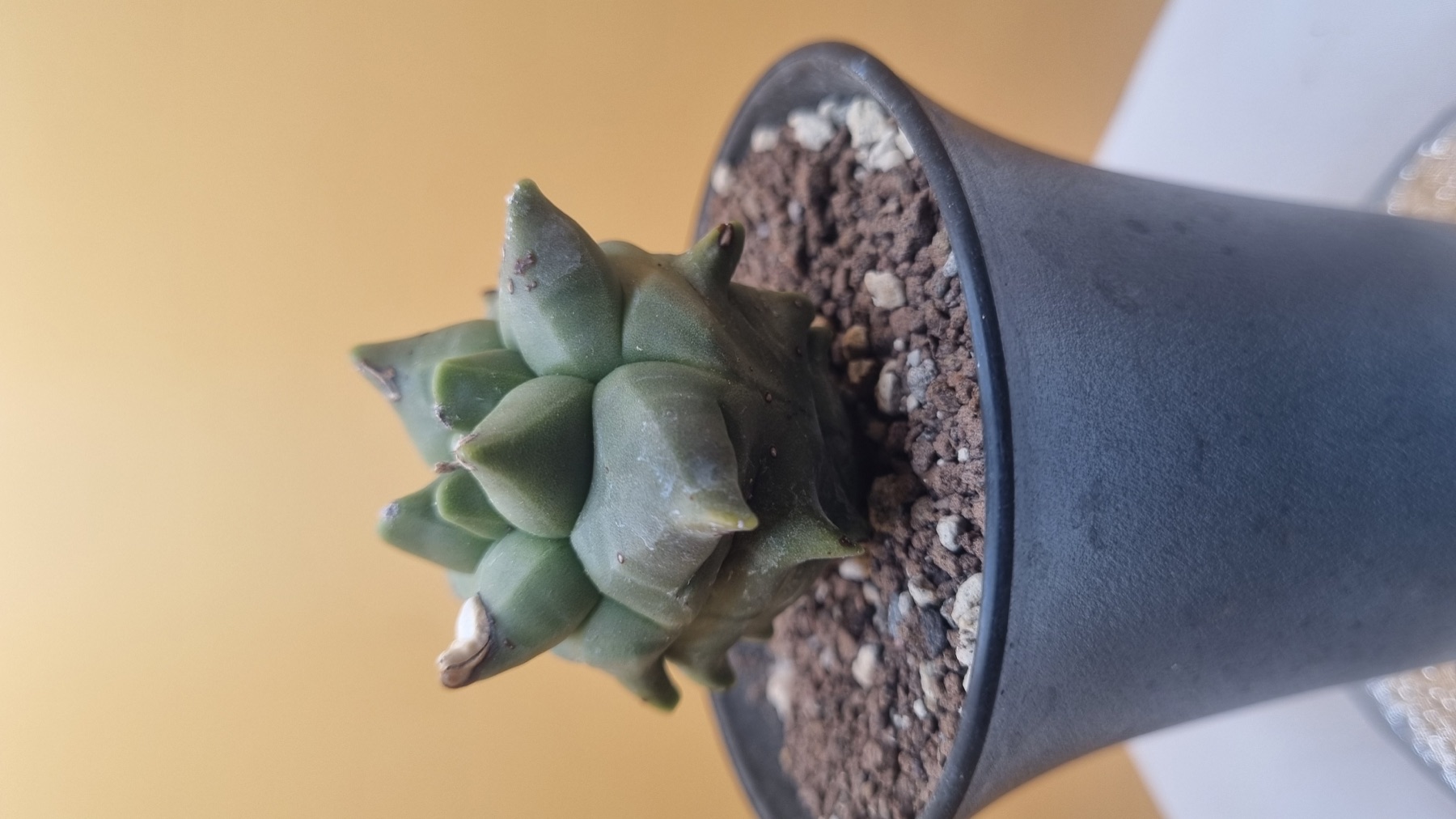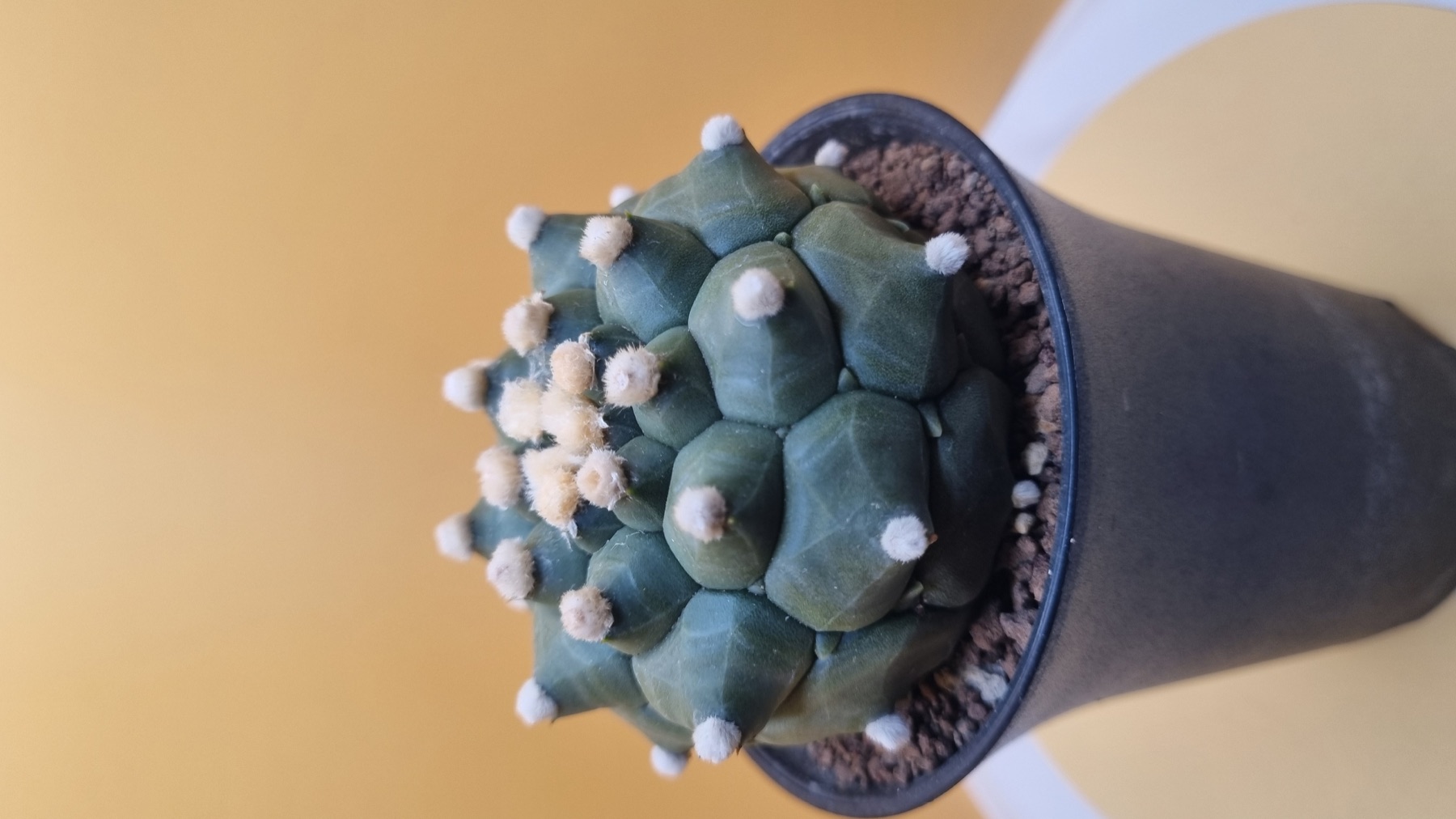
A star beneath
the snow.
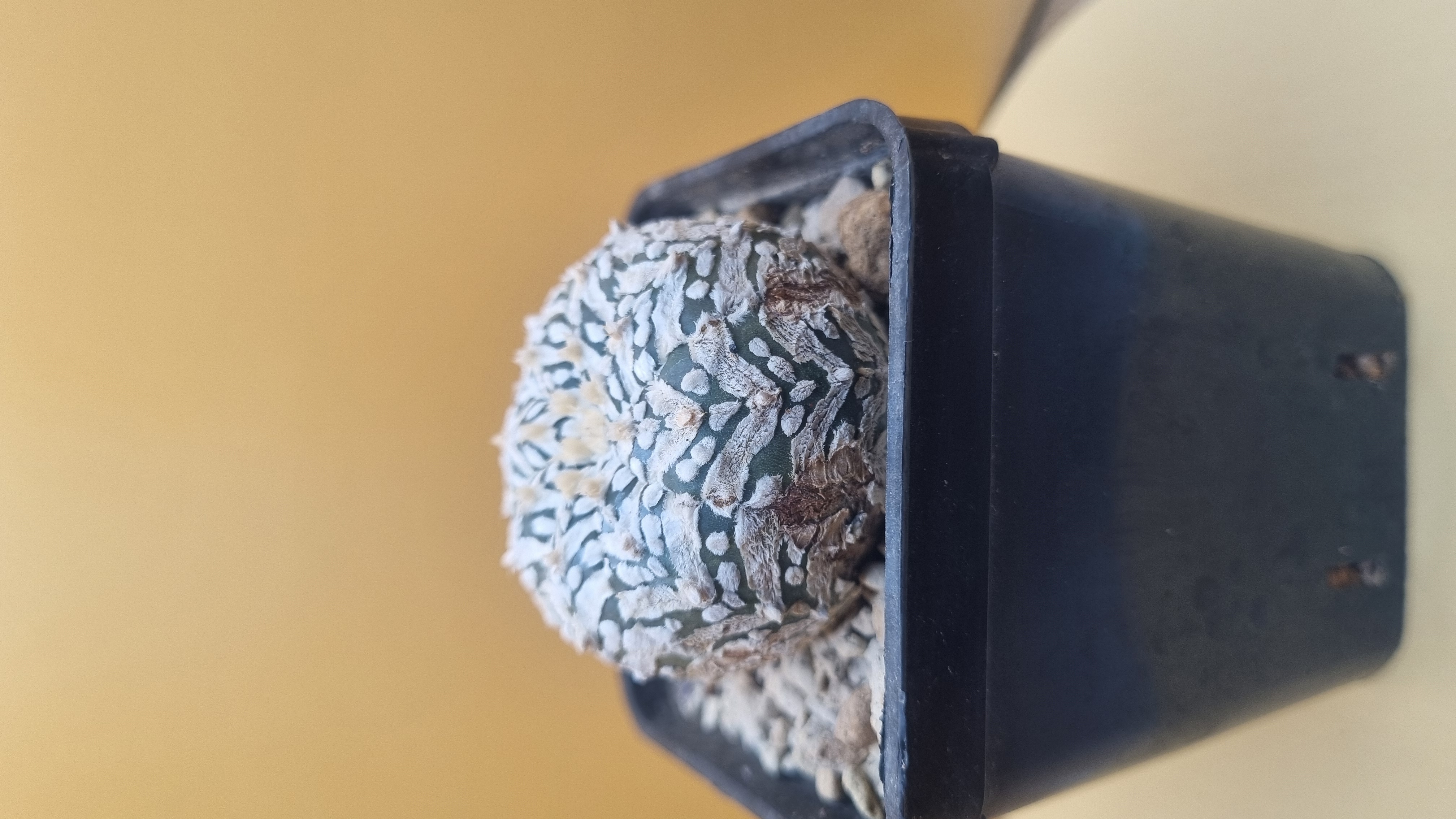
The white flecks nearly veil the body, but the eight-ribbed star of asterias is still there beneath them.
“Snow Type” is a grower’s description of the dense trichome pattern, not a separate species. I like this plant because the surface seems to gather light: from a distance it appears almost white, while close up each fleck remains distinct and the green skin shows through.
The history of Super Kabuto is Japanese horticulture, but its first chapter is not firmly documented. Specialist accounts place the introduction of an unusually patterned A. asterias to Japan around 1980–81, associated with Masaomi Takeo and later Tony Sato. The accounts differ on the exact year and details; neither gives a secure origin for every Snow Type selection. The responsible version of the story is “in cultivation by the early 1980s,” not a definitive birth date.
The wild species has a much older record. Baron von Karwinsky collected star cactus in Tamaulipas in 1843; Joseph Zuccarini described it in 1845. Its low, star-shaped body belongs to nature; the dense, selected white pattern belongs to cultivation. The field photographs below show wild A. asterias, not Super Kabuto.
Stirling Baker · Super Kabuto history and Japanese cultivation · LLIFLE · Super Kabuto account · U.S. Fish & Wildlife Service · Star Cactus Recovery Plan.