A Coahuilense
of my own.
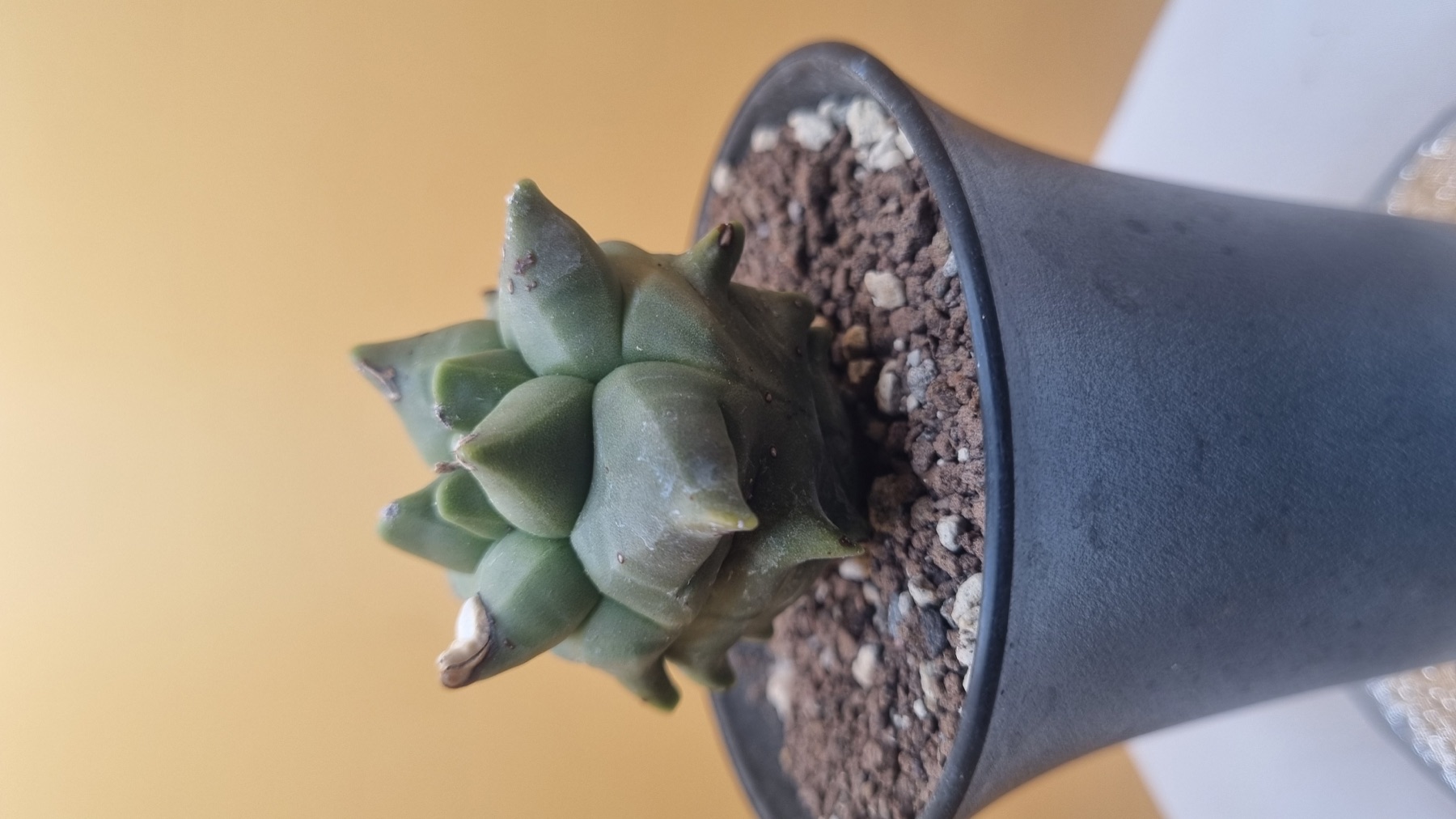
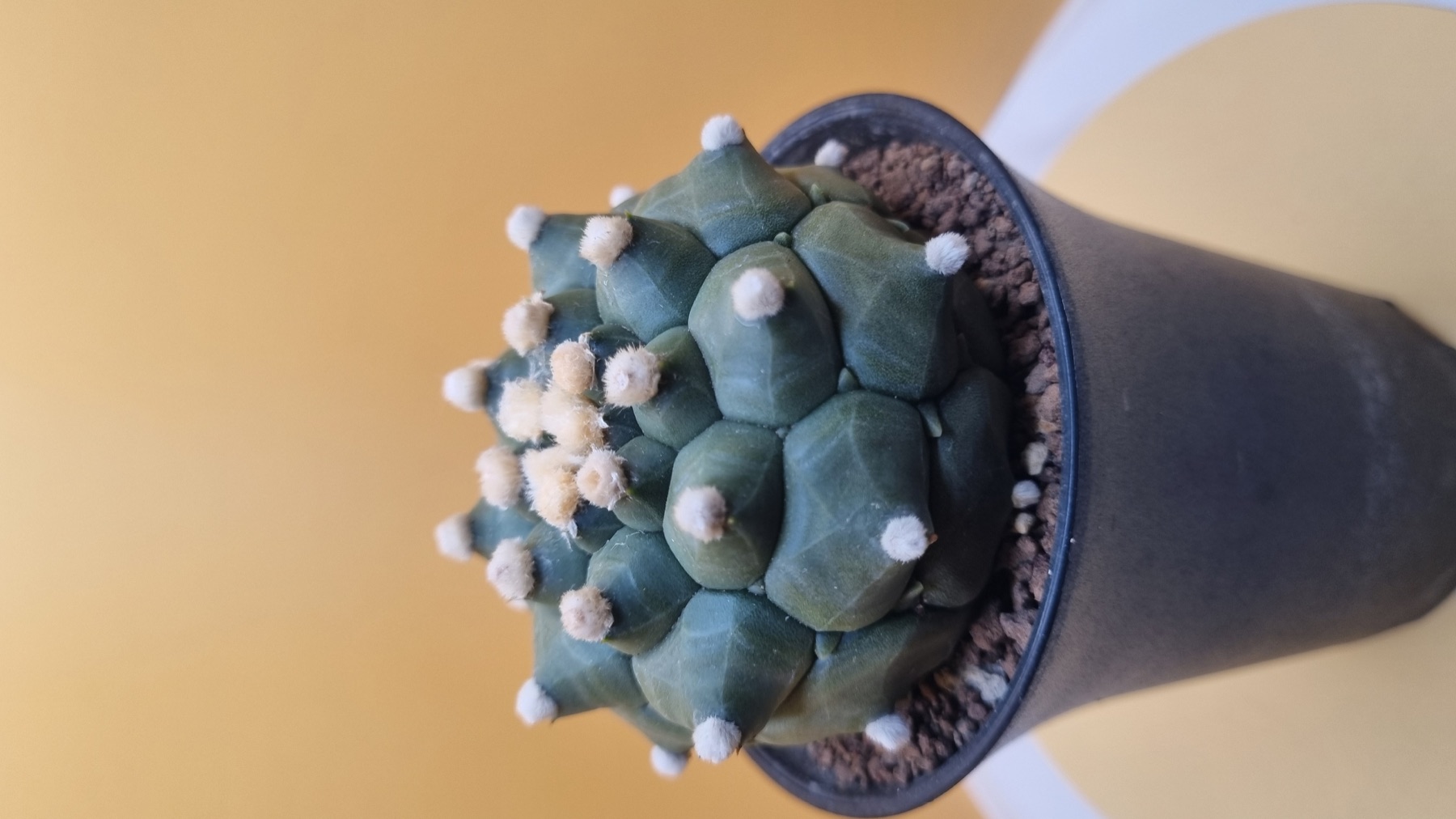
I chose this sharply sculpted plant at Festa del Cactus in Bologna in 2026. Its long, pointed rib edges make it unlike the rounder Kikko forms elsewhere in my collection.
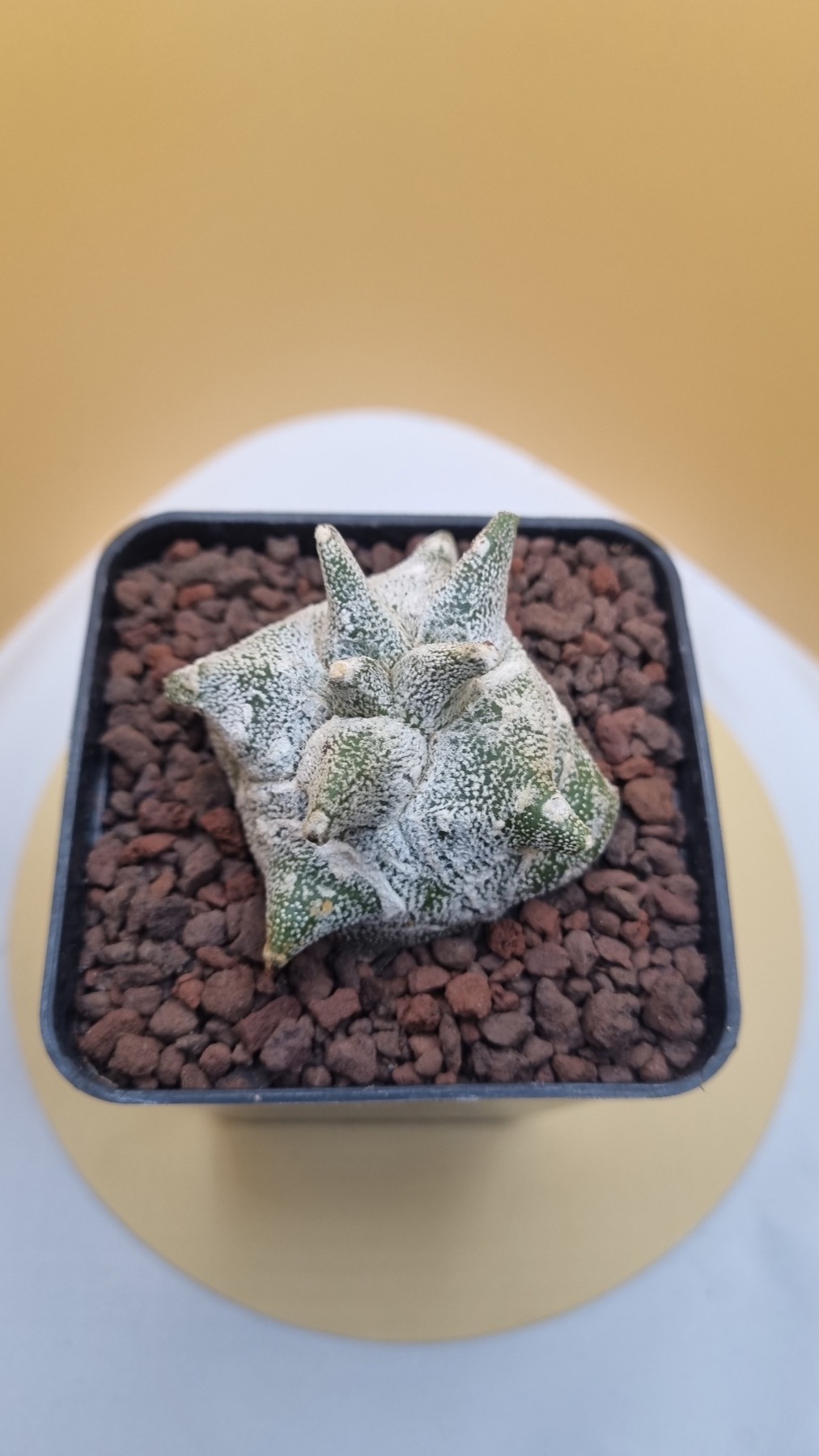
This is Astrophytum coahuilense ‘Hakuran’, the Coahuilense Kikko: not the A. myriostigma Kikko or the low, smooth-skinned A. asterias Kikko Nudum. The distinction is easy to see here. Pale flecks soften the green body; along each rib, the tubercles rise into long, pointed plates. From above they form a star. From the side they look almost folded.
I found it at Festa del Cactus in Bologna in 2026. I was drawn to the force of its shape, and to the way the familiar Kikko idea changes when it appears in a different species. This is the first Coahuilense Kikko in my collection. Its passport records the fair and year; the nursery and any earlier provenance were not recorded.
Hakuran’s Japanese history is older than most online summaries suggest, but its beginning is not settled. A cactus book published in 1979 is cited in a later account as showing unusual, monstrous Coahuilense seedlings. That is evidence that striking forms were already being noticed—not proof that those plants carried the name Hakuran. A separate account attributes the named selection to Mr. Narita of Aichi Prefecture in 1981. I have not found the original Japanese record, so I treat Narita and 1981 as an attribution rather than a confirmed origin.
The wild species has a firmer record. Astrophytum coahuilense was formally published in 1932, after plants collected in northern Mexico had been confused with the similar A. myriostigma. The pale flecking can make them look close; flowers and fruits help distinguish them. Coahuilense flowers are yellow with a red centre. I have yet to see this plant bloom, and that will be one of the details I follow.
Its natural range is in south-western Coahuila and nearby Durango, on rocky, lime-rich ground. This specimen’s route before Bologna is unknown, so that landscape belongs to the species account—not to its personal provenance. The wild populations are assessed as Vulnerable; documenting the plant accurately means keeping that distinction visible.
Sources: Kew · accepted name and publication · Petr Beneš (2012) · Hakuran history · LLIFLE · Narita/Aichi attribution.